
Advertisement

Hypertension in Children and Adolescents

ACF This article exemplifies the AAFP 2006 Annual Clinical Focus on caring for children and adolescents.
A PDF version of this document is available. Download PDF now (11 pages /337 KB).

The development of a national database on normative blood pressure levels throughout childhood has contributed to the recognition of elevated blood pressure in children and adolescents. The epidemic of childhood obesity, the risk of developing left ventricular hypertrophy, and evidence of the early development of atherosclerosis in children would make the detection of and intervention in childhood hypertension important to reduce long-term health risks; however, supporting data are lacking. Secondary hypertension is more common in preadolescent children, with most cases caused by renal disease. Primary or essential hypertension is more common in adolescents and has multiple risk factors, including obesity and a family history of hypertension. Evaluation involves a thorough history and physical examination, laboratory tests, and specialized studies. Management is multifaceted. Nonpharmacologic treatments include weight reduction, exercise, and dietary modifications. Recommendations for pharmacologic treatment are based on symptomatic hypertension, evidence of end-organ damage, stage 2 hypertension, stage 1 hypertension unresponsive to lifestyle modifications, and hypertension with diabetes mellitus. (Am Fam Physician 2006;73:1158-68. Copyright © 2006 American Academy of Family Physicians.)

The prevalence and rate of diagnosis of hypertension in children and adolescents appear to be increasing.1 This is due in part to the increasing prevalence of childhood obesity as well as growing awareness of this disease. There is evidence that childhood hypertension can lead to adult hypertension.2 Hypertension is a known risk factor for coronary artery disease (CAD) in adults, and the presence of childhood hypertension may contribute to the early development of CAD. Reports show that early development of atherosclerosis does exist in children and young adults and may be associated with childhood hypertension.3

SORT: Key Recommendations for Practice

Clinical recommendation

Evidence rating

References

Blood pressure should be checked routinely at every visit in children three years of age and older.

C

7

Three separate readings of an elevated blood pressure (greater than 90th percentile for age, height,
and sex) on separate visits are needed to make the diagnosis of hypertension.

C

7

Patients diagnosed with primary hypertension should have a comprehensive assessment for cardiovascular risk factors (lipid profile, fasting glucose, body mass index).

C

7

Nonpharmacologic treatment (e.g., weight loss, dietary modifications, exercise) should be first-line therapy in patients with stage 1 hypertension.

C

7

Pharmacologic treatment should be initiated in patients with stage 2 hypertension, symptomatic hypertension, when end-organ damage is present (left ventricular hypertrophy, retinopathy, proteinuria); and in stage 1 hypertension when blood pressure is unresponsive to lifestyle changes.

C

7


A = consistent, good-quality patient-oriented evidence; B = inconsistent or limited-quality patient-oriented evidence; C = consensus, disease-oriented evidence, usual practice, expert opinion, or case series. For information about the SORT evidence rating system, see page 1495 or http://www.aafp.org/afpsort.xml.

Left ventricular hypertrophy (LVH) is the most prominent clinical evidence of end-organ damage in childhood hypertension. Data show that LVH can be seen in as many as 41 percent of patients with childhood hypertension.4-6 Patients with severe cases of childhood hypertension are also at increased risk of developing hypertensive encephalopathy, seizures, cerebrovascular accidents, and congestive heart failure. Based on these observations, early detection of and intervention in children with hypertension are potentially beneficial in preventing long-term complications of hypertension.

Data associating childhood hypertension with cardiovascular risk in adulthood are lacking. An update of recommendations for diagnosis, evaluation, and treatment of childhood hypertension is provided in the fourth report by the National High Blood Pressure Education Program (NHBPEP) Working Group on High Blood Pressure in Children and Adolescents.7

Epidemiology

Because body size is an essential determinant of blood pressure in children, it is necessary to include the child's height percentile to determine if blood pressure is normal. The revised childhood blood pressure tables include 50th, 90th, 95th, and 99th percentiles by sex, age, and height based on the 1999-2000 National Health and Nutrition Examination Survey data (Appendices 1 and 2)7.

Table 17 shows the classifications of hypertension for children one year of age or older and adolescents and the corresponding systolic and diastolic blood pressures. Blood pressure should be measured on three or more separate occasions before characterizing the type of hypertension.

table 1

Classifications of Hypertension in Children One Year of Age and Older and Adolescents

Normal blood pressure

SBP and DBP less than the 90th percentile

Prehypertension

SBP or DBP greater than or equal to 90th percentile but less than 95th percentile

Blood pressure levels greater than or equal to 120/80 mm Hg for adolescents

Hypertension

SBP or DBP greater than or equal to 95th percentile

Stage 1 hypertension

SBP or DBP from 95th percentile to 99th percentile plus 5 mm Hg

Stage 2 hypertension

SBP or DBP greater than 99th percentile plus 5 mm Hg


NOTE: Percentiles are for sex, age, and height for blood pressure measured on at least three separate occasions; if systolic and diastolic percentiles are different, categorize by the higher value.

SBP = systolic blood pressure; DBP = diastolic blood pressure.

Adapted with permission from National High Blood Pressure Education Program Working Group on High Blood Pressure in Children and Adolescents. The fourth report on the diagnosis, evaluation, and treatment of high blood pressure in children and adolescents. Pediatrics 2004;114(2 suppl 4th report):560.

Reports have shown an association between blood pressure and body mass index (BMI),8,9 suggesting that obesity is a strong risk factor for developing childhood hypertension. There are insufficient data that define the role of race and ethnicity in childhood hypertension, although results of several studies10-13 show black children having higher blood pressure than white children. Heritability of childhood hypertension is estimated at 50 percent.14 One report15 noted that 49 percent of patients with primary childhood hypertension had a relative with primary hypertension, and that 46 percent of patients with secondary childhood hypertension had a relative with secondary hypertension. Another report16 showed that in adolescents with primary hypertension there is an overall 86 percent positive family history of hypertension. There is evidence that shows breastfeeding in infancy may be associated with a lower blood pressure in childhood.17-19

Blood Pressure Measurement

According to the NHBPEP recommendations, children three years of age or older should have their blood pressure measured when seen at a medical facility7; however, according to the U.S. Preventive Service Task Force (USPSTF), there is insufficient evidence to recommend for or against routine screening for childhood hypertension to reduce the risk of CAD.20

The preferred method for blood pressure measurement is auscultation. Aneroid manometers are used to measure blood pressure in children and are accurate when calibrated on a semiannual basis.21

Correct measurement of blood pressure in children requires use of a cuff that is appropriate to the size of the child's upper right arm. This is the preferred arm because of the possibility of decreased pressures in the left arm caused by coarctation of the aorta. By convention, an appropriate cuff size is one with an inflatable bladder width that is at least 40 percent of the arm circumference at a point midway between the olecranon and the acromion (Figure 1). The cuff bladder length should cover 80 to 100 percent of the circumference of the arm7 (Figure 2). An oversized cuff can underestimate the blood pressure, whereas an undersized cuff can overestimate the measurement. Blood pressure should be measured in a controlled environment after five minutes of rest in the seated position with the right arm supported at heart level. If the blood pressure is greater than the 90th percentile, the blood pressure should be repeated twice at the same office visit to test the validity of the reading.
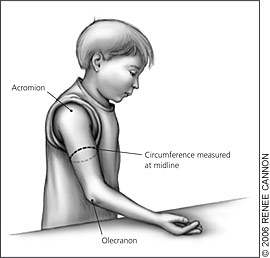
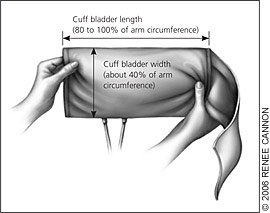
Figure 1.

Figure 1. Arm circumference should be measured midway between the olecranon and acromial process.

  Figure 2.

Figure 2. Blood pressure cuff showing size estimation based on arm circumference.

Ambulatory blood pressure monitoring (ABPM) requires a patient to wear a portable monitor that records blood pressure over a specified period. This allows measurements outside of the medical setting, where some patients may experience elevated blood pressure caused by anxiety ("white-coat hypertension"). Other uses for ABPM include episodic hypertension, autonomic dysfunction, and chronic kidney disease. ABPM also may have a role in differentiating primary from secondary hypertension and in identifying patients likely to have hypertension-induced end-organ damage.22 The USPSTF maintains that ABPM is subject to many of the same errors seen in the physician's office.20

table 2

Physical Findings Indicative of a Secondary Cause for Childhood Hypertension

Physical examination finding

Possible etiologies

Abdominal bruit

Renal artery stenosis

Abdominal mass

Polycystic kidney disease; hydronephrosis/obstructive renal lesions; neuroblastoma; Wilms' tumor

Acne

Cushing's syndrome

Adenotonsillar
hypertrophy

Sleep disorder associated with hypertension

Decreased perfusion
of lower extremities

Coarctation of the aorta

Diaphoresis

Pheochromocytoma

Flushing

Pheochromocytoma

Growth retardation

Chronic renal failure

Hirsutism

Cushing's syndrome

Joint swelling

Systemic lupus erythematosus

Malar rash

Systemic lupus erythematosus

Moon facies

Cushing's syndrome

Murmur

Coarctation of the aorta

Muscle weakness

Hyperaldosteronism

Obesity (general)

Association with primary hypertension

Obesity (of the face, neck, or trunk)

Cushing's syndrome

Tachycardia

Hyperthyroidism; pheochromocytoma; neuroblastoma

Thyromegaly

Hyperthyroidism


Adapted with permission from National High Blood Pressure Education Program Working Group on High Blood Pressure in Children and Adolescents. The fourth report on the diagnosis, evaluation, and treatment of high blood pressure in children and adolescents. Pediatrics 2004; 114(2 suppl 4th report):564.

Etiologies

Most childhood hypertension, particularly in preadolescents, is secondary to an underlying disorder (Table 27). Renal parenchymal disease is the most common (60 to 70 percent) cause of hypertension.23 Adolescents usually have primary or essential hypertension, making up 85 to 95 percent of cases.23 Table 323-25 shows causes of childhood hypertension according to age.

table 3

Causes of Childhood Hypertension According to Age Group

Age

Causes

One to six years

Renal parenchymal disease; renal vascular disease; endocrine causes; coarctation of the aorta; essential hypertension

Six to 12 years

Renal parenchymal disease; essential hypertension; renal vascular disease; endocrine causes; coarctation of the aorta; iatrogenic illness

12 to 18 years

Essential hypertension; iatrogenic illness; renal parenchymal disease; renal vascular disease; endocrine causes; coarctation of the aorta


NOTE: Causes listed in order of prevalence.

Information from references 23 through 25.

Essential hypertension rarely is found in children younger than 10 years and is a diagnosis of exclusion. Significant risk factors for essential hypertension include family history and increasing BMI. Some sleep disorders and black race can be potential risk factors for essential hypertension. Essential hypertension often is linked to other risk factors that make up metabolic syndrome and can lead to cardiovascular disease. These risk factors for metabolic syndrome include low plasma high-density lipoprotein, elevated plasma triglycerides, abdominal obesity, and insulin resistance/hyperinsulinemia. The prevalence of metabolic syndrome among adolescents is between 4.2 and 8.4 percent.26

Secondary hypertension is more common in children than in adults. It can present in adolescents, especially if they have physical findings not typically seen with essential hypertension. Renal disease is the most common cause of secondary hypertension in children.23-25 Other causes include endocrine disease (e.g., pheochromocytoma, hyperthyroidism) and pharmaceuticals (e.g., oral contraceptives, sympathomimetics, some over-the-counter preparations, dietary supplements). Transient rise in blood pressure, which can be mistaken for hypertension, is seen with caffeine use and certain psychological disorders (e.g., anxiety, stress).

Evaluation

Once hypertension has been confirmed, an extensive history and careful physical examination should be conducted to identify underlying causes of the elevated blood pressure and to detect any end-organ damage. With the appropriate information, unnecessary and often expensive laboratory and imaging studies can be avoided. The NHBPEP has developed an algorithm to help the physician navigate the diagnostic and management choices in childhood hypertension (Figure 3).7
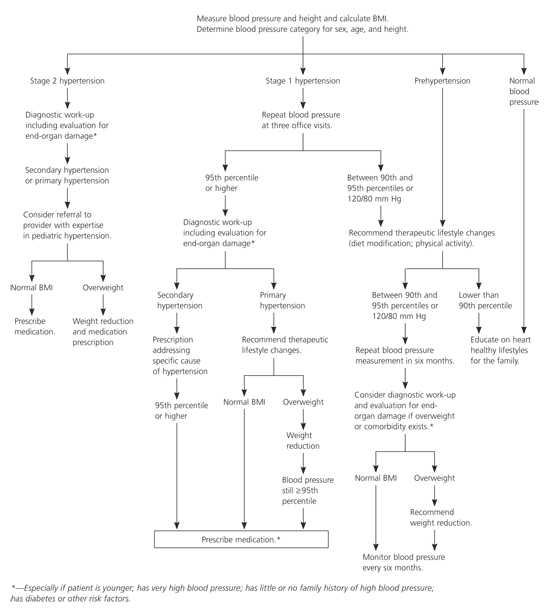
Management of Childhood Hypertension

algorithm

Figure 3. Algorithm for the management of childhood hypertension. (BMI = body mass index.)

Adapted with permission from National High Blood Pressure Education Program Working Group on High Blood Pressure in Children and Adolescents. The fourth report on the diagnosis, evaluation, and treatment of high blood pressure in children and adolescents. Pediatrics 2004;114(2 suppl 4th report):571.

history and physical examination

As mentioned previously, the child with primary hypertension often has a positive family history of hypertension or cardiovascular disease. Other risk factors including metabolic syndrome and sleep-disordered breathing (from snoring to obstructive sleep apnea) also are associated with primary hypertension. A careful history will uncover these important elements. It is helpful to remember that secondary hypertension is more likely in a younger child with stage 2 hypertension, thus data about systemic conditions associated with elevated blood pressure should be elicited. Because most secondary hypertension is renovascular in origin, a focused review of that system may provide insight into the possible etiology. Table 47 is a summary of information in a patient's history that can help determine the causes of childhood hypertension. A medication history should include any use of over-the-counter, prescription, and illicit drugs because many medications and drugs can elevate blood pressure. The physician should also ask about the use of performance-enhancing substances, herbal supplements (e.g., ma huang), and tobacco use.

table 4

History Suggesting Possible Etiologies or Associations with Hypertension

Possible etiology and/or associations

Family history


Cardiovascular disease (e.g., myocardial infarction, stroke)

Primary hypertension

Deafness

Congenital or familial renal disease

Dyslipidemia

Primary hypertension

Endocrine problems (e.g., diabetes, thyroid, adrenal)

Familial endocrinopathies

Hypertension

Primary hypertension

Kidney disease

Congenital or familial renal disease

Sleep apnea

Primary hypertension

Child's history


Chest pain

Cardiovascular disease

Diaphoresis (abnormal)

Endocrinopathies

Dyspnea on exertion

Cardiovascular disease

Edema

Cardiovascular disease

Enuresis

Renovascular disease, renal scarring

Growth failure

Endocrinopathies

Heat or cold intolerance

Endocrinopathies

Heart palpitations

Cardiovascular disease

Headaches

Primary hypertension

Hematuria

Renovascular disease, renal scarring

Joint pain or swelling

Rheumatologic disorders

Myalgias

Rheumatologic disorders

Neonatal hypovolemia/shock

Renovascular disease, renal scarring

Recurrent rashes

Rheumatologic disorders

Snoring or other sleep problems

Primary hypertension

Umbilical artery catheterization

Renovascular disease, renal scarring

Urinary tract infections (recurrent)

Renovascular disease, renal scarring

Weight or appetite changes

Endocrinopathies


Information from reference 7.

Physical examination should include calculation of BMI because of the strong association between obesity and hypertension. Obtaining blood pressure readings in the upper and lower extremities to rule out coarctation of the aorta also is recommended. Examination of the retina should be included to assess the effect of hypertension on an easily accessed end organ. In the majority of children with hypertension, however, the physical examination will be normal.

laboratory and imaging tests

Laboratory testing and imaging on a child with hypertension should screen for identifiable causes, detect comorbid conditions, and evaluate end-organ damage (Table 57). Screening tests should be performed on all children with a confirmed diagnosis of hypertension. Decisions about additional testing are based on individual and family histories, the presence of risk factors, and the results of the screening tests. Young children, those with stage 2 hypertension, and those in whom a systemic condition is suspected require a more extensive evaluation because these children are more likely to have secondary hypertension. The child who is older or obese, with a family history of diabetes or other cardiovascular risk factors, will require further work-up for the metabolic abnormalities associated with primary hypertension.7

Table 5

Laboratory Tests for the Child with Hypertension

Reason to test

Tests

Purpose of result

To identify cause

Complete blood count with differential, platelets

Rule out anemia, consistent with chronic renal disease


Electrolytes, blood urea nitrogen, creatinine, calcium, phosphorus, uric acid

Rule out renal disease, calculi; chronic pyelonephritis


Renal ultrasound

Rule out renal scarring; congenital renal anomalies; unequal renal size


Urinalysis, urine culture

Rule out infection; hematuria; proteinuria

To identify
comorbidities

Drug screen

Identify drug-induced hypertension

Fasting lipid panel, fasting glucose, insulin

Identify hyperlipidemias, metabolic syndrome, or diabetes


Polysomnography

Identify sleep disorders associated with hypertension

To identify end-organ damage

Echocardiography

Identify left ventricular hypertrophy

Retinal examination

Identify retinal vascular changes

Additional testing (as clinically indicated)

24-hour urine for protein and creatinine, creatinine clearance

Rule out chronic renal disease


Advanced imaging: renal scan; magnetic resonance angiogram; duplex Doppler flow studies; 3-dimensional computed tomography; arteriography (classic or digital subtraction)

Rule out renovascular disease


Ambulatory blood pressure monitoring

Rule out physician anxiety-induced ("white-coat") hypertension


Hormone levels (thyroid, adrenal)

Rule out hyperthyroidism, adrenal dysfunction


Plasma renin levels

Rule out mineralocorticoid-related disease


Urine and plasma catecholamines

Rule out catecholamine-mediated hypertension


Adapted with permission from National High Blood Pressure Education Program Working Group on High Blood Pressure in Children and Adolescents. The fourth report on the diagnosis, evaluation, and treatment of high blood pressure in children and adolescents. Pediatrics 2004;114(2 suppl 4th report):562.

Hormone levels and 24-hour urine studies are readily available to most physicians, but more specialized tests such as renal angiography often require referral to a center with pediatric radiology, nephrology, and cardiology services. When renovascular disease is strongly suspected, conventional or intra-arterial digitally subtracted angiography are recommended. Scintography with or without angiotensin-converting enzyme (ACE) inhibition also can be used. These older imaging techniques are quite invasive. Data on newer studies such as magnetic resonance angiography and 3-dimensional or spiral computed tomography in children are limited, but documentation of their usefulness is increasing.7

In addition to the diagnostic tests already mentioned, an assessment of end-organ damage must be made. Retinopathy, microalbuminuria, and increased carotid artery thickness have all been reported in children with primary hypertension.4,5 Documenting LVH is an important component of the evaluation of children with hypertension.7 Because echocardiography is noninvasive, easily obtained, and more sensitive than electrocardiography,23 it should be part of the initial evaluation of all children with hypertension and may be repeated periodically.

Management

Managing childhood hypertension is directed at the cause of the elevated blood pressure and the alleviation of any symptoms. End-organ damage, comorbid conditions, and associated risk factors also influence decisions about therapy.

Nonpharmacologic and pharmacologic treatments are recommended based on the age of the child, the stage of hypertension, and response to treatment.

nonpharmacologic treatments

For children and adolescents with prehypertension or stage 1 hypertension, therapeutic lifestyle changes are recommended. These include weight control, regular exercise, a low-fat and low-sodium diet, smoking cessation, and abstinence from alcohol use.

Obesity increases the occurrence of hypertension threefold while favoring the development of insulin resistance, hyperlipidemia, and salt sensitivity.24,27 Significant obesity also increases the likelihood of LVH independent of blood pressure level.27 Exercise has been shown to lower blood pressure in children but does not affect left ventricular function.28,29 Competitive sports are permitted for children with prehypertension, stage 1 hypertension, or controlled stage 2 hypertension in the absence of symptoms and end-organ damage.

Data regarding dietary changes in children with hypertension are limited. Nevertheless, the NHBPEP has taken an aggressive stance on sodium restriction, recommending a sodium intake of 1,200 mg per day. A no-salt-added diet with more fresh fruits and vegetables combined with low-fat dairy and protein akin to the DASH (Dietary Approaches to Stop Hypertension) food plan30 may be successful in lowering blood pressure in children. Increased intake of potassium and calcium also have been suggested as nutritional strategies to lower blood pressure.31,32 Whatever lifestyle changes are recommended, a family-centered rather than patient-oriented approach usually is more effective.7

pharmacotherapy

Reasons to initiate antihypertensive medication in children and adolescents include symptomatic hypertension, end-organ damage (e.g., LVH, retinopathy, proteinuria), secondary hypertension, stage 1 hypertension that does not respond to lifestyle changes, and stage 2 hypertension.7 In the absence of end-organ damage or comorbid conditions, the goal is to reduce blood pressure to less than the 95th percentile for age, height, and sex. When end-organ damage or coexisting illness is present, a blood pressure goal of less than the 90th percentile is recommended. Drug therapy is always an adjunct to nonpharmacologic measures.

Information about long-term, untreated childhood hypertension and the impact of antihypertensive medications on growth and development is insubstantial. According to the NHBPEP, pharmacotherapy should follow a step-up plan, introducing one medication at a time at the lowest dose, then increasing the dose until therapeutic effects are seen, side effects are seen, or the maximal dose is reached. Only then should a second agent, preferably one with a complementary mechanism of action, be initiated. Long-acting medication is useful in improving compliance, and predictable problems such as the effect of diuretic medications in young athletes should be avoided.7

table 6

Antihypertensive Medications with FDA Approval for Use in Children

Class

Drug

Initial dosage

Maximum dosage

Angiotensin-converting enzyme inhibitor*†‡

Benazepril (Lotensin)§

0.2 mg per kg per day up to 10 mg per day

0.6 mg per kg per day up to 40 mg per day


Enalapril (Vasotec)§

0.08 mg per kg per day up to 5 mg per day

0.6 mg per kg per day up to 40 mg per day


Fosinopril (Monopril)

Children heavier than 50 kg: 5 to 10 mg per day

Children heavier than 50 kg: 40 mg per day


Lisinopril (Zestril)§

0.07 mg per kg per day up to 5 mg per day

0.6 mg per kg per day up to 40 mg per day

Angiotensin-receptor blocker*†‡

Irbesartan (Avapro)

Six to 12 years of age: 75 to 150 mg per day

13 years of age: 150 to 300 mg per day

Same as initial

Same as initial


Losartan (Cozaar)§

0.7 mg per kg per day up to 50 mg per day

1.4 mg per kg per day up to 100 mg per day

Beta blocker

Propranolol (Inderal)||

1 to 2 mg per kg per day

4 mg per kg per day up to 640 mg per day

Calcium channel blocker¶

Amlodipine (Norvasc)§

6 to 17 years of age: 2.5 to 5.0 mg per day

10 mg per day

Diuretic**

Hydrochlorothiazide (Hydrodiuril)

1 mg per kg per day up to 50 mg per day

3 mg per kg per day up to 50 mg per day


FDA = U.S. Food and Drug Administration.

*-Contraindicated during pregnancy; females of childbearing age should be counseled to use contraception.

-Check serum potassium and creatinine periodically to monitor for hyperkalemia or azotemia.

-FDA approval is limited to children six years of age or older with creatinine clearance of at least 30 ml per min per 1.73 m2.

§-Can be prepared as a suspension.

||-Contraindicated in asthma and heart failure. Heart rate is dose-limiting. May impair athletic performance. Should not be used in insulin-dependent patients with diabetes. A sustained-release, once-daily formulation is available.

¶- May cause tachycardia.

**-All patients treated with diuretic medications should have electrolytes monitored shortly after initiation of therapy and periodically thereafter. Useful as add-on therapy in patients being treated with drugs from other drug classes.

Adapted with permission from National High Blood Pressure Education Program Working Group on High Blood Pressure in Children and Adolescents. The fourth report on the diagnosis, evaluation, and treatment of high blood pressure in children and adolescents. Pediatrics 2004;114(2 suppl 4th report):568-9.

The choice of initial drug therapy is largely at the discretion of the physician. Diuretics and beta blockers have documented safety and effectiveness in children. Preferential use of specific classes of medications for certain underlying or coexisting pathology has led to the prescribing of ACE inhibitors in children with diabetes or proteinuria and beta-adrenergic or calcium channel blockers for children with migraines.33 Becoming familiar with medications in each major class and with effective combinations of medications will facilitate treatment. Many medications have growing research to support their use. Those with approval from the U.S. Food and Drug Administration for use in children are listed in Table 6.7 As with any chronic health issue, medical follow-up and appropriate monitoring are key to long-term success.


The Authors

GREGORY B. LUMA, M.D., is an attending physician with the Mount Sinai School of Medicine/Jamaica Hospital Medical Center Family Medicine Residency Program and is a clinical instructor at both New York College of Osteopathic Medicine in New York, N.Y., and Mount Sinai School of Medicine in Queens, N.Y. He received his medical degree from Temple University School of Medicine, Philadelphia, Pa., and completed his residency in family medicine with the West Jersey-Memorial Hospital at Virtua Program in Voorhees, N.J. He also completed a pediatric residency with the Thomas Jefferson University/duPont Hospital for Children Program in Wilmington, Del.

ROSEANN T. SPIOTTA, M.D., is clinical assistant professor at N.Y. College of Osteopathic Medicine, clinical instructor at Mount Sinai School of Medicine, and medical director of the Jamaica Hospital's Family Practice Center in New York, N.Y. She received her medical degree from the State University of N.Y.-Downstate Medical Center, Brooklyn, and completed her pediatric residency at Long Island Jewish Hillside Medical Center, New Hyde Park, N.Y.

Address correspondence to Gregory B. Luma, M.D., Department of Family Medicine, 89-06 135th Street, Suite 3C, Jamaica, NY 11418 (e-mail: gregory.luma@mssm.edu). Reprints are not available from the authors.

Author disclosure: Nothing to disclose.

REFERENCES

1. Sorof JM, Lai D, Turner J, Poffenbarger T, Portman RJ. Overweight, ethnicity, and the prevalence of hypertension in school-aged children. Pediatrics 2004;113(3 pt 1):475-82.

2. Lauer RM, Clarke WR. Childhood risk factors for high adult blood pressure: the Muscatine Study. Pediatrics 1989;84:633-41.

3. Berenson GS, Srinivasan SR, Bao W, Newman WP 3rd, Tracy RE, Wattigney WA. Association between multiple cardiovascular risk factors and atherosclerosis in children and young adults. The Bogalusa Heart Study. N Engl J Med 1998;338:1650-6.

4. Sorof JM, Alexandrov AV, Cardwell G, Portman RJ. Carotid artery intimal-medial thickness and left ventricular hypertrophy in children with elevated blood pressure. Pediatrics 2003;111:61-6.

5. Belsha CW, Wells TG, McNiece KL, Seib PM, Plummer JK, Berry PL. Influence of diurnal blood pressure variations on target organ abnormalities in adolescents with mild essential hypertension. Am J Hypertens 1998;11(4 pt 1):410-7.

6. Hanevold C, Waller J, Daniels S, Portman R, Sorof J; International Pediatric Hypertension Association. The effects of obesity, gender, and ethnic group on left ventricular hypertrophy and geometry in hypertensive children: a collaborative study of the International Pediatric Hypertension Association [published correction appears in Pediatrics 2005;115:1118]. Pediatrics 2004;113:328-33.

7. National High Blood Pressure Education Program Working Group on High Blood Pressure in Children and Adolescents. The fourth report on the diagnosis, evaluation, and treatment of high blood pressure in children and adolescents. Pediatrics 2004;114(2 suppl 4th report):555-76.

8. Stabouli S, Kotsis V, Papamichael C, Constantopoulos A, Zakopoulos N. Adolescent obesity is associated with high ambulatory blood pressure and increased carotid intimal-medial thickness. J Pediatr 2005;147: 651-6.

9. Muntner P, He J, Cutler JA, Wildman RP, Whelton PK. Trends in blood pressure among children and adolescents. JAMA 2004;291:2107-13.

10. Voors AW, Foster TA, Frerichs RR, Webber LS, Berenson GS. Studies of blood pressures in children, ages 5-14 years, in a total biracial community: the Bogalusa Heart Study. Circulation 1976;54:319-27.

11. Berenson GS, Voors AW, Webber LS, Dalferes ER Jr, Harsha DW. Racial differences of parameters associated with blood pressure levels in children-the Bogalusa Heart Study. Metabolism 1979;28:1218-28.

12. Berenson GS, Wattigney WA, Webber LS. Epidemiology of hypertension from childhood to young adulthood in black, white, and Hispanic population samples. Public Health Rep 1996;111(suppl 2):3-6.

13. Dekkers JC, Snieder H, Van Den Oord EJ, Treiber FA. Moderators of blood pressure development from childhood to adulthood: a 10-year longitudinal study, J Pediatr 2002;141:770-9.

14. Jung FF, Ingelfinger JR. Hypertension in childhood and adolescence. Pediatr Rev 1993;14:169-79.

15. Robinson RF, Batisky DL, Hayes JR, Nahata MC, Mahan JD. Significance of heritability in primary and secondary pediatric hypertension. Am J Hypertens 2005;18:917-21.

16. Flynn JT, Alderman MH. Characteristics of children with primary hypertension seen at a referral center. Pediatr Nephrol 2005;20:961-6

17. Martin RM, Ness AR, Gunnell D, Emmett P, Davey Smith G; ALSPAC Study Team. Does breast-feeding in infancy lower blood pressure in childhood? The Avon Longitudinal Study of Parents and Children (ALSPAC). Circulation 2004;109:1259-66.

18. Wilson AC, Forsyth JS, Greene SA, Irvine L, Hau C, Howie PW. Relation of infant diet to childhood health: seven year follow up of cohort of children in Dundee infant feeding study. BMJ 1998;316:21-5.

19. Lawlor DA, Najman JM, Sterne J, Williams GM, Ebrahim S, Davey Smith G. Associations of parental, birth, and early life characteristics with systolic blood pressure at 5 years of age: findings from the Mater-University study of pregnancy and its outcomes. Circulation 2004;110: 2417-23.

20. U.S. Preventive Services Task Force. Screening for high blood pressure: recommendations and rationale. Rockville, Md.: Agency for Healthcare Research and Quality, 2003. Accessed online February 2, 2006, at: http://www.ahrq.gov/clinic/3rduspstf/highbloodsc/hibloodrr.htm.

21. Canzanello VJ, Jensen PL, Schwartz GL. Are aneroid sphygmomanometers accurate in hospital and clinic settings? Arch Intern Med 2001;161:729-31.

22. Flynn JT. Differentiation between primary and secondary hypertension in children using ambulatory blood pressure monitoring. Pediatrics 2002;110(1 pt 1):89-93.

23. Flynn JT. Evaluation and management of hypertension in childhood. Prog Pediatr Cardiol 2001;12:177-88.

24. Bartosh SM, Aronson AJ. Childhood hypertension. An update on etiology, diagnosis, and treatment. Pediatr Clin North Am 1999;46:235-52.

25. Flynn JT. Hypertension in adolescents. Adolesc Med Clin 2005;16:11-29.

26. Goodman E, Daniels SR, Morrison JA, Huang B, Dolan LM. Contrasting prevalence of and demographic disparities in the World Health Organization and National Cholesterol Education Program Adult Treatment Panel III definitions of metabolic syndrome among adolescents. J Pediatr 2004;145:445-51.

27. Freedman DS, Dietz WH, Srinivasan SR, Berenson GS. The relation of overweight to cardiovascular risk factors among children and adolescents: the Bogalusa Heart Study. Pediatrics 1999;103(6 pt 1):1175-82.

28. Daniels SR, Loggie JM, Khoury P, Kimball TR. Left ventricular geometry and severe left ventricular hypertrophy in children and adolescents with essential hypertension. Circulation 1998;97:1907-11.

29. Mitchell BM, Gutin B, Kapuku G, Barbeau P, Humphries MC, Owens S, et al. Left ventricular structure and function in obese adolescents: relations to cardiovascular fitness, percent body fat, and visceral adiposity, and effects of physical training. Pediatrics 2002;109:E73-3.

30. Sacks FM, Svetkey LP, Vollmer WM, Appel LJ, Bray GA, Harsha D, et al; DASH-Sodium Collaborative Research Group. Effects on blood pressure of reduced dietary sodium and the Dietary Approaches to Stop Hypertension (DASH) diet. N Engl J Med 2001;344:3-10.

31. Kawano Y, Minami J, Takishita S, Omae T. Effects of potassium supplementation on office, home, and 24-h blood pressure in patients with essential hypertension. Am J Hypertens 1998;11:1141-6.

32. Gillman MW, Hood MY, Moore LL, Nguyen US, Singer MR, Andon MB. Effect of calcium supplementation on blood pressure in children. J Pediatr 1995;127:186-92.

33. Chobanian AV, Bakris GL, Black HR, Cushman WC, Green LA, Izzo JL Jr, et al; National Heart, Lung, and Blood Institutes Joint National Committee on Prevention, Detection, Evaluation, and Treatment of High Blood Pressure, National High Blood Pressure Education Program Coordination Committee. The seventh report of the Joint National Committee on Prevention, Detection, Evaluation and Treatment of High Blood Pressure: The JNC 7 Report [published correction in appears in JAMA 2003;290:197]. JAMA 2003;289:2560-72.


Appendix 1. Blood Pressure Levels for Boys by Age and Height Percentile

Age, years

Blood pressure percentile

Systolic blood pressure (mm Hg)

Percentile of height

Diastolic blood pressure (mm Hg)

Percentile of height

5th

10th

25th

50th

75th

90th

95th

5th

10th

25th

50th

75th

90th

95th

1

50th

80

81

83

85

87

88

89

34

35

36

37

38

39

39


90th

94

95

97

99

100

102

103

49

50

51

52

53

53

54


95th

98

99

101

103

104

106

106

54

54

55

56

57

58

58


99th

105

106

108

110

112

113

114

61

62

63

64

65

66

66

2

50th

84

85

87

88

90

92

92

39

40

41

42

43

44

44


90th

97

99

100

102

104

105

106

54

55

56

57

58

58

59


95th

101

102

104

106

108

109

110

59

59

60

61

62

63

63


99th

109

110

111

113

115

117

117

66

67

68

69

70

71

71

3

50th

86

87

89

91

93

94

95

44

44

45

46

47

48

48


90th

100

101

103

105

107

108

109

59

59

60

61

62

63

63


95th

104

105

107

109

110

112

113

63

63

64

65

66

67

67


99th

111

112

114

116

118

119

120

71

71

72

73

74

75

75

4

50th

88

89

91

93

95

96

97

47

48

49

50

51

51

52


90th

102

103

105

107

109

110

111

62

63

64

65

66

66

67


95th

106

107

109

111

112

114

115

66

67

68

69

70

71

71


99th

113

114

116

118

120

121

122

74

75

76

77

78

78

79

5

50th

90

91

93

95

96

98

98

50

51

52

53

54

55

55


90th

104

105

106

108

110

111

112

65

66

67

68

69

69

70


95th

108

109

110

112

114

115

116

69

70

71

72

73

74

74


99th

115

116

118

120

121

123

123

77

78

79

80

81

81

82

6

50th

91

92

94

96

98

99

100

53

53

54

55

56

57

57


90th

105

106

108

110

111

113

113

68

68

69

70

71

72

72


95th

109

110

112

114

115

117

117

72

72

73

74

75

76

76


99th

116

117

119

121

123

124

125

80

80

81

82

83

84

84

7

50th

92

94

95

97

99

100

101

55

55

56

57

58

59

59


90th

106

107

109

111

113

114

115

70

70

71

72

73

74

74


95th

110

111

113

115

117

118

119

74

74

75

76

77

78

78


99th

117

118

120

122

124

125

126

82

82

83

84

85

86

86

8

50th

94

95

97

99

100

102

102

56

57

58

59

60

60

61


90th

107

109

110

112

114

115

116

71

72

72

73

74

75

76


95th

111

112

114

116

118

119

120

75

76

77

78

79

79

80


99th

119

120

122

123

125

127

127

83

84

85

86

87

87

88

9

50th

95

96

98

100

102

103

104

57

58

59

60

61

61

62


90th

109

110

112

114

115

117

118

72

73

74

75

76

76

77


95th

113

114

116

118

119

121

121

76

77

78

79

80

81

81


99th

120

121

123

125

127

128

129

84

85

86

87

88

88

89

10

50th

97

98

100

102

103

105

106

58

59

60

61

61

62

63


90th

111

112

114

115

117

119

119

73

73

74

75

76

77

78


95th

115

116

117

119

121

122

123

77

78

79

80

81

81

82


99th

122

123

125

127

128

130

130

85

86

86

88

88

89

90

11

50th

99

100

102

104

105

107

107

59

59

60

61

62

63

63


90th

113

114

115

117

119

120

121

74

74

75

76

77

78

78


95th

117

118

119

121

123

124

125

78

78

79

80

81

82

82


99th

124

125

127

129

130

132

132

86

86

87

88

89

90

90

12

50th

101

102

104

106

108

109

110

59

60

61

62

63

63

64


90th

115

116

118

120

121

123

123

74

75

75

76

77

78

79


95th

119

120

122

123

125

127

127

78

79

80

81

82

82

83


99th

126

127

129

131

133

134

135

86

87

88

89

90

90

91

13

50th

104

105

106

108

110

111

112

60

60

61

62

63

64

64


90th

117

118

120

122

124

125

126

75

75

76

77

78

79

79


95th

121

122

124

126

128

129

130

79

79

80

81

82

83

83


99th

128

130

131

133

135

136

137

87

87

88

89

90

91

91

14

50th

106

107

109

111

113

114

115

60

61

62

63

64

65

65


90th

120

121

123

125

126

128

128

75

76

77

78

79

79

80


95th

124

125

127

128

130

132

132

80

80

81

82

83

84

84


99th

131

132

134

136

138

139

140

87

88

89

90

91

92

92

15

50th

109

110

112

113

115

117

117

61

62

63

64

65

66

66


90th

122

124

125

127

129

130

131

76

77

78

79

80

80

81


95th

126

127

129

131

133

134

135

81

81

82

83

84

85

85


99th

134

135

136

138

140

142

142

88

89

90

91

92

93

93

16

50th

111

112

114

116

118

119

120

63

63

64

65

66

67

67


90th

125

126

128

130

131

133

134

78

78

79

80

81

82

82


95th

129

130

132

134

135

137

137

82

83

83

84

85

86

87


99th

136

137

139

141

143

144

145

90

90

91

92

93

94

94

17

50th

114

115

116

118

120

121

122

65

66

66

67

68

69

70


90th

127

128

130

132

134

135

136

80

80

81

82

83

84

84


95th

131

132

134

136

138

139

140

84

85

86

87

87

88

89


99th

139

140

141

143

145

146

147

92

93

93

94

95

96

97


Adapted with permission from National High Blood Pressure Education Program Working Group on High Blood Pressure in Children and Adolescents. The fourth report on the diagnosis, evaluation, and treatment of high blood pressure in children and adolescents. Pediatrics 2004;114(2 suppl 4th report):558.


Appendix 2. Blood Pressure Levels for Girls by Age and Height Percentile

Age, years

Blood pressure percentile

Systolic blood pressure (mm Hg)

Percentile of height

Diastolic blood pressure (mm Hg)

Percentile of height

5th

10th

25th

50th

75th

90th

95th

5th

10th

25th

50th

75th

90th

95th

1

50th

83

84

85

86

88

89

90

38

39

39

40

41

41

42


90th

97

97

98

100

101

102

103

52

53

53

54

55

55

56


95th

100

101

102

104

105

106

107

56

57

57

58

59

59

60


99th

108

108

109

111

112

113

114

64

64

65

65

66

67

67

2

50th

85

85

87

88

89

91

91

43

44

44

45

46

46

47


90th

98

99

100

101

103

104

105

57

58

58

59

60

61

61


95th

102

103

104

105

107

108

109

61

62

62

63

64

65

65


99th

109

110

111

112

114

115

116

69

69

70

70

71

72

72

3

50th

86

87

88

89

91

92

93

47

48

48

49

50

50

51


90th

100

100

102

103

104

106

106

61

62

62

63

64

64

65


95th

104

104

105

107

108

109

110

65

66

66

67

68

68

69


99th

111

111

113

114

115

116

117

73

73

74

74

75

76

76

4

50th

88

88

90

91

92

94

94

50

50

51

52

52

53

54


90th

101

102

103

104

106

107

108

64

64

65

66

67

67

68


95th

105

106

107

108

110

111

112

68

68

69

70

71

71

72


99th

112

113

114

115

117

118

119

76

76

76

77

78

79

79

5

50th

89

90

91

93

94

95

96

52

53

53

54

55

55

56


90th

103

103

105

106

107

109

109

66

67

67

68

69

69

70


95th

107

107

108

110

111

112

113

70

71

71

72

73

73

74


99th

114

114

116

117

118

120

120

78

78

79

79

80

81

81

6

50th

91

92

93

94

96

97

98

54

54

55

56

56

57

58


90th

104

105

106

108

109

110

111

68

68

69

70

70

71

72


95th

108

109

110

111

113

114

115

72

72

73

74

74

75

76


99th

115

116

117

119

120

121

122

80

80

80

81

82

83

83

7

50th

93

93

95

96

97

99

99

55

56

56

57

58

58

59


90th

106

107

108

109

111

112

113

69

70

70

71

72

72

73


95th

110

111

112

113

115

116

116

73

74

74

75

76

76

77


99th

117

118

119

120

122

123

124

81

81

82

82

83

84

84

8

50th

95

95

96

98

99

100

101

57

57

57

58

59

60

60


90th

108

109

110

111

113

114

114

71

71

71

72

73

74

74


95th

112

112

114

115

116

118

118

75

75

75

76

77

78

78


99th

119

120

121

122

123

125

125

82

82

83

83

84

85

86

9

50th

96

97

98

100

101

102

103

58

58

58

59

60

61

61


90th

110

110

112

113

114

116

116

72

72

72

73

74

75

75


95th

114

114

115

117

118

119

120

76

76

76

77

78

79

79


99th

121

121

123

124

125

127

127

83

83

84

84

85

86

87

10

50th

98

99

100

102

103

104

105

59

59

59

60

61

62

62


90th

112

112

114

115

116

118

118

73

73

73

74

75

76

76


95th

116

116

117

119

120

121

122

77

77

77

78

79

80

80


99th

123

123

125

126

127

129

129

84

84

85

86

86

87

88

11

50th

100

101

102

103

105

106

107

60

60

60

61

62

63

63


90th

114

114

116

117

118

119

120

74

74

74

75

76

77

77


95th

118

118

119

121

122

123

124

78

78

78

79

80

81

81


99th

125

125

126

128

129

130

131

85

85

86

87

87

88

89

12

50th

102

103

104

105

107

108

109

61

61

61

62

63

64

64


90th

116

116

117

119

120

121

122

75

75

75

76

77

78

78


95th

119

120

121

123

124

125

126

79

79

79

80

81

82

82


99th

127

127

128

130

131

132

133

86

86

87

88

88

89

90

13

50th

104

105

106

107

109

110

110

62

62

62

63

64

65

65


90th

117

118

119

121

122

123

124

76

76

76

77

78

79

79


95th

121

122

123

124

126

127

128

80

80

80

81

82

83

83


99th

128

129

130

132

133

134

135

87

87

88

89

89

90

91

14

50th

106

106

107

109

110

111

112

63

63

63

64

65

66

66


90th

119

120

121

122

124

125

125

77

77

77

78

79

80

80


95th

123

123

125

126

127

129

129

81

81

81

82

83

84

84


99th

130

131

132

133

135

136

136

88

88

89

90

90

91

92

15

50th

107

108

109

110

111

113

113

64

64

64

65

66

67

67


90th

120

121

122

123

125

126

127

78

78

78

79

80

81

81


95th

124

125

126

127

129

130

131

82

82

82

83

84

85

85


99th

131

132

133

134

136

137

138

89

89

90

91

91

92

93

16

50th

108

108

110

111

112

114

114

64

64

65

66

66

67

68


90th

121

122

123

124

126

127

128

78

78

79

80

81

81

82


95th

125

126

127

128

130

131

132

82

82

83

84

85

85

86


99th

132

133

134

135

137

138

139

90

90

90

91

92

93

93

17

50th

108

109

110

111

113

114

115

64

65

65

66

67

67

68


90th

122

122

123

125

126

127

128

78

79

79

80

81

81

82


95th

125

126

127

129

130

131

132

82

83

83

84

85

85

86


99th

133

133

134

136

137

138

139

90

90

91

91

92

93

93


Adapted with permission from National High Blood Pressure Education Program Working Group on High Blood Pressure in Children and Adolescents. The fourth report on the diagnosis, evaluation, and treatment of high blood pressure in children and adolescents. Pediatrics 2004;114(2 suppl 4th report):559.


Advertisement