to the editor: A 51-year-old black woman with diabetic neuropathy presented for evaluation of a pruritic burning rash on her back. Because of inadequate pharmacologic control of chronic back pain over the past several years, she intermittently used a heating pad for pain relief, and occasionally slept with the pad underneath her back.
Examination revealed a diffuse reticular erythematous, macular, non-blanching discoloration of her back, suggestive of erythema ab igne (see accompanying figure); this diagnosis was confirmed on punch biopsy. The hyperpigmentation and lichenification shown suggests chronic permanent skin changes.
Erythema ab igne is a skin condition associated with chronic and repetitive exposure to moderate heat from an external heat source. It is characterized by persistent, pruritic reticulate, erythematous patches, telangiectasia, and hyperpigmentation. Mild cases with little or no pigmentary changes usually resolve within months following cessation of heat exposure. In severe or non-resolving cases, treatment with topical tretinoin (Retin-A) or laser therapy may improve skin appearance. Regular monitoring of permanent skin changes is advised because of the possibility of malignant degeneration (e.g., thermal keratoses, squamous cell carcinoma in situ, squamous cell carcinoma) in the affected areas.1,2 Erythema ab igne is usually diagnosed clinically; however, if the diagnosis is uncertain, a punch biopsy is beneficial.1
Figure.
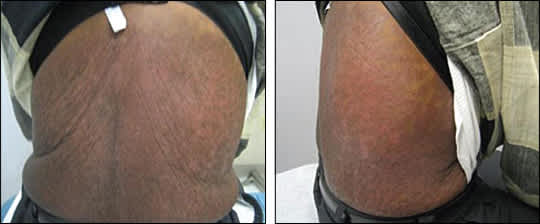
Diffuse reticular erythematous, macular, non-blanching discoloration of the back, suggestive of erythema ab igne.
Patients who are diabetic are at increased risk of developing chronic thermal injuries because of peripheral neuropathy and poor circulation that results in higher skin temperatures and greater risk of burning. Physicians should be aware of this problem and educate patients with diabetes about the risks associated with the use of contact thermal devices (e.g., heating pads, heating blankets, hot packs).3