
CKD identification, diagnosis and management

Learn about the identification, diagnosis and management of chronic kidney disease (CKD) through this illustrated handout. Review the impact of CKD in the U.S., along with leading risk factors and how kidney function and damage are assessed.
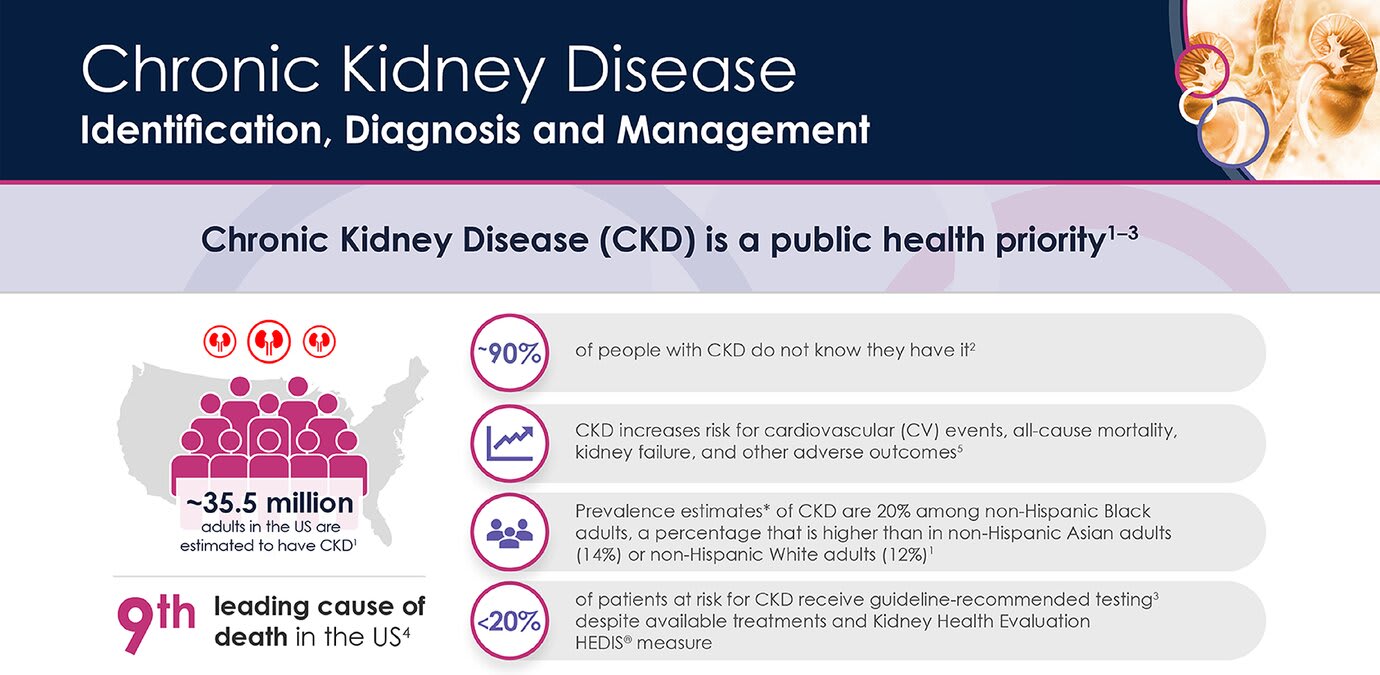
The leading risk factors associated with CKD, including diabetes, hypertension and more

How kidney function and damage are assessed using estimated glomerular filtration rate (eGFR) and albuminuria:
- Blood tests for eGFR measure how well the kidneys are filtering waste from blood and indicate the remaining kidney function.
- Urine albumin-to-creatinine ratio (UACR) urine tests measure the leakage of albumin (protein) into the urine—one of the earliest indicators of kidney damage.
Guidance for screening for CKD, which should be implemented at least once per year in all adults with type 2 diabetes and should also be a high priority for adults with hypertension and cardiovascular (CV) disease

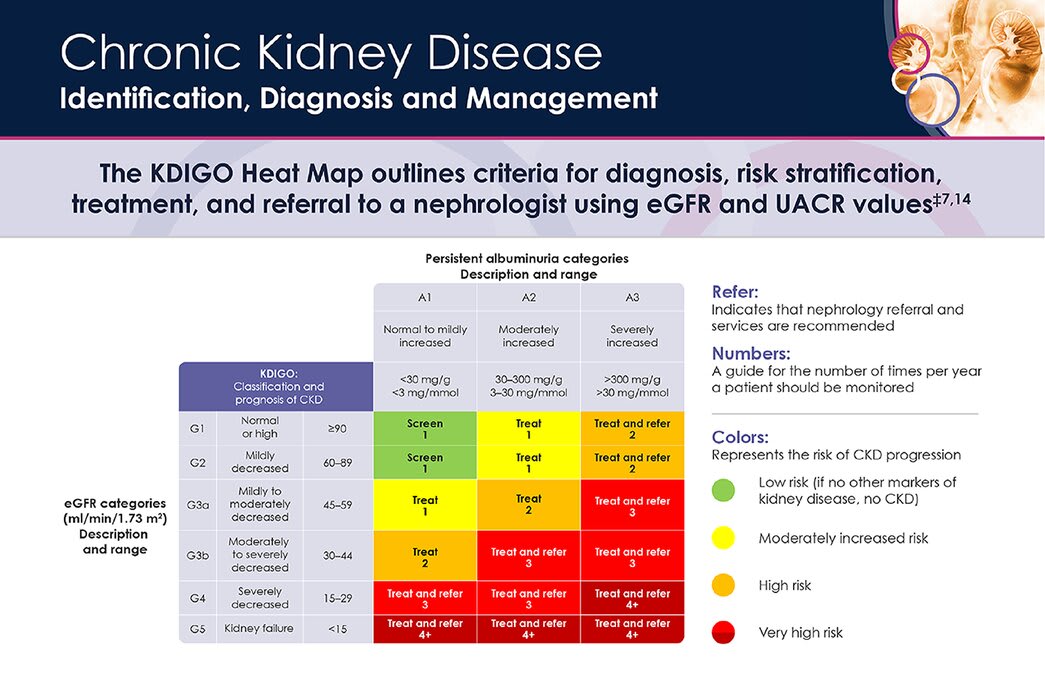
The Kidney Disease: Improving Global Outcomes (KDIGO) criteria for diagnosis, risk stratification, treatment and referral to a nephrologist using eGFR and UACR values, visualized through a color-coded heat map
Disclaimer:
The posting of information and content on this page should not be considered an AAFP endorsement or recommendation of the partner or sponsor organization’s products, services, policies or procedures. The information and opinions expressed are those of partners and paid sponsors and do not necessarily reflect the views of the AAFP. The AAFP is not responsible for the content of third-party websites linked from this page. Any links on this page to third-party websites where goods and services are advertised are not endorsements or recommendations by the AAFP of the third-party sites, goods or services.