Available to AAFP members only.

Value-based Care: Caring for Patients
Online CME
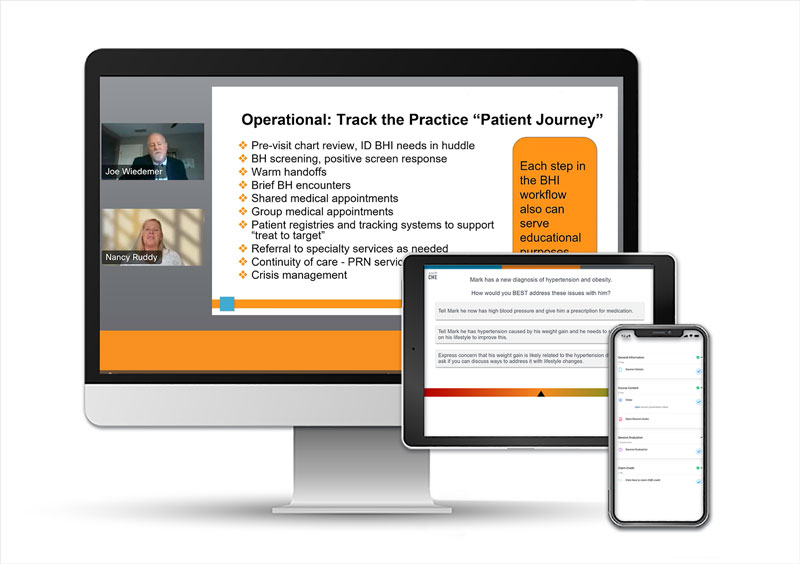
Free practice management CME for AAFP members. Watch for newly added sessions as they become available.
Learn how to deliver high-quality, cost-effective care while maintaining a patient-centered approach—and get paid appropriately for it, too.
Value-based care models are designed to give you room to flex your coordination and continuity skills to achieve highly effective patient care. When you know how to fully integrate the principles of value-based care into practice, you optimize care quality and simultaneously keep costs low.
Enhance patient care, streamline processes, and improve overall practice efficiency as you successfully transition into a value-based care practice model.
“This really is better care. Data showed one patient had been to the ER more than 40 times the year before, always on a weekend. My care manager started calling him every Friday morning to ask, ‘Do you need to be seen? Do you need any refills?’ The following year he went to the ER maybe twice.”
– Employed physician | Group practice
Available to AAFP members only.
Value-based Care: Caring for Patients
Online CME
Free practice management CME for AAFP members. Watch for newly added sessions as they become available.
Learn how to deliver high-quality, cost-effective care while maintaining a patient-centered approach—and get paid appropriately for it, too.
Value-based care models are designed to give you room to flex your coordination and continuity skills to achieve highly effective patient care. When you know how to fully integrate the principles of value-based care into practice, you optimize care quality and simultaneously keep costs low.
Enhance patient care, streamline processes, and improve overall practice efficiency as you successfully transition into a value-based care practice model.
“This really is better care. Data showed one patient had been to the ER more than 40 times the year before, always on a weekend. My care manager started calling him every Friday morning to ask, ‘Do you need to be seen? Do you need any refills?’ The following year he went to the ER maybe twice.”
– Employed physician | Group practice
Advance Care Planning and the Role of Family Medicine
David B Brecher, MD, FAAFP, FAAHPM
1 CME credit
Upon completion of this session, you should be able to:
- Recognize the value of discussing Advance Care Planning and its benefit to patients and their family.
- Utilize Advance Care documents to best honor patients' Goals of Care.
- Create conversation starters and helpful dialogue to initiate Goals of Care conversations.
Building and Leading the Integrated Care Team
Andrew Valeras DO, MPH, FAAFP; Mark Williams, MD; Parinda Khatri, PhD
1 CME credit
Upon completion of this session, you should be able to:
- Using evidence-based research, examine effective strategies for building and leading integrated care teams.
- Review the stages of team development and how to form, hire, and grow a care team at each stage.
- Gain tools and strategies for continually and effectively evaluating the team's success and impact on patient outcomes.
Collaborative Model Case Studies
Mark Williams, MD; Sarah Coles, MD, FAAFP; Robin Schreur, BS, RN, CCM
1 CME credit
Upon completion of this session, you should be able to:
- List the key elements of the CoCM model, outcomes to expect, and strengths/limitations.
- Explore how a patient flows through a clinic with CoCM to learn the mechanics.
- Discuss examples on common challenges to implementing this in your clinic and ways to work around those challenges.
Continuity: Understanding panels and how to manage them
Stacey Bartell, MD
.5 CME credit
Upon completion of this session, you should be able to:
- Explain the importance of continuity for the patient and care team experience.
- Define continuity from the patient perspective and the clinical team perspective.
- Describe best practices to improve continuity of care, including engaging clinic staff to support continuity of care.
This session is supported by a generous grant from Ardmore Institute of Health.
Don’t Go It Alone – Success Requires Community-Based Solutions
Andrew Valeras DO, MPH, FAAFP; Mark Williams, MD; Santina Wheat, MD, MPH, FAAFP PhD
1 CME credit
Upon completion of this session, you should be able to:
- Examine the important role of community factors in behavioral health integration, such as social determinants of health and regional variances.
- Examine the role of community-based solutions in starting and sustaining a successful BHI program.
- Describe several options for your site on identifying and acting on social determinants impacting the mental health and physical health of your patient populations.
Empanelment: Connecting patients and care teams in a robust and meaningful way through empanelment workflows and communication
Stacey Bartell, MD
.5 CME credit
Upon completion of this session, you should be able to:
- Explain in plain language why empanelment is foundational to practice improvement.
- Describe how to start the process of empanelment
- Explain how to calculate ideal panel size and weighting and balancing panels
- Describe how to address “shadow panels”
This session is supported by a generous grant from Ardmore Institute of Health.
Improving Access
Stacey Bartell, MD
.5 CME credit
Upon completion of this session, you should be able to:
- Define the role of LSM in team-based care.
- Employ active listening and effective communication skills to engage with different care team members.
- Describe approaches to enhance team communication such as effective meetings, huddles, team-building exercises, co-location.
This session is supported by a generous grant from Ardmore Institute of Health.
Improving adherence to prescribed medications
Stacey Bartell, MD
.5 CME credit
Developed in collaboration with UCSF Center for Excellence in Primary Care (CEPC) and AAFP.
Upon completion of this session, you should be able to:
- Explain common reasons patients do not take their medications
- Describe strategies for addressing patients’ concerns
- Apply medication reconciliation with patients
It Starts With "Why” – Understanding and Engaging your Patients
Elizabeth Polk, MD, FAAFP, dipABLM, RYT-500
1 CME credit
Upon completion of this session, you should be able to:
- Recognize the importance of identifying a purpose as a key driver of success in behavior change and talk to your patients about their "why".
- Evaluate your patient's readiness to change and formulate meaningful goals with them.
- Apply practical tips for behavior change to your patients, your team, and yourself to improve health and well-being.
Making the Case for Change
Andrew Valeras DO, MPH, FAAFP; Mark Williams, MD; Jennifer Thomas, MD
1 CME credit
Upon completion of this session, you should be able to:
- Create a process for developing initial proposal case for IBH.
- Identifying model and IBH resources needed for developing a case for integrating behavioral health support into practice.
- Identify key stakeholders involved in making process and practice level change.
- Apply process for effective change management.
Optimizing Care Coordination Services to Transition to Value-Based Payment
Jennifer McKenny, MD, FAAFP
.75 CME credits
Upon completion of this session, you should be able to:
- Examine strategies for optimizing care coordination billing.
- Discuss best practices for implementing and transitioning to Value-Based Payment.
- Categorize most up-to-date care-coordination services.
Pills to Prevention: Transforming Chronic Condition Care
Karyn Springer, MD
.5 CME credits
Upon completion of this session, you should be able to:
- Understand the current evidence around lifestyle and disease.
- Recognize the difference between life and health expectancy.
- Review current guidelines for key pillars of lifestyle medicine.
- Learn how to do brief interventions with patients to promote healthy behaviors.
This session is supported by a generous grant from Ardmore Institute of Health.
Primary Care Behavioral Health Model Case Studies
Andrew Valeras DO, MPH, FAAFP; Jeff Reiter, PhD
1 CME credits
Upon completion of this session, you should be able to:
- List the key elements of the PCBH model, outcomes to expect, and strengths/limitations.
- Explore how a patient flows through a clinic with PCBH to learn the mechanics.
- Discuss examples on common challenges to implementing this in your clinic and ways to work around those challenges.
Proactive care – how is it different for teams and patients
Timothy L. Switaj, MD, MBA, MHA, CPE, FACHE, FAAFP
.5 CME credits
Upon completion of this session, you should be able to:
- Explain how a proactive approach to care management improves patient health and reduces healthcare costs.
- Integrate proactive care strategies within healthcare teams to enhance collaboration and patient outcomes.
- Demonstrate the impact of proactive care on improving health outcomes and reducing overall healthcare cost (through case studies or evidence-based examples- if you choose).
- This session is supported by a generous grant from Ardmore Institute of Health.
Residency – Program Directors and Residents
Joseph Wiedemer, MD, FAAFP; Nancy Ruddy, PhD
.75 CME credits
Upon completion of this session, you should be able to:
- Participants will be able to identify three educational and accreditation factors that support BHI implementation in residency.
- Participants will be able to identify two ways that BHI implementation processes must be adapted to the residency educational environment.
- Participants will be able to identify practice assessment processes to facilitate BHI operational design that aligns with residency and practice needs.
- Participants will be able to identify two actionable strategies to establish, grow, and/or maintain BHI in their home program.
The "In-Between Spaces" – Management of the Patient Outside of a Visit
Amy Scanlan, MD
.25 CME credits
Upon completion of this session, you should be able to:
- Examine the importance of managing patient care outside of the clinic.
- Describe the roles and responsibilities of care managers as part of the care team.
- Identify why risk stratifying patients is important.
- Apply risk stratification strategies to your patient population that allow resources to be targeted - "right patient, right care, right time."
The State of the US Integrated Behavioral Health Landscape
Andrew Valeras DO, MPH, FAAFP; Mark Williams, MD; Jessica Kenny, PhD; Neftali Serrano, PsyD
1 CME credit
Upon completion of this session, you should be able to:
- Examine the current US landscape in behavioral health integration and the current challenges in addressing behavioral health needs of patients.
- Identify the need and promise of behavioral health integration into primary care.
- Connect their primary care practice to other examples of successful BHI models and explore possible paths to success in integration.
Towards Health Equity: Health-Quality, Whole-Person Care for the Medically Vulnerable
Brent K Sugimoto, MD, MPH, FAAFP
.5 CME credit
Upon completion of this session, you should be able to:
- Examine the potential benefits of lifestyle interventions on patient outcomes and cost savings, considering the lens of prevention, whole person health, and lifestyle medicine.
- Identify community resources to support disease prevention and address the social determinants of health for vulnerable patients.
- Develop strategies to implement individualized care plans, in a culturally appropriate manner, that address the unique needs and barriers of vulnerable patients, incorporating lifestyle medicine principles where appropriate and leveraging community resources.
This session is supported by a generous grant from Ardmore Institute of Health.
We Call Them Patients, You Call Them Members: Working together to improve the health of individuals
Vinita Magoon, DO, JD, MPH, MBA
Upon completion of this session, you should be able to:
- Appreciate the different organizational needs of health systems and payors and the populations they serve.
- Identify what factors drive population health improvement.
- Recognize how payors and health systems can collaborate to improve the health of the population, and review payer-supported health improvement strategies.
- Identify opportunities to support patients in understanding and effectively utilizing the benefits and resources provided by payers to their members.
- Navigate example case scenarios to make decisions at the point of care.
- High-speed broadband connection required for online access.
- Latest version of Firefox, Safari, or Chrome on Windows or Macintosh computers or tablets.
- Latest version of Adobe Reader.
The AAFP has reviewed Value-Based Care - Caring for Patients and deemed it acceptable for up to 8.25 enduring AAFP Prescribed credits. Term of Approval is from 8/15/2024 to 8/15/2027. Physicians should claim only the credit commensurate with the extent of their participation in the activity.
The AAFP is accredited by the Accreditation Council for Continuing Medical Education (ACCME) to provide continuing medical education for physicians.
The American Academy of Family Physicians designates this enduring activity for a maximum of 8.25 AMA PRA Category 1 Credits™. Physicians should claim only the credit commensurate with the extent of their participation in the activity.
CME activities approved for AAFP credit are recognized by the AOA as equivalent to AOA Category 2 credit.