Available to AAFP members only.

Value-based Care:
The Role of Teams
Online CME
Free practice management CME for AAFP members. Watch for newly added sessions as they become available.
Apply proven strategies to implement advanced team-based care and help each person on the team function at the top of their skill set.
This course will help you work with system leadership and administration to identify and solve for potential challenges, such as:
- Organizational resistance
- Reimbursement models
- Workflow adjustments
“A team-based care approach allows all of us within the practice to work at our comfort level, our license level and our training level. It provides the flexibility to match responsibilities with staff skill sets."
– Independent physician | Rural practice
Free practice management CME for AAFP members. Watch for newly added sessions as they become available.
Apply proven strategies to implement advanced team-based care and help each person on the team function at the top of their skill set.
This course will help you work with system leadership and administration to identify and solve for potential challenges, such as:
- Organizational resistance
- Reimbursement models
- Workflow adjustments
“A team-based care approach allows all of us within the practice to work at our comfort level, our license level and our training level. It provides the flexibility to match responsibilities with staff skill sets."
– Independent physician | Rural practice
Caring for patients with complex needs
Stacey Bartell, MD
Developed in collaboration with UCSF Center for Excellence in Primary Care (CEPC) and AAFP.
Upon completion of this session, you should be able to:
- Define Complex Care Management (CCM)
- Describe how the population served by a CCM program will influence its core components and staffing
- Identify metrics used to evaluate the success of a CCM program
- Describe team-based approaches to support patients with complex medical or psychosocial needs
UCSF Center for Excellence in Primary Care (CEPC) and AAFP.
Upon completion of this session, you should be able to:
- Define patient & community engagement in healthcare
- Describe practical approaches to engage patients as partners in practice improvement
- Explain how to translate patient feedback into sustainable improvements in care
Foundations of team-based care
Stacey Bartell, MD
0.25 Credits
Upon completion of this session, you should be able to:
- Define team-based care and its core components (e.g., roles, responsibilities, communication, collaboration).
- Analyze the potential benefits and challenges of implementing team-based care.
- Identify opportunities within your practice to incorporate team-based care principles.
From Tension to Teamwork: Building Bridges between Family Physicians and Health System Leadership for Enhanced Patient Care
Melissa Gerdes, MD, MBA, FAAFP, ABFM, CHCQM
0.75 Credits
Upon completion of this session, you should be able to:
- Develop, initiate, and maintain open communications with health system leadership
- Develop strategies to focus and magnify communications with health system leadership on the needs and perspectives of patients and family physicians
- Identify, understand, and appreciate the responsibilities, perspectives, and challenges of health system leadership as they pertain to primary care practices
- Examine ways to leverage health system resources and support structures to improve the physician and patient care delivery experience
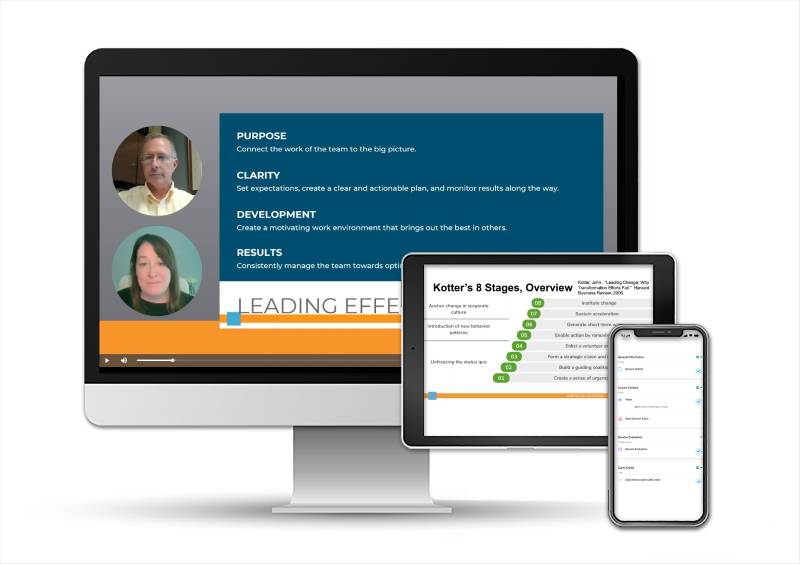
Leading Effective Teams
Jason Marker, MD, MPA, FAAFP and Erin Fajen, Med
0.75 Credits
Upon completion of this session, you should be able to:
- Review how different challenges in the workplace impact leading teams effectively.
- Explore four key strategies and common tactics for leading effective teams.
- Apply information about leading effective teams to their own workplace.
Partnering with Members of your Team
Stacey Bartell, MD
0.25 Credits
Upon completion of this session, you should be able to:
- Define the role of LSM in team-based care.
- Employ active listening and effective communication skills to engage with different care team members.
- Describe approaches to enhance team communication such as effective meetings, huddles, team-building exercises, co-location.
Transformational Leadership
Timothy L. Switaj, MD, MBA, MHA, CPE, FACHE, FAAFP
0.50 Credits
Upon completion of this session, you should be able to:
- Effectively set and communicate your vision for ongoing change.
- Develop leadership skills to advocate for and lead process changes that support advanced team-based care.
- Evaluate challenges to adopting change management principles, including organizational resistance and workflow adjustments, and strategize solutions to overcome these barriers.
Who’s on Your Team? Understanding Job Roles and Expanding Your Impact
Stacey Bartell, MD
0.50 CME credits
Upon completion of this session, you should be able to:
- Explore how team roles may be redesigned to meet the needs of patient populations.
- Discuss how to support staff taking on new roles.
- Appraise evidence and case examples of effective collaboration and roles on the care team to improve patient management and outcomes.
- High-speed broadband connection required for online access.
- Latest version of Firefox, Safari, or Chrome on Windows or Macintosh computers or tablets.
- Latest version of Adobe Reader.
The AAFP has reviewed Value-Based Care - The Role of Teams and deemed it acceptable for up to 4.75 enduring AAFP Prescribed credits. Term of Approval is from 10/15/2024 to 8/15/2027. Physicians should claim only the credit commensurate with the extent of their participation in the activity.
The AAFP is accredited by the Accreditation Council for Continuing Medical Education (ACCME) to provide continuing medical education for physicians.
The American Academy of Family Physicians designates this enduring activity for a maximum of 4.75 AMA PRA Category 1 Credits™. Physicians should claim only the credit commensurate with the extent of their participation in the activity.
CME activities approved for AAFP credit are recognized by the AOA as equivalent to AOA Category 2 credit.