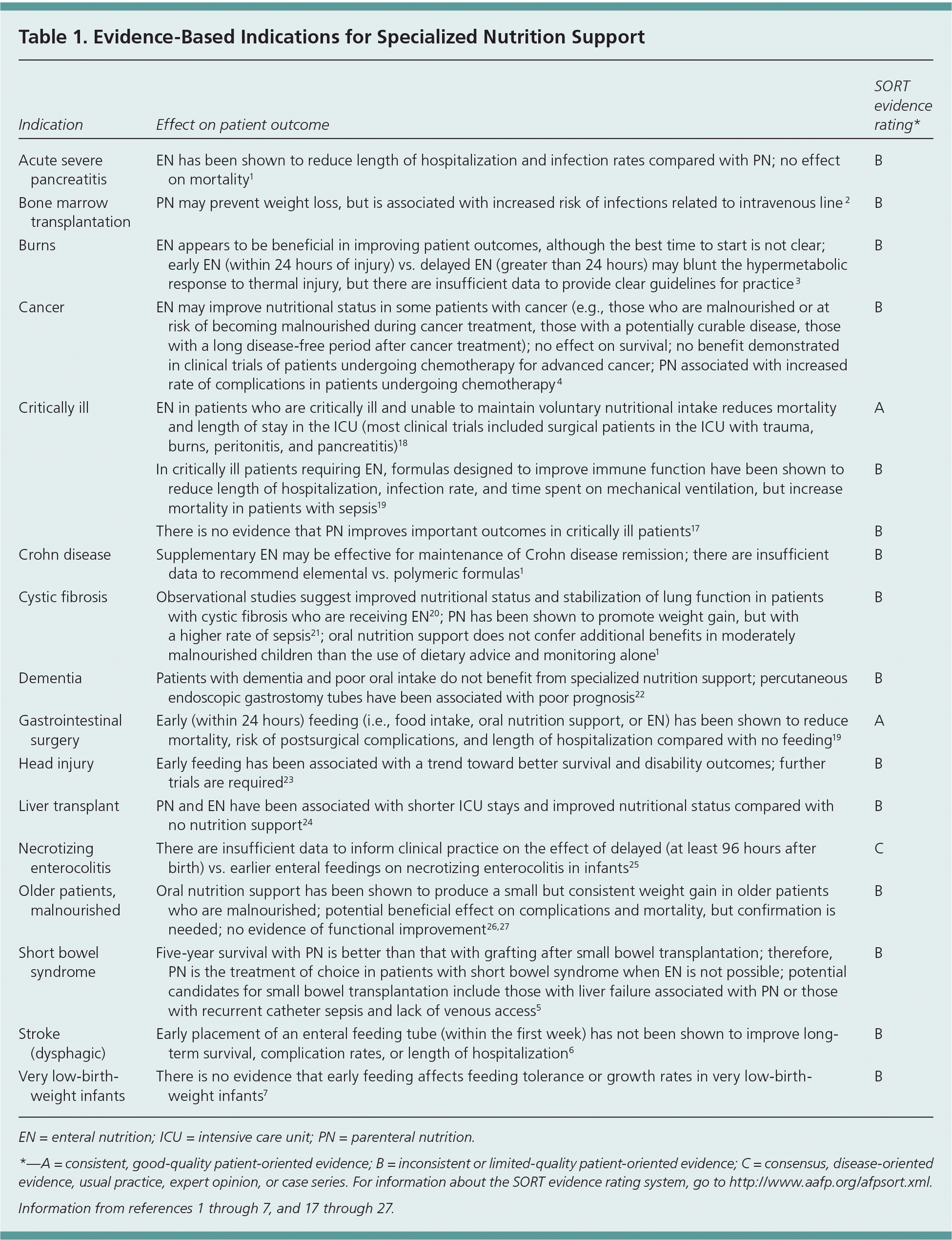
| Acute severe pancreatitis | EN has been shown to reduce length of hospitalization and infection rates compared with PN; no effect on mortality1 | B |
| Bone marrow transplantation | PN may prevent weight loss, but is associated with increased risk of infections related to intravenous line2 | B |
| Burns | EN appears to be beneficial in improving patient outcomes, although the best time to start is not clear; early EN (within 24 hours of injury) vs. delayed EN (greater than 24 hours) may blunt the hypermetabolic response to thermal injury, but there are insufficient data to provide clear guidelines for practice3 | B |
| Cancer | EN may improve nutritional status in some patients with cancer (e.g., those who are malnourished or at risk of becoming malnourished during cancer treatment, those with a potentially curable disease, those with a long disease-free period after cancer treatment); no effect on survival; no benefit demonstrated in clinical trials of patients undergoing chemotherapy for advanced cancer; PN associated with increased rate of complications in patients undergoing chemotherapy4 | B |
| Critically ill | EN in patients who are critically ill and unable to maintain voluntary nutritional intake reduces mortality and length of stay in the ICU (most clinical trials included surgical patients in the ICU with trauma, burns, peritonitis, and pancreatitis)18 | A |
| In critically ill patients requiring EN, formulas designed to improve immune function have been shown to reduce length of hospitalization, infection rate, and time spent on mechanical ventilation, but increase mortality in patients with sepsis19 | B |
| There is no evidence that PN improves important outcomes in critically ill patients17 | B |
| Crohn disease | Supplementary EN may be effective for maintenance of Crohn disease remission; there are insufficient data to recommend elemental vs. polymeric formulas1 | B |
| Cystic fibrosis | Observational studies suggest improved nutritional status and stabilization of lung function in patients with cystic fibrosis who are receiving EN20; PN has been shown to promote weight gain, but with a higher rate of sepsis21; oral nutrition support does not confer additional benefits in moderately malnourished children than the use of dietary advice and monitoring alone1 | B |
| Dementia | Patients with dementia and poor oral intake do not benefit from specialized nutrition support; percutaneous endoscopic gastrostomy tubes have been associated with poor prognosis22 | B |
| Gastrointestinal surgery | Early (within 24 hours) feeding (i.e., food intake, oral nutrition support, or EN) has been shown to reduce mortality, risk of postsurgical complications, and length of hospitalization compared with no feeding19 | A |
| Head injury | Early feeding has been associated with a trend toward better survival and disability outcomes; further trials are required23 | B |
| Liver transplant | PN and EN have been associated with shorter ICU stays and improved nutritional status compared with no nutrition support24 | B |
| Necrotizing enterocolitis | There are insufficient data to inform clinical practice on the effect of delayed (at least 96 hours after birth) vs. earlier enteral feedings on necrotizing enterocolitis in infants25 | C |
| Older patients, malnourished | Oral nutrition support has been shown to produce a small but consistent weight gain in older patients who are malnourished; potential beneficial effect on complications and mortality, but confirmation is needed; no evidence of functional improvement26,27 | B |
| Short bowel syndrome | Five-year survival with PN is better than that with grafting after small bowel transplantation; therefore, PN is the treatment of choice in patients with short bowel syndrome when EN is not possible; potential candidates for small bowel transplantation include those with liver failure associated with PN or those with recurrent catheter sepsis and lack of venous access5 | B |
| Stroke (dysphagic) | Early placement of an enteral feeding tube (within the first week) has not been shown to improve long-term survival, complication rates, or length of hospitalization6 | B |
| Very low-birth-weight infants | There is no evidence that early feeding affects feeding tolerance or growth rates in very low-birth-weight infants7 | B |