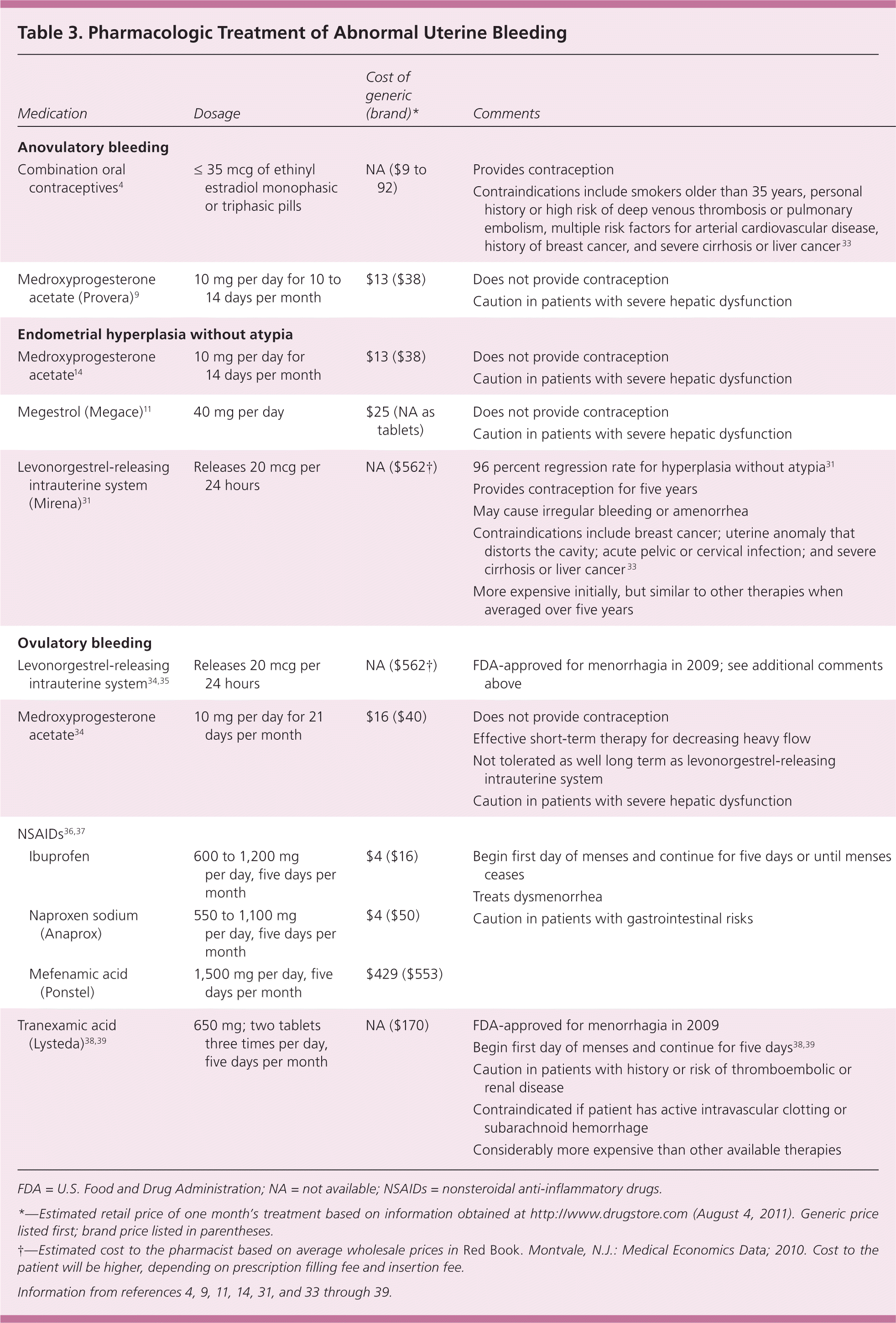
| Anovulatory bleeding |
| Combination oral contraceptives4 | ≤ 35 mcg of ethinyl estradiol monophasic or triphasic pills | NA ($9 to 92) | Provides contraception |
| Contraindications include smokers older than 35 years, personal history or high risk of deep venous thrombosis or pulmonary embolism, multiple risk factors for arterial cardiovascular disease, history of breast cancer, and severe cirrhosis or liver cancer33 |
| Medroxyprogesterone acetate (Provera)9 | 10 mg per day for 10 to 14 days per month | $13 ($38) | Does not provide contraception |
| Caution in patients with severe hepatic dysfunction |
| Endometrial hyperplasia without atypia |
| Medroxyprogesterone acetate14 | 10 mg per day for 14 days per month | $13 ($38) | Does not provide contraception |
| Caution in patients with severe hepatic dysfunction |
| Megestrol (Megace)11 | 40 mg per day | $25 (NA as tablets) | Does not provide contraception |
| Caution in patients with severe hepatic dysfunction |
| Levonorgestrel-releasing intrauterine system (Mirena)31 | Releases 20 mcg per 24 hours | NA ($562†) | 96 percent regression rate for hyperplasia without atypia31 |
| Provides contraception for five years |
| May cause irregular bleeding or amenorrhea |
| Contraindications include breast cancer; uterine anomaly that distorts the cavity; acute pelvic or cervical infection; and severe cirrhosis or liver cancer33 |
| More expensive initially, but similar to other therapies when averaged over five years |
| Ovulatory bleeding |
| Levonorgestrel-releasing intrauterine system34,35 | Releases 20 mcg per 24 hours | NA ($562†) | FDA-approved for menorrhagia in 2009; see additional comments above |
| Medroxyprogesterone acetate34 | 10 mg per day for 21 days per month | $16 ($40) | Does not provide contraception |
| Effective short-term therapy for decreasing heavy flow |
| Not tolerated as well long term as levonorgestrel-releasing intrauterine system |
| Caution in patients with severe hepatic dysfunction |
| NSAIDs36,37 |
| Ibuprofen | 600 to 1,200 mg per day, five days per month | $4 ($16) | Begin first day of menses and continue for five days or until menses ceases |
| Treats dysmenorrhea |
| Caution in patients with gastrointestinal risks |
| Naproxen sodium (Anaprox) | 550 to 1,100 mg per day, five days per month | $4 ($50) | Begin first day of menses and continue for five days or until menses ceases |
| Treats dysmenorrhea |
| Caution in patients with gastrointestinal risks |
| Mefenamic acid (Ponstel) | 1,500 mg per day, five days per month | $429 ($553) | Begin first day of menses and continue for five days or until menses ceases |
| Treats dysmenorrhea |
| Caution in patients with gastrointestinal risks |
| Tranexamic acid (Lysteda)38,39 | 650 mg; two tablets three times per day, five days per month | NA ($170) | FDA-approved for menorrhagia in 2009 |
| Begin first day of menses and continue for five days38,39 |
| Caution in patients with history or risk of thromboembolic or renal disease |
| Contraindicated if patient has active intravascular clotting or subarachnoid hemorrhage |
| Considerably more expensive than other available therapies |