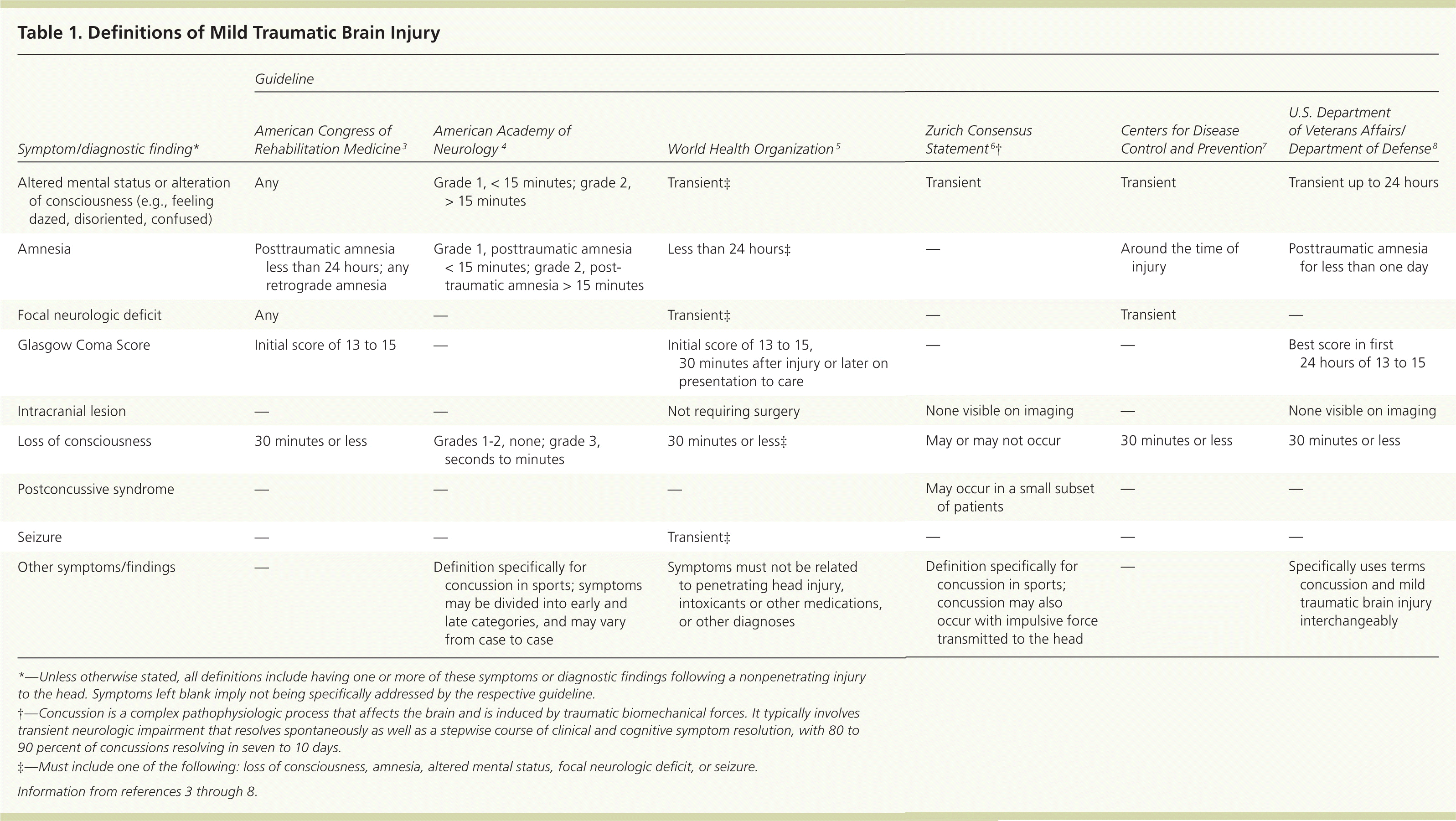
| Altered mental status or alteration of consciousness (e.g., feeling dazed, disoriented, confused) | Any | Grade 1, < 15 minutes; grade 2, > 15 minutes | Transient‡ | Transient | Transient | Transient up to 24 hours |
| Amnesia | Posttraumatic amnesia less than 24 hours; any retrograde amnesia | Grade 1, posttraumatic amnesia < 15 minutes; grade 2, post-traumatic amnesia > 15 minutes | Less than 24 hours‡ | — | Around the time of injury | Posttraumatic amnesia for less than one day |
| Focal neurologic deficit | Any | — | Transient‡ | — | Transient | — |
| Glasgow Coma Score | Initial score of 13 to 15 | — | Initial score of 13 to 15, 30 minutes after injury or later on presentation to care | — | — | Best score in first24 hours of 13 to 15 |
| Intracranial lesion | — | — | Not requiring surgery | None visible on imaging | — | None visible on imaging |
| Loss of consciousness | 30 minutes or less | Grades 1–2, none; grade 3, seconds to minutes | 30 minutes or less‡ | May or may not occur | 30 minutes or less | 30 minutes or less |
| Postconcussive syndrome | — | — | — | May occur in a small subset of patients | — | — |
| Seizure | — | — | Transient‡ | — | — | — |
| Other symptoms/findings | — | Definition specifically for concussion in sports; symptoms may be divided into early and late categories, and may vary from case to case | Symptoms must not be related to penetrating head injury, intoxicants or other medications, or other diagnoses | Definition specifically for concussion in sports; concussion may also occur with impulsive force transmitted to the head | — | Specifically uses terms concussion and mild traumatic brain injury interchangeably |