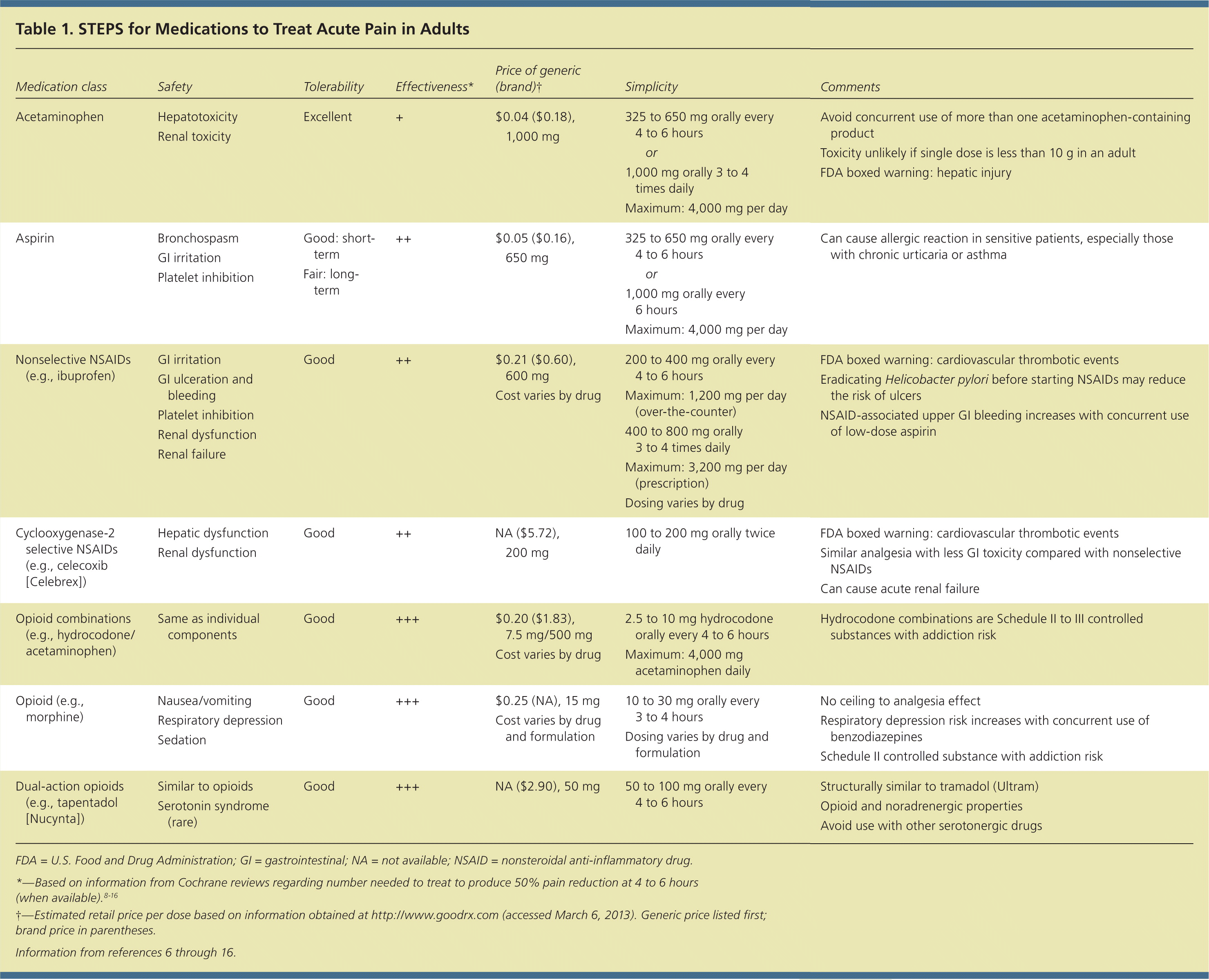
| Acetaminophen | Hepatotoxicity Renal toxicity
| | + | | 325 to 650 mg orally every 4 to 6 hours or 1,000 mg orally 3 to 4 times daily Maximum: 4,000 mg per day
| Avoid concurrent use of more than one acetaminophen-containing product Toxicity unlikely if single dose is less than 10 g in an adult FDA boxed warning: hepatic injury
|
| Aspirin | Bronchospasm GI irritation Platelet inhibition
| Good: short-term Fair: long-term
| ++ | | 325 to 650 mg orally every 4 to 6 hours or 1,000 mg orally every 6 hours Maximum: 4,000 mg per day
| |
| Nonselective NSAIDs (e.g., ibuprofen) | | | ++ | $0.21 ($0.60), 600 mg Cost varies by drug
| 200 to 400 mg orally every 4 to 6 hours Maximum: 1,200 mg per day (over-the-counter) 400 to 800 mg orally 3 to 4 times daily Maximum: 3,200 mg per day (prescription) Dosing varies by drug
| FDA boxed warning: cardiovascular thrombotic events Eradicating Helicobacter pylori before starting NSAIDs may reduce the risk of ulcers NSAID-associated upper GI bleeding increases with concurrent use of low-dose aspirin
|
| Cyclooxygenase-2 selective NSAIDs (e.g., celecoxib [Celebrex]) | Hepatic dysfunction Renal dysfunction
| | ++ | | | FDA boxed warning: cardiovascular thrombotic events Similar analgesia with less GI toxicity compared with nonselective NSAIDs Can cause acute renal failure
|
| Opioid combinations (e.g., hydrocodone/acetaminophen) | | | +++ | | | |
| Opioid (e.g., morphine) | Nausea/vomiting Respiratory depression Sedation
| | +++ | | | No ceiling to analgesia effect Respiratory depression risk increases with concurrent use of benzodiazepines Schedule II controlled substance with addiction risk
|
| Dual-action opioids (e.g., tapentadol [Nucynta]) | | | +++ | | | Structurally similar to tramadol (Ultram) Opioid and noradrenergic properties Avoid use with other serotonergic drugs
|