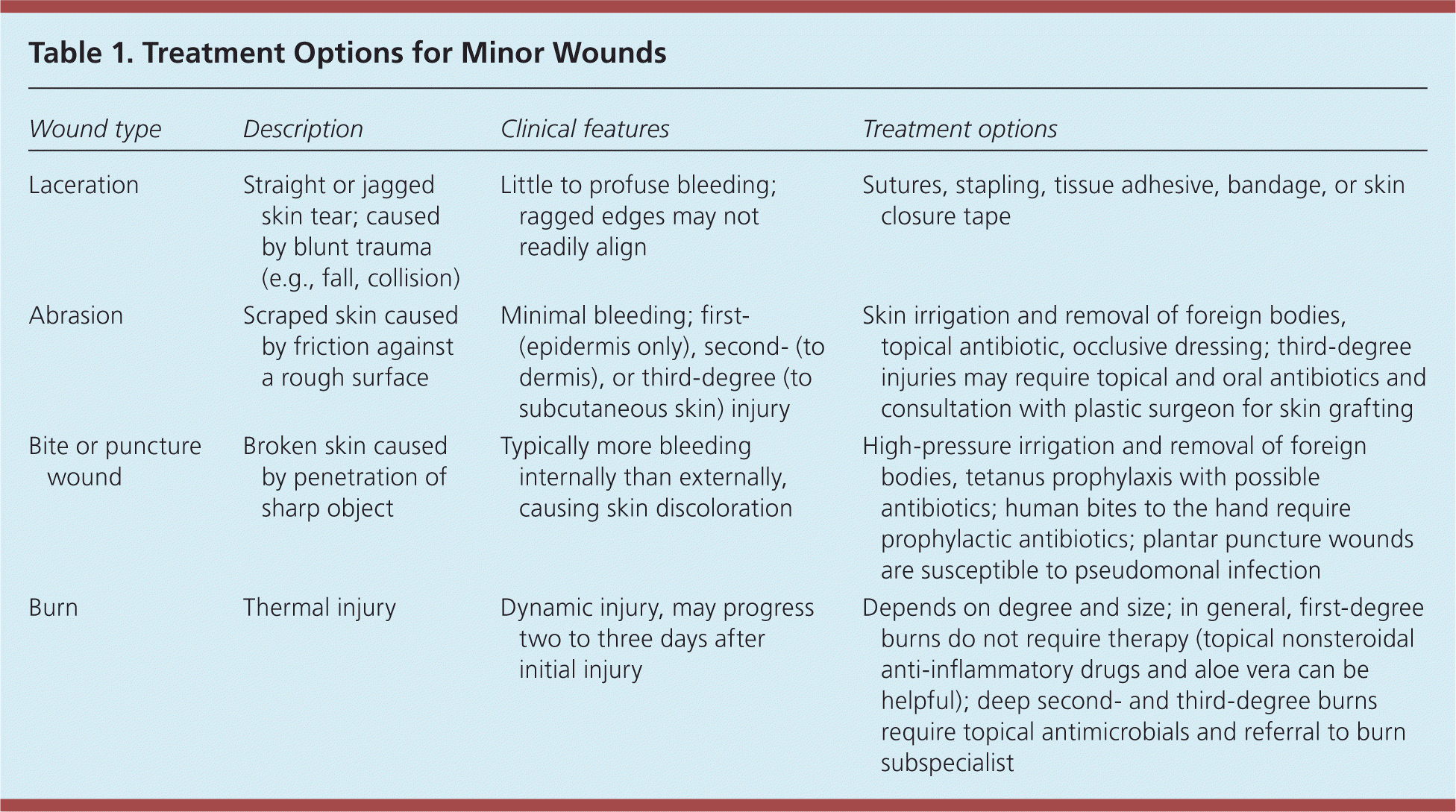
| Laceration | Straight or jagged skin tear; caused by blunt trauma (e.g., fall, collision) | Little to profuse bleeding; ragged edges may not readily align | Sutures, stapling, tissue adhesive, bandage, or skin closure tape |
| Abrasion | Scraped skin caused by friction against a rough surface | Minimal bleeding; first- (epidermis only), second- (to dermis), or third-degree (to subcutaneous skin) injury | Skin irrigation and removal of foreign bodies, topical antibiotic, occlusive dressing; third-degree injuries may require topical and oral antibiotics and consultation with plastic surgeon for skin grafting |
| Bite or puncture wound | Broken skin caused by penetration of sharp object | Typically more bleeding internally than externally, causing skin discoloration | High-pressure irrigation and removal of foreign bodies, tetanus prophylaxis with possible antibiotics; human bites to the hand require prophylactic antibiotics; plantar puncture wounds are susceptible to pseudomonal infection |
| Burn | Thermal injury | Dynamic injury, may progress two to three days after initial injury | Depends on degree and size; in general, first-degree burns do not require therapy (topical nonsteroidal anti-inflammatory drugs and aloe vera can be helpful); deep second- and third-degree burns require topical antimicrobials and referral to burn subspecialist |