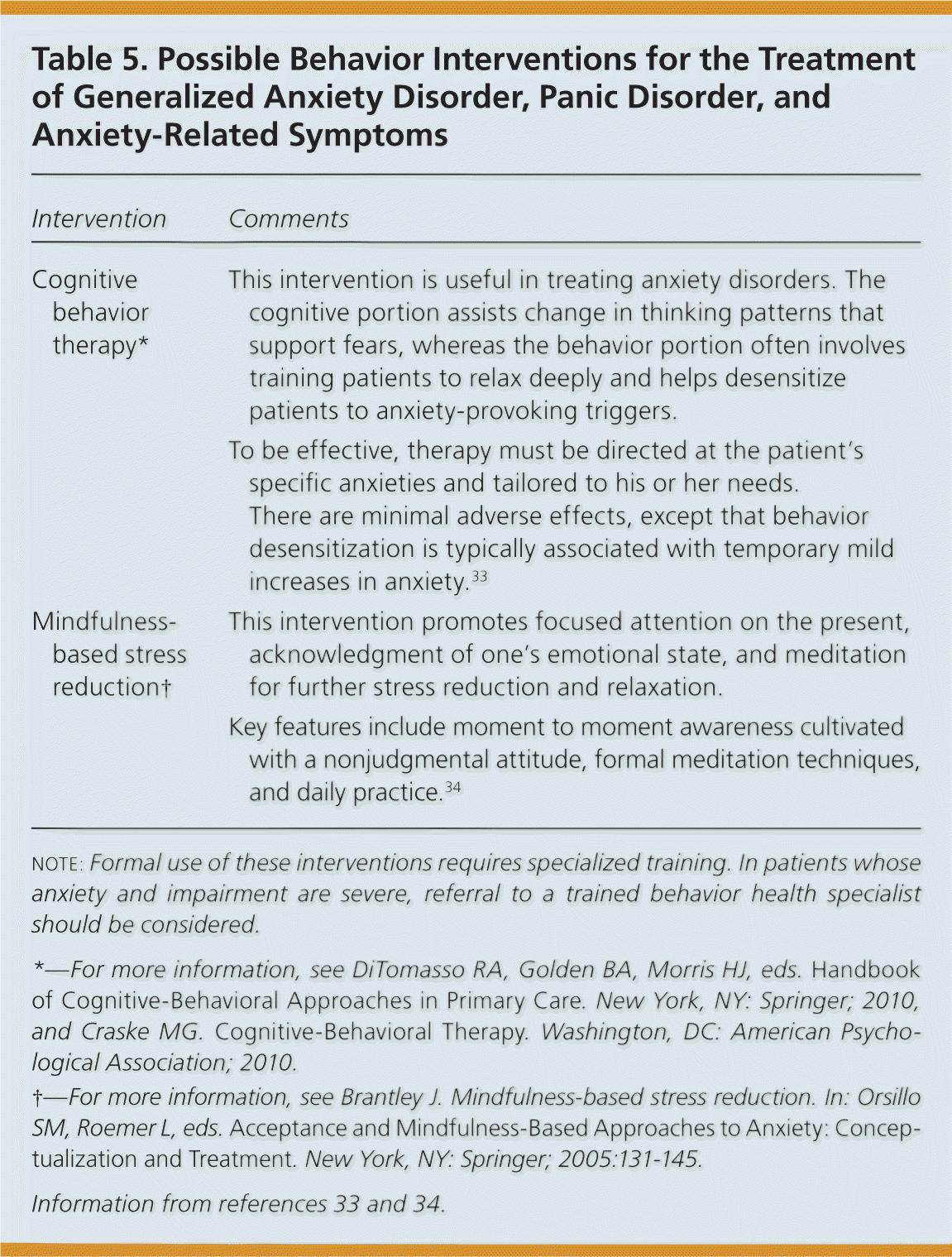
| Cognitive behavior therapy* | This intervention is useful in treating anxiety disorders. The cognitive portion assists change in thinking patterns that support fears, whereas the behavior portion often involves training patients to relax deeply and helps desensitize patients to anxiety-provoking triggers. |
| To be effective, therapy must be directed at the patient's specific anxieties and tailored to his or her needs. There are minimal adverse effects, except that behavior desensitization is typically associated with temporary mild increases in anxiety.33 |
| Mindfulness-based stress reduction† | This intervention promotes focused attention on the present, acknowledgment of one's emotional state, and meditation for further stress reduction and relaxation. |
| Key features include moment to moment awareness cultivated with a nonjudgmental attitude, formal meditation techniques, and daily practice.34 |