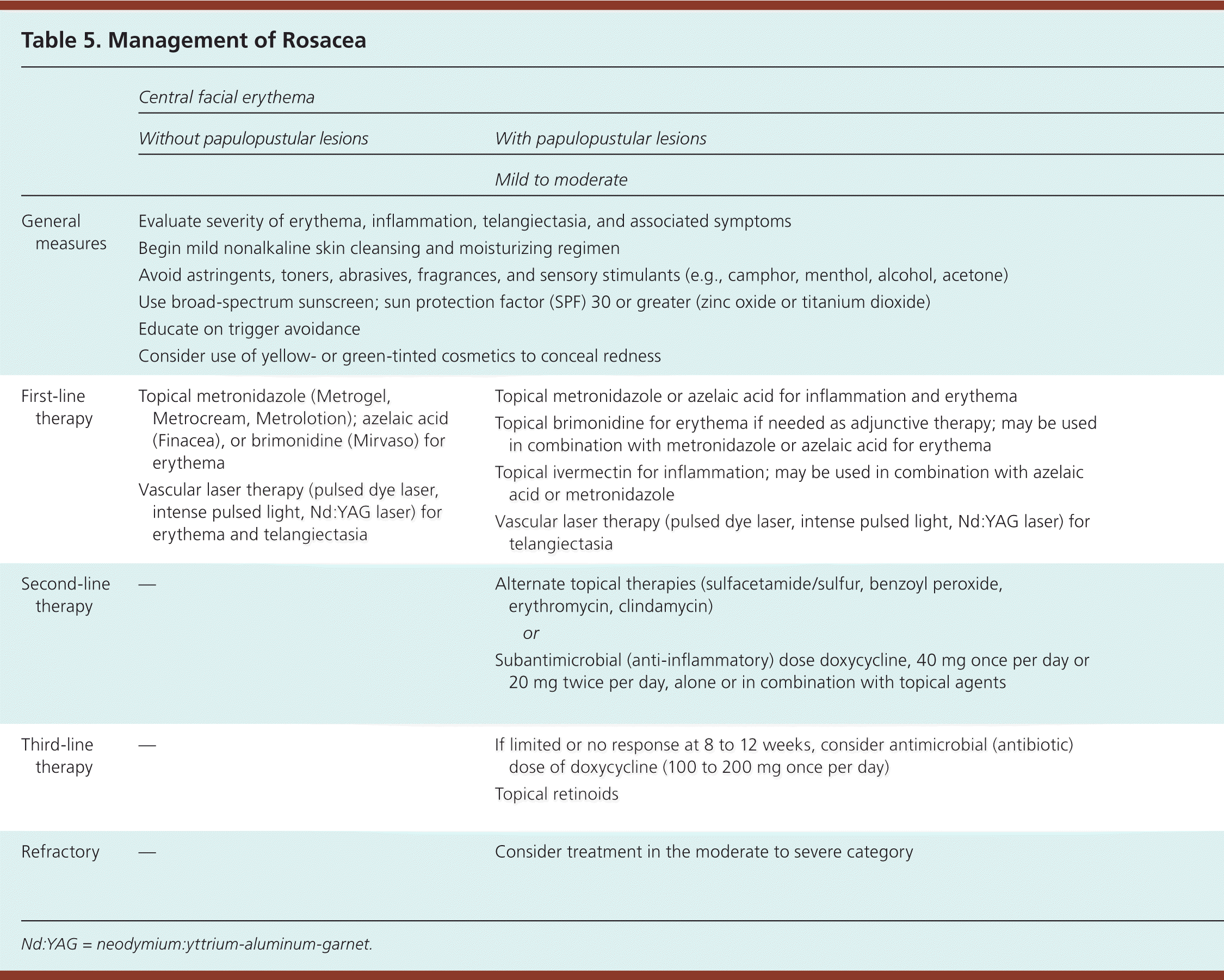
| Evaluate severity of erythema, inflammation, telangiectasia, and associated symptoms Begin mild nonalkaline skin cleansing and moisturizing regimen Avoid astringents, toners, abrasives, fragrances, and sensory stimulants (e.g., camphor, menthol, alcohol, acetone) Use broad-spectrum sunscreen; sun protection factor (SPF) 30 or greater (zinc oxide or titanium dioxide) Educate on trigger avoidance Consider use of yellow- or green-tinted cosmetics to conceal redness
| | | |
| Topical metronidazole (Metrogel, Metrocream, Metrolotion); azelaic acid (Finacea), or brimonidine (Mirvaso) for erythema Vascular laser therapy (pulsed dye laser, intense pulsed light, Nd:YAG laser) for erythema and telangiectasia
| Topical metronidazole or azelaic acid for inflammation and erythema Topical brimonidine for erythema if needed as adjunctive therapy; may be used in combination with metronidazole or azelaic acid for erythema Topical ivermectin for inflammation; may be used in combination with azelaic acid or metronidazole Vascular laser therapy (pulsed dye laser, intense pulsed light, Nd:YAG laser) for telangiectasia
| Topical metronidazole or azelaic acid for inflammation plus subantimicrobial (anti-inflammatory) dose of doxycycline (Oracea), 40 mg once per day or 20 mg twice per day Topical brimonidine for erythema if needed as adjunctive therapy Vascular laser therapy (pulsed dye laser, intense pulsed light, Nd:YAG laser) for telangiectasia
| | |
| | | | Vascular laser therapy (pulsed dye laser, intense pulsed light, Nd:YAG laser, and carbon dioxide laser) Dermabrasion, electroscalpel, electrosurgery, loop cautery
| Oral tetracyclines (preferred), or metronidazole or azithromycin (Zithromax) Cyclosporine ophthalmic emulsion (Restasis) Ophthalmologic referral
|
| | | | | |
| | | If limited or no response at reassessment, consider alternative oral antibiotic (tetracycline, minocycline [Minocin], metronidazole [Flagyl], azithromycin) and/or topical treatment (sulfacetamide/sulfur, benzoyl peroxide, erythromycin, clindamycin, permethrin [Elimite])
| | |
| | | | | |
| | | | | |