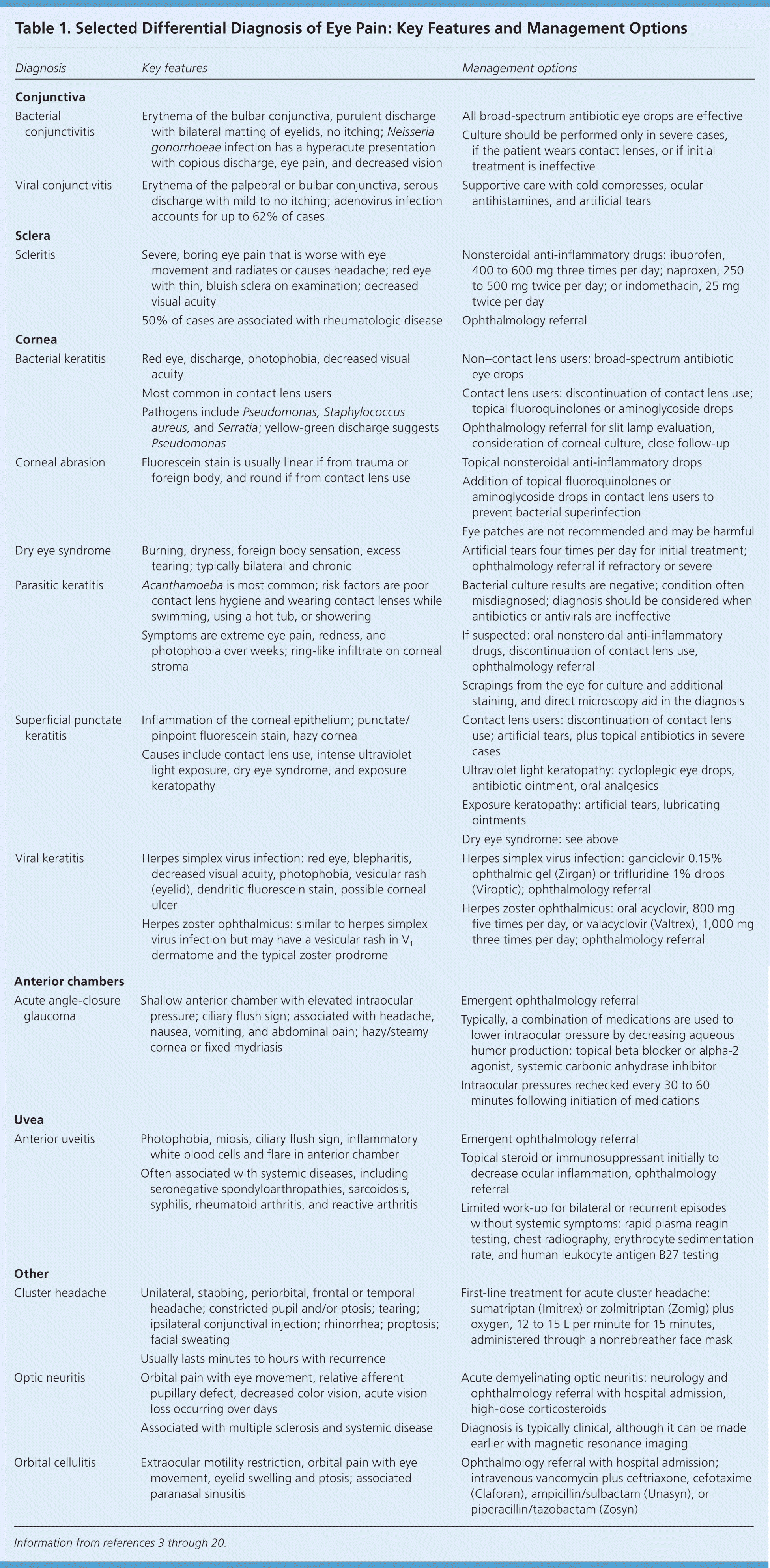
| Conjunctiva |
| Erythema of the bulbar conjunctiva, purulent discharge with bilateral matting of eyelids, no itching; Neisseria gonorrhoeae infection has a hyperacute presentation with copious discharge, eye pain, and decreased vision
| All broad-spectrum antibiotic eye drops are effective Culture should be performed only in severe cases, if the patient wears contact lenses, or if initial treatment is ineffective
|
| | |
| Sclera |
| Severe, boring eye pain that is worse with eye movement and radiates or causes headache; red eye with thin, bluish sclera on examination; decreased visual acuity 50% of cases are associated with rheumatologic disease
| Nonsteroidal anti-inflammatory drugs: ibuprofen, 400 to 600 mg three times per day; naproxen, 250 to 500 mg twice per day; or indomethacin, 25 mg twice per day Ophthalmology referral
|
| Cornea |
| Red eye, discharge, photophobia, decreased visual acuity Most common in contact lens users Pathogens include Pseudomonas, Staphylococcus aureus, and Serratia; yellow-green discharge suggests Pseudomonas
| Non–contact lens users: broad-spectrum antibiotic eye drops Contact lens users: discontinuation of contact lens use; topical fluoroquinolones or aminoglycoside drops Ophthalmology referral for slit lamp evaluation, consideration of corneal culture, close follow-up
|
| | Topical nonsteroidal anti-inflammatory drops Addition of topical fluoroquinolones or aminoglycoside drops in contact lens users to prevent bacterial superinfection Eye patches are not recommended and may be harmful
|
| | |
| Acanthamoeba is most common; risk factors are poor contact lens hygiene and wearing contact lenses while swimming, using a hot tub, or showering Symptoms are extreme eye pain, redness, and photophobia over weeks; ring-like infiltrate on corneal stroma
| Bacterial culture results are negative; condition often misdiagnosed; diagnosis should be considered when antibiotics or antivirals are ineffective If suspected: oral nonsteroidal anti-inflammatory drugs, discontinuation of contact lens use, ophthalmology referral Scrapings from the eye for culture and additional staining, and direct microscopy aid in the diagnosis
|
| Inflammation of the corneal epithelium; punctate/pinpoint fluorescein stain, hazy cornea Causes include contact lens use, intense ultraviolet light exposure, dry eye syndrome, and exposure keratopathy
| Contact lens users: discontinuation of contact lens use; artificial tears, plus topical antibiotics in severe cases Ultraviolet light keratopathy: cycloplegic eye drops, antibiotic ointment, oral analgesics Exposure keratopathy: artificial tears, lubricating ointments Dry eye syndrome: see above
|
| Herpes simplex virus infection: red eye, blepharitis, decreased visual acuity, photophobia, vesicular rash (eyelid), dendritic fluorescein stain, possible corneal ulcer Herpes zoster ophthalmicus: similar to herpes simplex virus infection but may have a vesicular rash in V1 dermatome and the typical zoster prodrome
| Herpes simplex virus infection: ganciclovir 0.15% ophthalmic gel (Zirgan) or trifluridine 1% drops (Viroptic); ophthalmology referral Herpes zoster ophthalmicus: oral acyclovir, 800 mg five times per day, or valacyclovir (Valtrex), 1,000 mg three times per day; ophthalmology referral
|
| Anterior chambers |
| Shallow anterior chamber with elevated intraocular pressure; ciliary flush sign; associated with headache, nausea, vomiting, and abdominal pain; hazy/steamy cornea or fixed mydriasis
| Emergent ophthalmology referral Typically, a combination of medications are used to lower intraocular pressure by decreasing aqueous humor production: topical beta blocker or alpha-2 agonist, systemic carbonic anhydrase inhibitor Intraocular pressures rechecked every 30 to 60 minutes following initiation of medications
|
| Uvea |
| Photophobia, miosis, ciliary flush sign, inflammatory white blood cells and flare in anterior chamber Often associated with systemic diseases, including seronegative spondyloarthropathies, sarcoidosis, syphilis, rheumatoid arthritis, and reactive arthritis
| Emergent ophthalmology referral Topical steroid or immunosuppressant initially to decrease ocular inflammation, ophthalmology referral Limited work-up for bilateral or recurrent episodes without systemic symptoms: rapid plasma reagin testing, chest radiography, erythrocyte sedimentation rate, and human leukocyte antigen B27 testing
|
| Other |
| Unilateral, stabbing, periorbital, frontal or temporal headache; constricted pupil and/or ptosis; tearing; ipsilateral conjunctival injection; rhinorrhea; proptosis; facial sweating Usually lasts minutes to hours with recurrence
| First-line treatment for acute cluster headache: sumatriptan (Imitrex) or zolmitriptan (Zomig) plus oxygen, 12 to 15 L per minute for 15 minutes, administered through a nonrebreather face mask |
| Orbital pain with eye movement, relative afferent pupillary defect, decreased color vision, acute vision loss occurring over days Associated with multiple sclerosis and systemic disease
| Acute demyelinating optic neuritis: neurology and ophthalmology referral with hospital admission, high-dose corticosteroids Diagnosis is typically clinical, although it can be made earlier with magnetic resonance imaging
|
| | Ophthalmology referral with hospital admission; intravenous vancomycin plus ceftriaxone, cefotaxime (Claforan), ampicillin/sulbactam (Unasyn), or piperacillin/tazobactam (Zosyn)
|