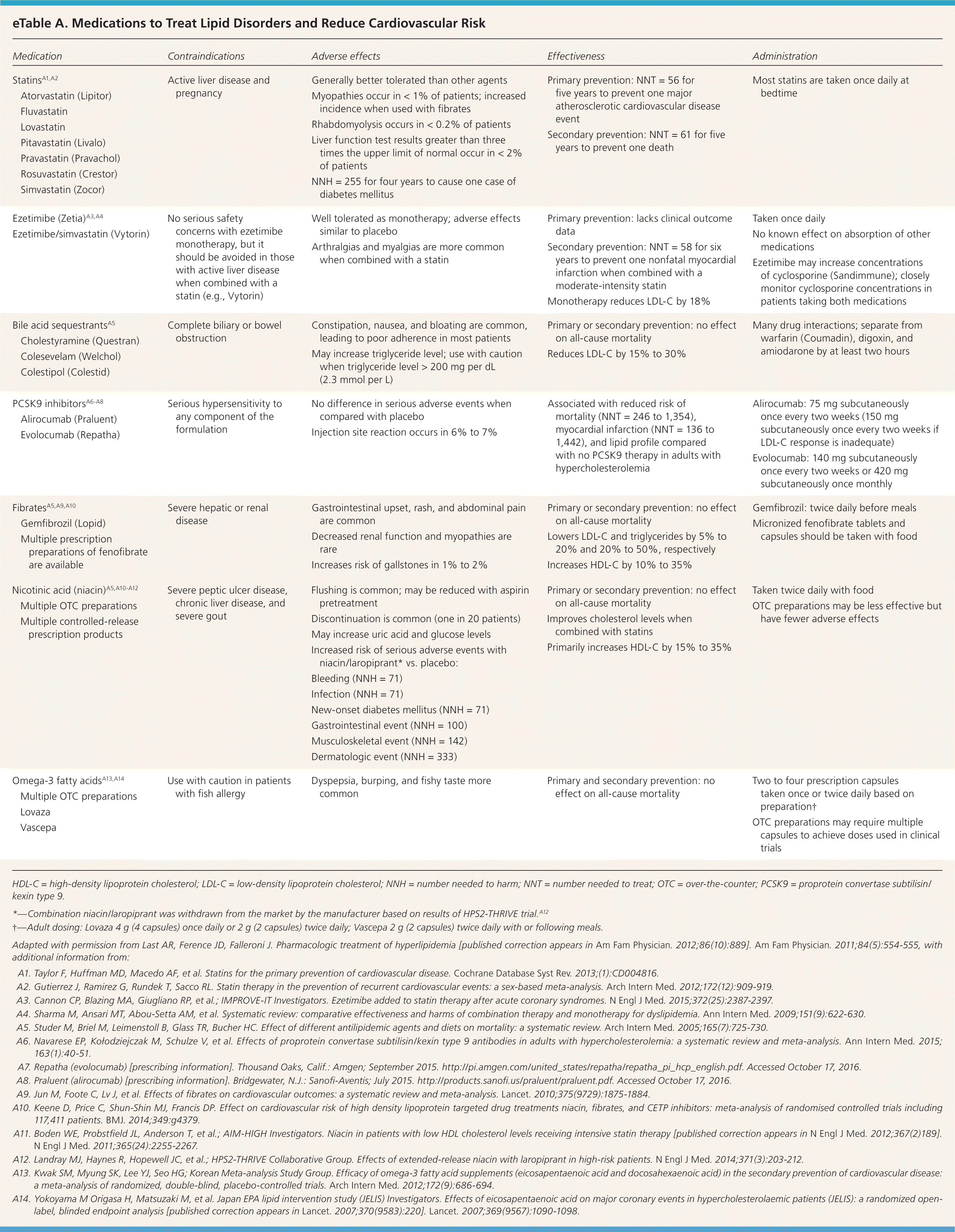
MedicationContraindicationsAdverse effectsEffectivenessAdministration
  • Atorvastatin (Lipitor)

  • Fluvastatin

  • Lovastatin

  • Pitavastatin (Livalo)

  • Pravastatin (Pravachol)

  • Rosuvastatin (Crestor)

  • Simvastatin (Zocor)

  • Active liver disease and pregnancy

  • Generally better tolerated than other agents

  • Myopathies occur in < 1% of patients; increased incidence when used with fibrates

  • Rhabdomyolysis occurs in < 0.2% of patients

  • Liver function test results greater than three times the upper limit of normal occur in < 2% of patients

  • NNH = 255 for four years to cause one case of diabetes mellitus

  • Primary prevention: NNT = 56 for five years to prevent one major atherosclerotic cardiovascular disease event

  • Secondary prevention: NNT = 61 for five years to prevent one death

  • Most statins are taken once daily at bedtime

  • Ezetimibe (Zetia)A3,A4

  • Ezetimibe/simvastatin (Vytorin)

  • No serious safety concerns with ezetimibe monotherapy, but it should be avoided in those with active liver disease when combined with a statin (e.g., Vytorin)

  • Well tolerated as monotherapy; adverse effects similar to placebo

  • Arthralgias and myalgias are more common when combined with a statin

  • Primary prevention: lacks clinical outcome data

  • Secondary prevention: NNT = 58 for six years to prevent one nonfatal myocardial infarction when combined with a moderate-intensity statin

  • Monotherapy reduces LDL-C by 18%

  • Taken once daily

  • No known effect on absorption of other medications

  • Ezetimibe may increase concentrations of cyclosporine (Sandimmune); closely monitor cyclosporine concentrations in patients taking both medications

  • Bile acid sequestrantsA5

  • Cholestyramine (Questran)

  • Colesevelam (Welchol)

  • Colestipol (Colestid)

  • Complete biliary or bowel obstruction

  • Constipation, nausea, and bloating are common, leading to poor adherence in most patients

  • May increase triglyceride level; use with caution when triglyceride level > 200 mg per dL (2.3 mmol per L)

  • Primary or secondary prevention: no effect on all-cause mortality

  • Reduces LDL-C by 15% to 30%

  • Many drug interactions; separate from warfarin (Coumadin), digoxin, and amiodarone by at least two hours

  • PCSK9 inhibitorsA6A8

  • Alirocumab (Praluent)

  • Evolocumab (Repatha)

  • Serious hypersensitivity to any component of the formulation

  • No difference in serious adverse events when compared with placebo

  • Injection site reaction occurs in 6% to 7%

  • Associated with reduced risk of mortality (NNT = 246 to 1,354), myocardial infarction (NNT = 136 to 1,442), and lipid profile compared with no PCSK9 therapy in adults with hypercholesterolemia

  • Alirocumab: 75 mg subcutaneously once every two weeks (150 mg subcutaneously once every two weeks if LDL-C response is inadequate)

  • Evolocumab: 140 mg subcutaneously once every two weeks or 420 mg subcutaneously once monthly

  • Gemfibrozil (Lopid)

  • Multiple prescription preparations of fenofibrate are available

  • Severe hepatic or renal disease

  • Gastrointestinal upset, rash, and abdominal pain are common

  • Decreased renal function and myopathies are rare

  • Increases risk of gallstones in 1% to 2%

  • Primary or secondary prevention: no effect on all-cause mortality

  • Lowers LDL-C and triglycerides by 5% to 20% and 20% to 50%, respectively

  • Increases HDL-C by 10% to 35%

  • Gemfibrozil: twice daily before meals

  • Micronized fenofibrate tablets and capsules should be taken with food

  • Multiple OTC preparations

  • Multiple controlled-release prescription products

  • Severe peptic ulcer disease, chronic liver disease, and severe gout

  • Flushing is common; may be reduced with aspirin pretreatment

  • Discontinuation is common (one in 20 patients)

  • May increase uric acid and glucose levels

  • Increased risk of serious adverse events with niacin/laropiprant* vs. placebo:

  • Bleeding (NNH = 71)

  • Infection (NNH = 71)

  • New-onset diabetes mellitus (NNH = 71)

  • Gastrointestinal event (NNH = 100)

  • Musculoskeletal event (NNH = 142)

  • Dermatologic event (NNH = 333)

  • Primary or secondary prevention: no effect on all-cause mortality

  • Improves cholesterol levels when combined with statins

  • Primarily increases HDL-C by 15% to 35%

  • Taken twice daily with food

  • OTC preparations may be less effective but have fewer adverse effects

  • Multiple OTC preparations

  • Lovaza

  • Vascepa

  • Use with caution in patients with fish allergy

  • Dyspepsia, burping, and fishy taste more common

  • Primary and secondary prevention: no effect on all-cause mortality

  • Two to four prescription capsules taken once or twice daily based on preparation

  • OTC preparations may require multiple capsules to achieve doses used in clinical trials