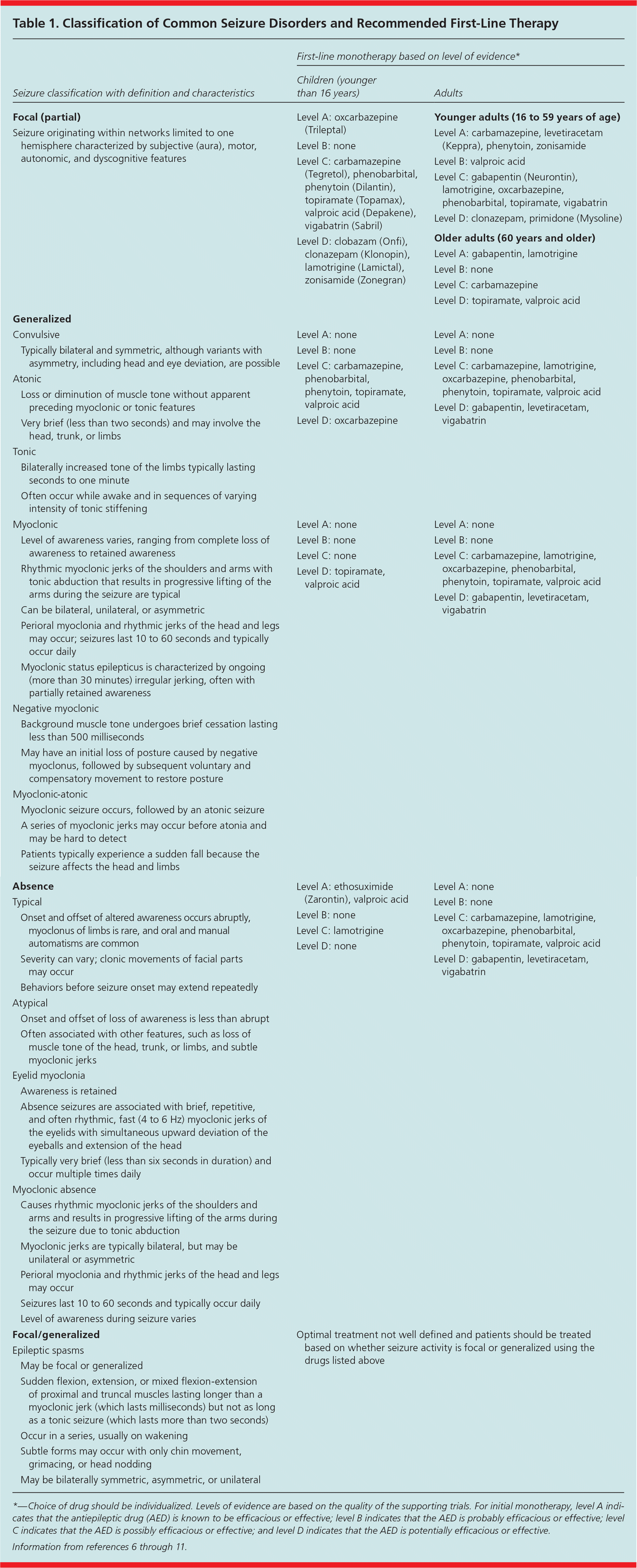
| Focal (partial) | Level A: oxcarbazepine (Trileptal) | Younger adults (16 to 59 years of age) |
| Seizure originating within networks limited to one hemisphere characterized by subjective (aura), motor, autonomic, and dyscognitive features | Level B: none | Level A: carbamazepine, levetiracetam (Keppra), phenytoin, zonisamide |
| Level C: carbamazepine (Tegretol), phenobarbital, phenytoin (Dilantin), topiramate (Topamax), valproic acid (Depakene), vigabatrin (Sabril) | Level B: valproic acid |
| Level D: clobazam (Onfi), clonazepam (Klonopin), lamotrigine (Lamictal), zonisamide (Zonegran) | Level C: gabapentin (Neurontin), lamotrigine, oxcarbazepine, phenobarbital, topiramate, vigabatrin |
| | Level D: clonazepam, primidone (Mysoline) |
| | Older adults (60 years and older) |
| | Level A: gabapentin, lamotrigine |
| | Level B: none |
| | Level C: carbamazepine |
| | Level D: topiramate, valproic acid |
| Generalized |
| Convulsive | Level A: none | Level A: none |
| Typically bilateral and symmetric, although variants with asymmetry, including head and eye deviation, are possible | Level B: none | Level B: none |
| Atonic | Level C: carbamazepine, phenobarbital, phenytoin, topiramate, valproic acid | Level C: carbamazepine, lamotrigine, oxcarbazepine, phenobarbital, phenytoin, topiramate, valproic acid |
| Loss or diminution of muscle tone without apparent preceding myoclonic or tonic features | Level D: oxcarbazepine | Level D: gabapentin, levetiracetam, vigabatrin |
| Very brief (less than two seconds) and may involve the head, trunk, or limbs | | |
| Tonic | | |
| Bilaterally increased tone of the limbs typically lasting seconds to one minute | | |
| Often occur while awake and in sequences of varying intensity of tonic stiffening | | |
| Myoclonic | Level A: none | Level A: none |
| Level of awareness varies, ranging from complete loss of awareness to retained awareness | Level B: none | Level B: none |
| Rhythmic myoclonic jerks of the shoulders and arms with tonic abduction that results in progressive lifting of the arms during the seizure are typical | Level C: none | Level C: carbamazepine, lamotrigine, oxcarbazepine, phenobarbital, phenytoin, topiramate, valproic acid |
| Can be bilateral, unilateral, or asymmetric | Level D: topiramate, valproic acid | Level D: gabapentin, levetiracetam, vigabatrin |
| Perioral myoclonia and rhythmic jerks of the head and legs may occur; seizures last 10 to 60 seconds and typically occur daily | | |
| Myoclonic status epilepticus is characterized by ongoing (more than 30 minutes) irregular jerking, often with partially retained awareness | | |
| Negative myoclonic | | |
| Background muscle tone undergoes brief cessation lasting less than 500 milliseconds | | |
| May have an initial loss of posture caused by negative myoclonus, followed by subsequent voluntary and compensatory movement to restore posture | | |
| Myoclonic-atonic | | |
| Myoclonic seizure occurs, followed by an atonic seizure | | |
| A series of myoclonic jerks may occur before atonia and may be hard to detect | | |
| Patients typically experience a sudden fall because the seizure affects the head and limbs | | |
| Absence | Level A: ethosuximide (Zarontin), valproic acid | Level A: none |
| Typical | Level B: none | Level B: none |
| Onset and offset of altered awareness occurs abruptly, myoclonus of limbs is rare, and oral and manual automatisms are common | Level C: lamotrigine | Level C: carbamazepine, lamotrigine, oxcarbazepine, phenobarbital, phenytoin, topiramate, valproic acid |
| Severity can vary; clonic movements of facial parts may occur | Level D: none | Level D: gabapentin, levetiracetam, vigabatrin |
| Behaviors before seizure onset may extend repeatedly | | |
| Atypical | | |
| Onset and offset of loss of awareness is less than abrupt | | |
| Often associated with other features, such as loss of muscle tone of the head, trunk, or limbs, and subtle myoclonic jerks | | |
| Eyelid myoclonia | | |
| Awareness is retained | | |
| Absence seizures are associated with brief, repetitive, and often rhythmic, fast (4 to 6 Hz) myoclonic jerks of the eyelids with simultaneous upward deviation of the eyeballs and extension of the head | | |
| Typically very brief (less than six seconds in duration) and occur multiple times daily | | |
| Myoclonic absence | | |
| Causes rhythmic myoclonic jerks of the shoulders and arms and results in progressive lifting of the arms during the seizure due to tonic abduction | | |
| Myoclonic jerks are typically bilateral, but may be unilateral or asymmetric | | |
| Perioral myoclonia and rhythmic jerks of the head and legs may occur | | |
| Seizures last 10 to 60 seconds and typically occur daily | | |
| Level of awareness during seizure varies | | |
| Focal/generalized | Optimal treatment not well defined and patients should be treated based on whether seizure activity is focal or generalized using the drugs listed above |
| Epileptic spasms | | |
| May be focal or generalized | | |
| Sudden flexion, extension, or mixed flexion-extension of proximal and truncal muscles lasting longer than a myoclonic jerk (which lasts milliseconds) but not as long as a tonic seizure (which lasts more than two seconds) | | |
| Occur in a series, usually on wakening | | |
| Subtle forms may occur with only chin movement, grimacing, or head nodding | | |
| May be bilaterally symmetric, asymmetric, or unilateral | | |