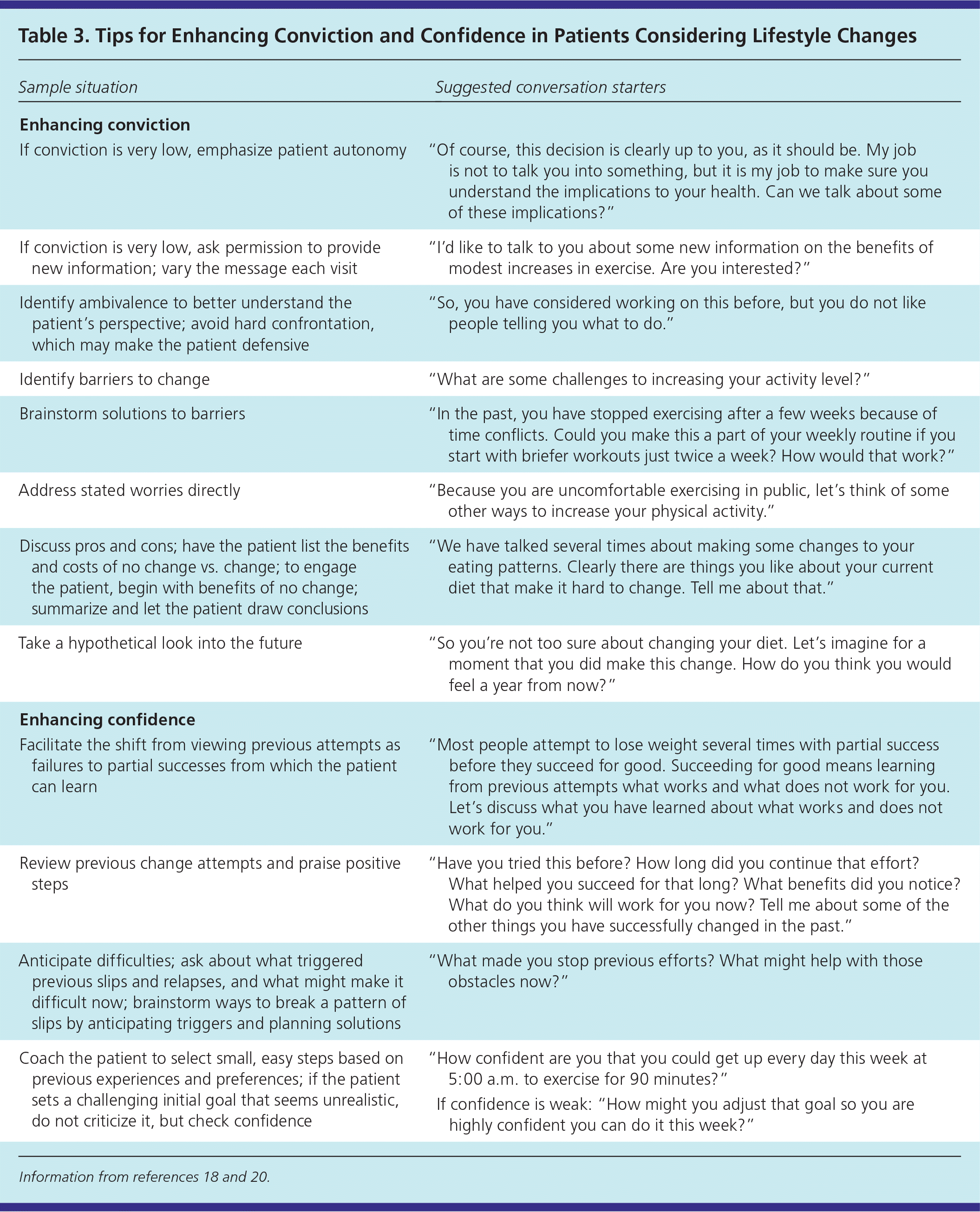
| Enhancing conviction |
| If conviction is very low, emphasize patient autonomy | “Of course, this decision is clearly up to you, as it should be. My job is not to talk you into something, but it is my job to make sure you understand the implications to your health. Can we talk about some of these implications?” |
| If conviction is very low, ask permission to provide new information; vary the message each visit | “I'd like to talk to you about some new information on the benefits of modest increases in exercise. Are you interested?” |
| Identify ambivalence to better understand the patient's perspective; avoid hard confrontation, which may make the patient defensive | “So, you have considered working on this before, but you do not like people telling you what to do.” |
| Identify barriers to change | “What are some challenges to increasing your activity level?” |
| Brainstorm solutions to barriers | “In the past, you have stopped exercising after a few weeks because of time conflicts. Could you make this a part of your weekly routine if you start with briefer workouts just twice a week? How would that work?” |
| Address stated worries directly | “Because you are uncomfortable exercising in public, let's think of some other ways to increase your physical activity.” |
| Discuss pros and cons; have the patient list the benefits and costs of no change vs. change; to engage the patient, begin with benefits of no change; summarize and let the patient draw conclusions | “We have talked several times about making some changes to your eating patterns. Clearly there are things you like about your current diet that make it hard to change. Tell me about that.” |
| Take a hypothetical look into the future | “So you're not too sure about changing your diet. Let's imagine for a moment that you did make this change. How do you think you would feel a year from now?” |
| Enhancing confidence |
| Facilitate the shift from viewing previous attempts as failures to partial successes from which the patient can learn | “Most people attempt to lose weight several times with partial success before they succeed for good. Succeeding for good means learning from previous attempts what works and what does not work for you. Let's discuss what you have learned about what works and does not work for you.” |
| Review previous change attempts and praise positive steps | “Have you tried this before? How long did you continue that effort? What helped you succeed for that long? What benefits did you notice? What do you think will work for you now? Tell me about some of the other things you have successfully changed in the past.” |
| Anticipate difficulties; ask about what triggered previous slips and relapses, and what might make it difficult now; brainstorm ways to break a pattern of slips by anticipating triggers and planning solutions | “What made you stop previous efforts? What might help with those obstacles now?” |
| Coach the patient to select small, easy steps based on previous experiences and preferences; if the patient sets a challenging initial goal that seems unrealistic, do not criticize it, but check confidence | “How confident are you that you could get up every day this week at 5:00 a.m. to exercise for 90 minutes?” |
| If confidence is weak: “How might you adjust that goal so you are highly confident you can do it this week?” |