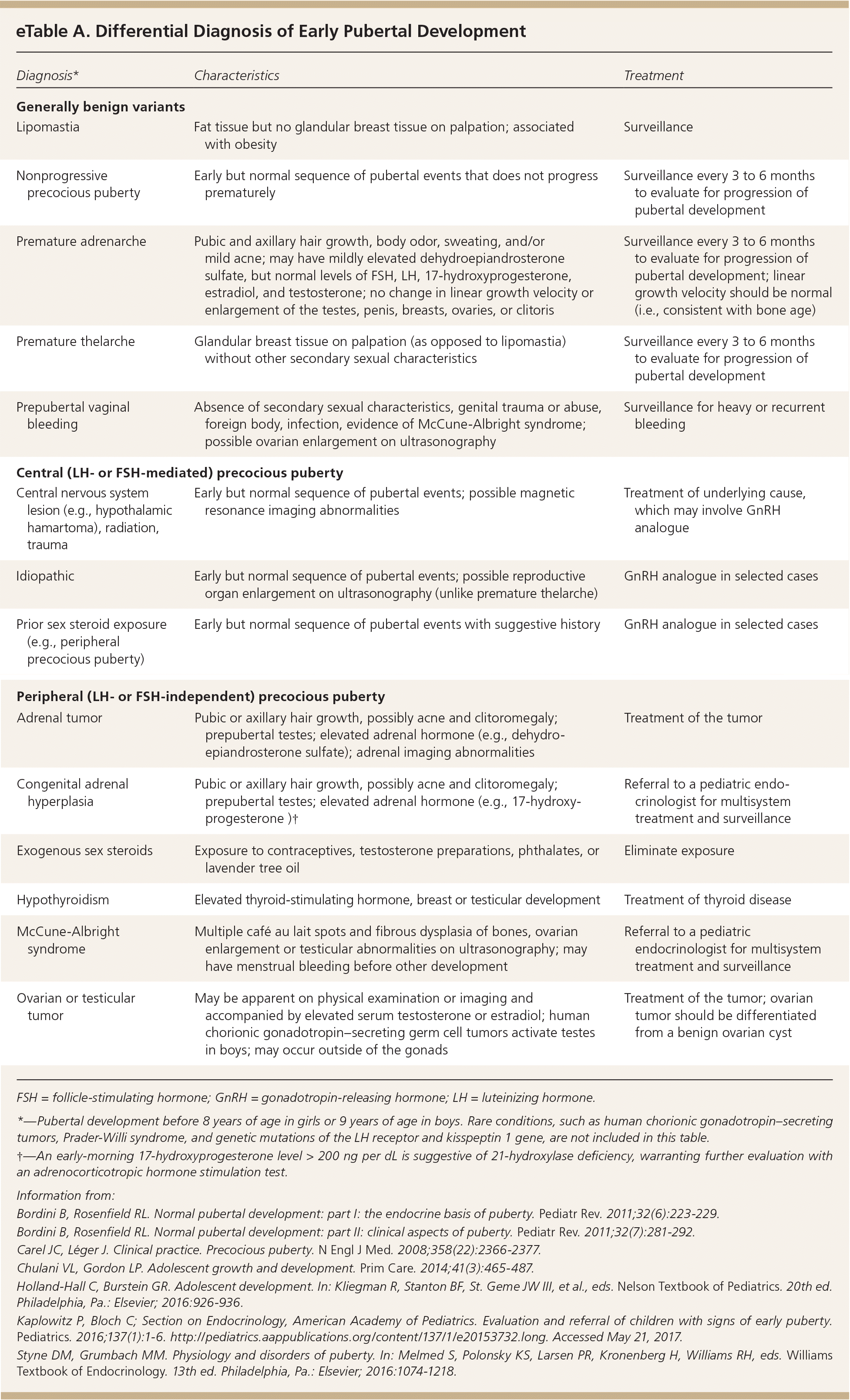
| Generally benign variants |
| Lipomastia | Fat tissue but no glandular breast tissue on palpation; associated with obesity | Surveillance |
| Nonprogressive precocious puberty | Early but normal sequence of pubertal events that does not progress prematurely | Surveillance every 3 to 6 months to evaluate for progression of pubertal development |
| Premature adrenarche | Pubic and axillary hair growth, body odor, sweating, and/or mild acne; may have mildly elevated dehydroepiandrosterone sulfate, but normal levels of FSH, LH, 17-hydroxyprogesterone, estradiol, and testosterone; no change in linear growth velocity or enlargement of the testes, penis, breasts, ovaries, or clitoris | Surveillance every 3 to 6 months to evaluate for progression of pubertal development; linear growth velocity should be normal (i.e., consistent with bone age) |
| Premature thelarche | Glandular breast tissue on palpation (as opposed to lipomastia) without other secondary sexual characteristics | Surveillance every 3 to 6 months to evaluate for progression of pubertal development |
| Prepubertal vaginal bleeding | Absence of secondary sexual characteristics, genital trauma or abuse, foreign body, infection, evidence of McCune-Albright syndrome; possible ovarian enlargement on ultrasonography | Surveillance for heavy or recurrent bleeding |
| Central (LH‐ or FSH ‐mediated) precocious puberty |
| Central nervous system lesion (e.g., hypothalamic hamartoma), radiation, trauma | Early but normal sequence of pubertal events; possible magnetic resonance imaging abnormalities | Treatment of underlying cause, which may involve GnRH analogue |
| Idiopathic | Early but normal sequence of pubertal events; possible reproductive organ enlargement on ultrasonography (unlike premature thelarche) | GnRH analogue in selected cases |
| Prior sex steroid exposure (e.g., peripheral precocious puberty) | Early but normal sequence of pubertal events with suggestive history | GnRH analogue in selected cases |
| Peripheral (LH‐ or FSH‐independent) precocious puberty |
| Adrenal tumor | Pubic or axillary hair growth, possibly acne and clitoromegaly; prepubertal testes; elevated adrenal hormone (e.g., dehydro-epiandrosterone sulfate); adrenal imaging abnormalities | Treatment of the tumor |
| Congenital adrenal hyperplasia | Pubic or axillary hair growth, possibly acne and clitoromegaly; prepubertal testes; elevated adrenal hormone (e.g., 17-hydroxy-progesterone)† | Referral to a pediatric endocrinologist for multisystem treatment and surveillance |
| Exogenous sex steroids | Exposure to contraceptives, testosterone preparations, phthalates, or lavender tree oil | Eliminate exposure |
| Hypothyroidism | Elevated thyroid-stimulating hormone, breast or testicular development | Treatment of thyroid disease |
| McCune-Albright syndrome | Multiple café au lait spots and fibrous dysplasia of bones, ovarian enlargement or testicular abnormalities on ultrasonography; may have menstrual bleeding before other development | Referral to a pediatric endocrinologist for multisystem treatment and surveillance |
| Ovarian or testicular tumor | May be apparent on physical examination or imaging and accompanied by elevated serum testosterone or estradiol; human chorionic gonadotropin–secreting germ cell tumors activate testes in boys; may occur outside of the gonads | Treatment of the tumor; ovarian tumor should be differentiated from a benign ovarian cyst |