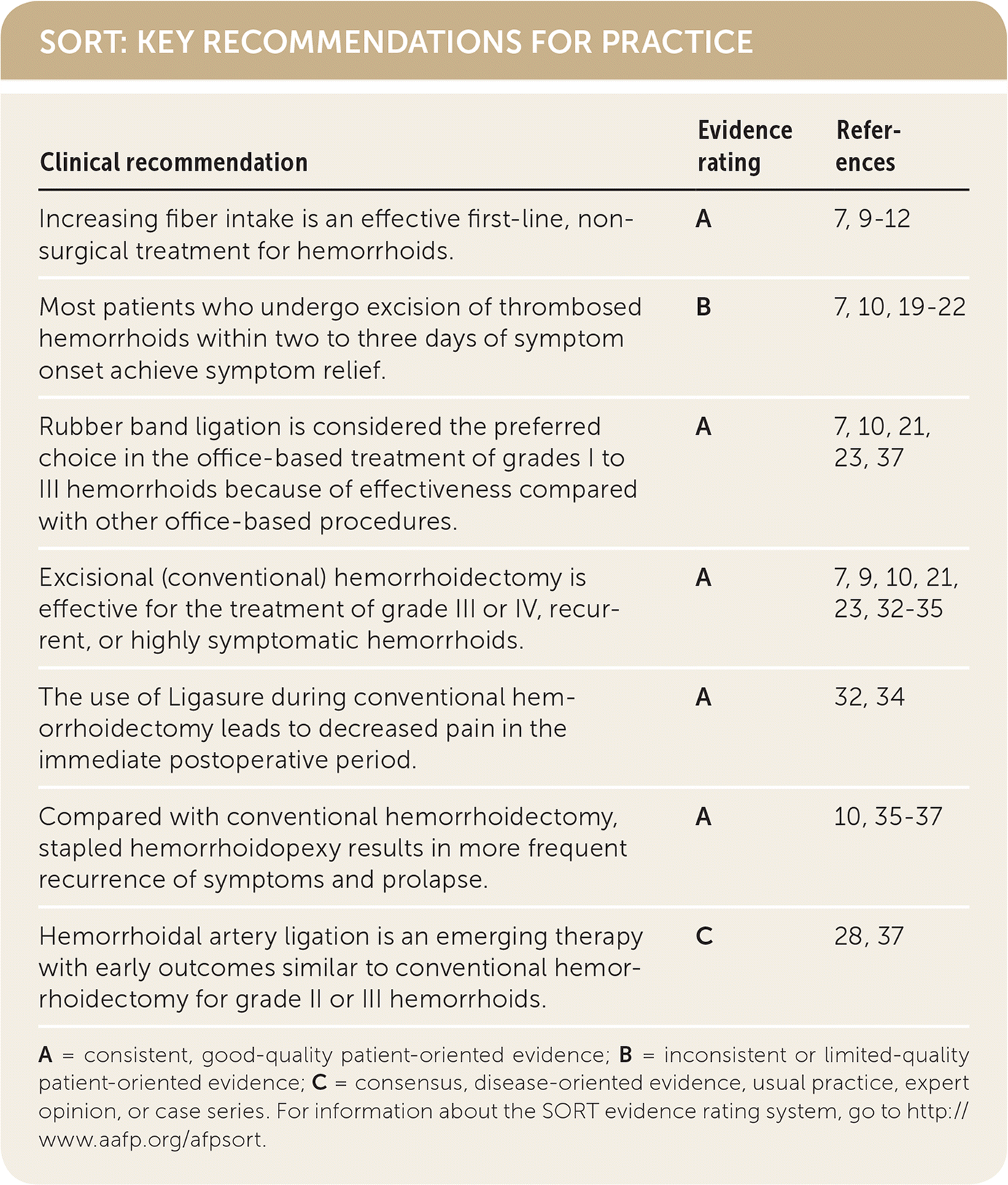
| Increasing fiber intake is an effective first-line, nonsurgical treatment for hemorrhoids. |
A |
7, 9–12 |
| Most patients who undergo excision of thrombosed hemorrhoids within two to three days of symptom onset achieve symptom relief. |
B |
7, 10, 19–22 |
| Rubber band ligation is considered the preferred choice in the office-based treatment of grades I to III hemorrhoids because of effectiveness compared with other office-based procedures. |
A |
7, 10, 21, 23, 37 |
| Excisional (conventional) hemorrhoidectomy is effective for the treatment of grade III or IV, recurrent, or highly symptomatic hemorrhoids. |
A |
7, 9, 10, 21, 23, 32–35 |
| The use of Ligasure during conventional hemorrhoidectomy leads to decreased pain in the immediate postoperative period. |
A |
32, 34 |
| Compared with conventional hemorrhoidectomy, stapled hemorrhoidopexy results in more frequent recurrence of symptoms and prolapse. |
A |
10, 35–37 |
| Hemorrhoidal artery ligation is an emerging therapy with early outcomes similar to conventional hemorrhoidectomy for grade II or III hemorrhoids. |
C |
28, 37 |