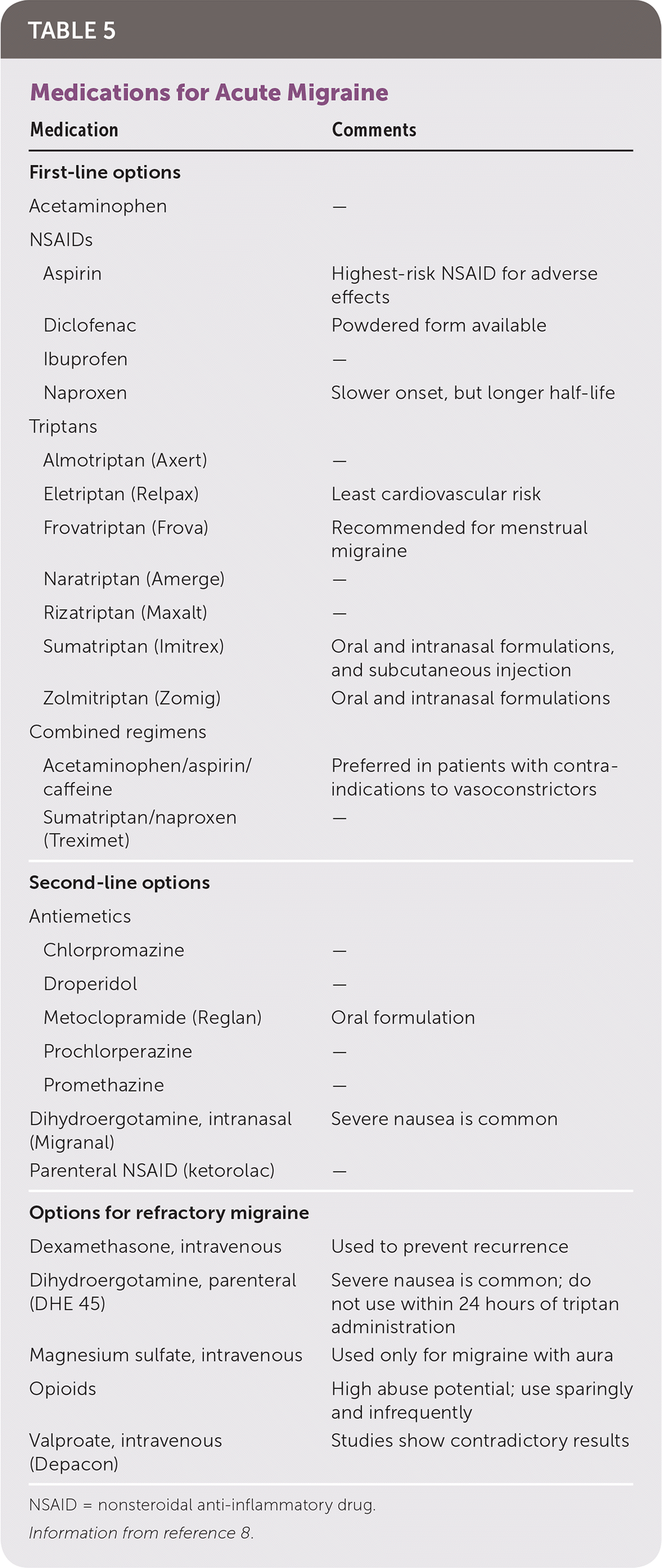
| First-line options |
| Acetaminophen | — |
| NSAIDs | |
| Aspirin | Highest-risk NSAID for adverse effects |
| Diclofenac | Powdered form available |
| Ibuprofen | — |
| Naproxen | Slower onset, but longer half-life |
| Triptans | |
| Almotriptan (Axert) | — |
| Eletriptan (Relpax) | Least cardiovascular risk |
| Frovatriptan (Frova) | Recommended for menstrual migraine |
| Naratriptan (Amerge) | — |
| Rizatriptan (Maxalt) | — |
| Sumatriptan (Imitrex) | Oral and intranasal formulations, and subcutaneous injection |
| Zolmitriptan (Zomig) | Oral and intranasal formulations |
| Combined regimens | |
| Acetaminophen/aspirin/caffeine | Preferred in patients with contraindications to vasoconstrictors |
| Sumatriptan/naproxen (Treximet) | — |
| Second-line options |
| Antiemetics | |
| Chlorpromazine | — |
| Droperidol | — |
| Metoclopramide (Reglan) | Oral formulation |
| Prochlorperazine | — |
| Promethazine | — |
| Dihydroergotamine, intranasal (Migranal) | Severe nausea is common |
| Parenteral NSAID (ketorolac) | — |
| Options for refractory migraine |
| Dexamethasone, intravenous | Used to prevent recurrence |
| Dihydroergotamine, parenteral (DHE 45) | Severe nausea is common; do not use within 24 hours of triptan administration |
| Magnesium sulfate, intravenous | Used only for migraine with aura |
| Opioids | High abuse potential; use sparingly and infrequently |
| Valproate, intravenous (Depacon) | Studies show contradictory results |