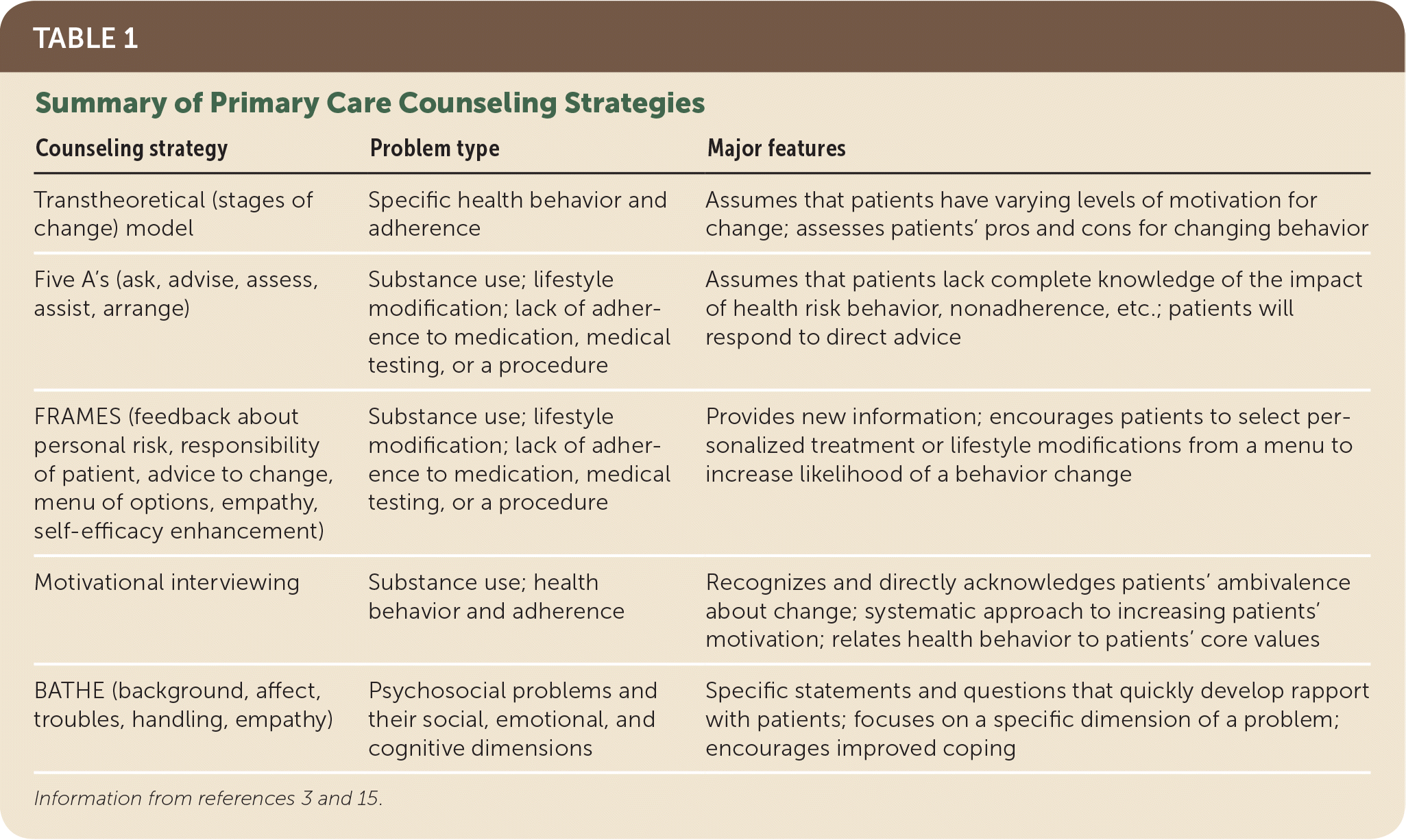
| Transtheoretical (stages of change) model | Specific health behavior and adherence | Assumes that patients have varying levels of motivation for change; assesses patients’ pros and cons for changing behavior |
| Five A’s (ask, advise, assess, assist, arrange) | Substance use; lifestyle modification; lack of adherence to medication, medical testing, or a procedure | Assumes that patients lack complete knowledge of the impact of health risk behavior, nonadherence, etc.; patients will respond to direct advice |
| FRAMES (feedback about personal risk, responsibility of patient, advice to change, menu of options, empathy, self-efficacy enhancement) | Substance use; lifestyle modification; lack of adherence to medication, medical testing, or a procedure | Provides new information; encourages patients to select personalized treatment or lifestyle modifications from a menu to increase likelihood of a behavior change |
| Motivational interviewing | Substance use; health behavior and adherence | Recognizes and directly acknowledges patients’ ambivalence about change; systematic approach to increasing patients’ motivation; relates health behavior to patients’ core values |
| BATHE (background, affect, troubles, handling, empathy) | Psychosocial problems and their social, emotional, and cognitive dimensions | Specific statements and questions that quickly develop rapport with patients; focuses on a specific dimension of a problem; encourages improved coping |