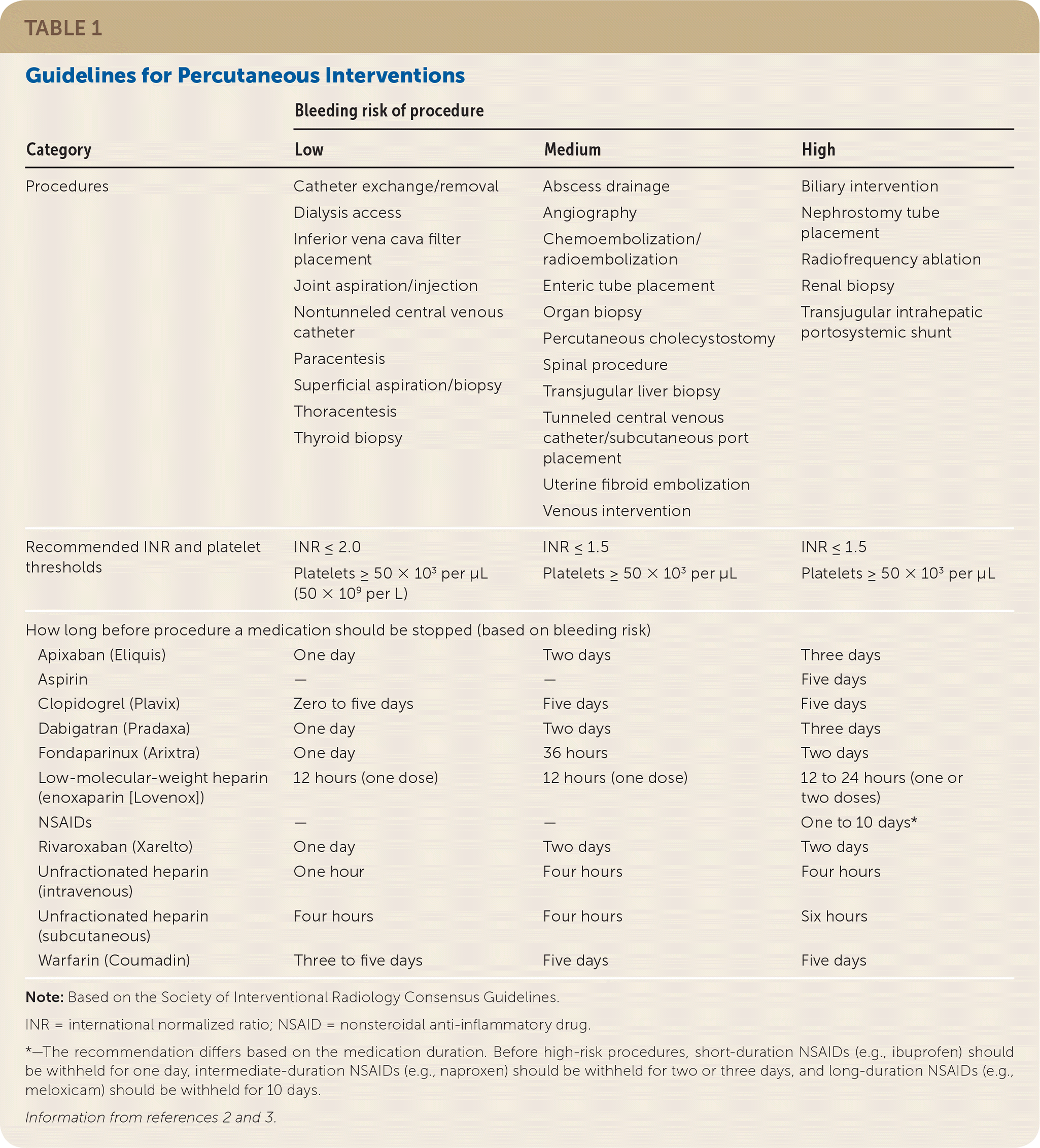
| Category | Bleeding risk of procedure | ||
|---|---|---|---|
| Low | Medium | High | |
| Procedures | Catheter exchange/removal Dialysis access Inferior vena cava filter placement Joint aspiration/injection Nontunneled central venous catheter Paracentesis Superficial aspiration/biopsy Thoracentesis Thyroid biopsy | Abscess drainage Angiography Chemoembolization/radioembolization Enteric tube placement Organ biopsy Percutaneous cholecystostomy Spinal procedure Transjugular liver biopsy Tunneled central venous catheter/subcutaneous port placement Uterine fibroid embolization Venous intervention | Biliary intervention Nephrostomy tube placement Radiofrequency ablation Renal biopsy Transjugular intrahepatic portosystemic shunt |
| Recommended INR and platelet thresholds | INR ≤ 2.0 Platelets ≥ 50 × 103 per μL (50 × 109 per L) | INR ≤ 1.5 Platelets ≥ 50 × 103 per μL | INR ≤ 1.5 Platelets ≥ 50 × 103 per μL |
| How long before procedure a medication should be stopped (based on bleeding risk) | |||
| Apixaban (Eliquis) | One day | Two days | Three days |
| Aspirin | — | — | Five days |
| Clopidogrel (Plavix) | Zero to five days | Five days | Five days |
| Dabigatran (Pradaxa) | One day | Two days | Three days |
| Fondaparinux (Arixtra) | One day | 36 hours | Two days |
| Low-molecular-weight heparin (enoxaparin [Lovenox]) | 12 hours (one dose) | 12 hours (one dose) | 12 to 24 hours (one or two doses) |
| NSAIDs | — | — | One to 10 days* |
| Rivaroxaban (Xarelto) | One day | Two days | Two days |
| Unfractionated heparin (intravenous) | One hour | Four hours | Four hours |
| Unfractionated heparin (subcutaneous) | Four hours | Four hours | Six hours |
| Warfarin (Coumadin) | Three to five days | Five days | Five days |