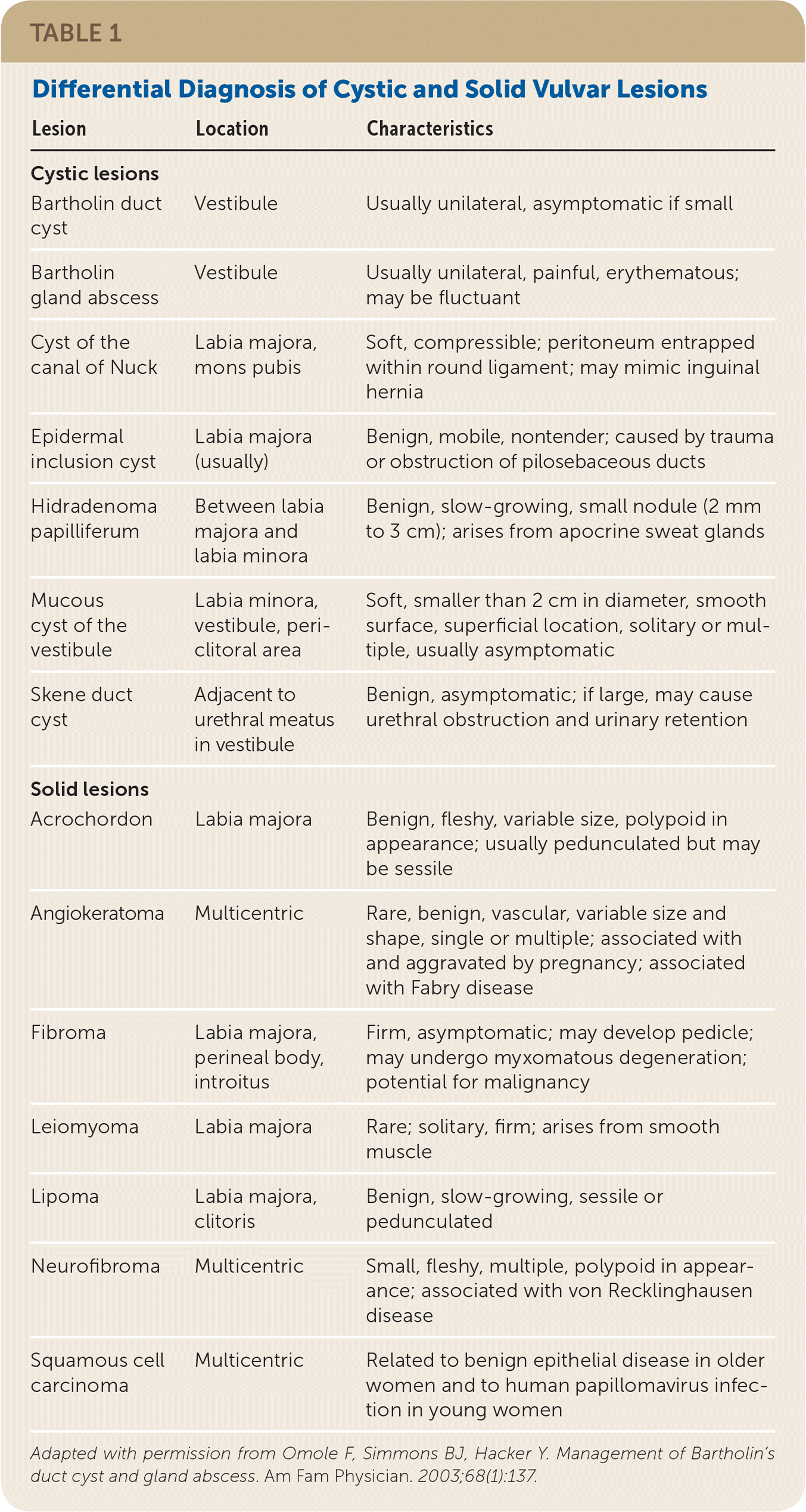
| Cystic lesions |
| Bartholin duct cyst | Vestibule | Usually unilateral, asymptomatic if small |
| Bartholin gland abscess | Vestibule | Usually unilateral, painful, erythematous; may be fluctuant |
| Cyst of the canal of Nuck | Labia majora, mons pubis | Soft, compressible; peritoneum entrapped within round ligament; may mimic inguinal hernia |
| Epidermal inclusion cyst | Labia majora (usually) | Benign, mobile, nontender; caused by trauma or obstruction of pilosebaceous ducts |
| Hidradenoma papilliferum | Between labia majora and labia minora | Benign, slow-growing, small nodule (2 mm to 3 cm); arises from apocrine sweat glands |
| Mucous cyst of the vestibule | Labia minora, vestibule, periclitoral area | Soft, smaller than 2 cm in diameter, smooth surface, superficial location, solitary or multiple, usually asymptomatic |
| Skene duct cyst | Adjacent to urethral meatus in vestibule | Benign, asymptomatic; if large, may cause urethral obstruction and urinary retention |
| Solid lesions |
| Acrochordon | Labia majora | Benign, fleshy, variable size, polypoid in appearance; usually pedunculated but may be sessile |
| Angiokeratoma | Multicentric | Rare, benign, vascular, variable size and shape, single or multiple; associated with and aggravated by pregnancy; associated with Fabry disease |
| Fibroma | Labia majora, perineal body, introitus | Firm, asymptomatic; may develop pedicle; may undergo myxomatous degeneration; potential for malignancy |
| Leiomyoma | Labia majora | Rare; solitary, firm; arises from smooth muscle |
| Lipoma | Labia majora, clitoris | Benign, slow-growing, sessile or pedunculated |
| Neurofibroma | Multicentric | Small, fleshy, multiple, polypoid in appearance; associated with von Recklinghausen disease |
| Squamous cell carcinoma | Multicentric | Related to benign epithelial disease in older women and to human papillomavirus infection in young women |