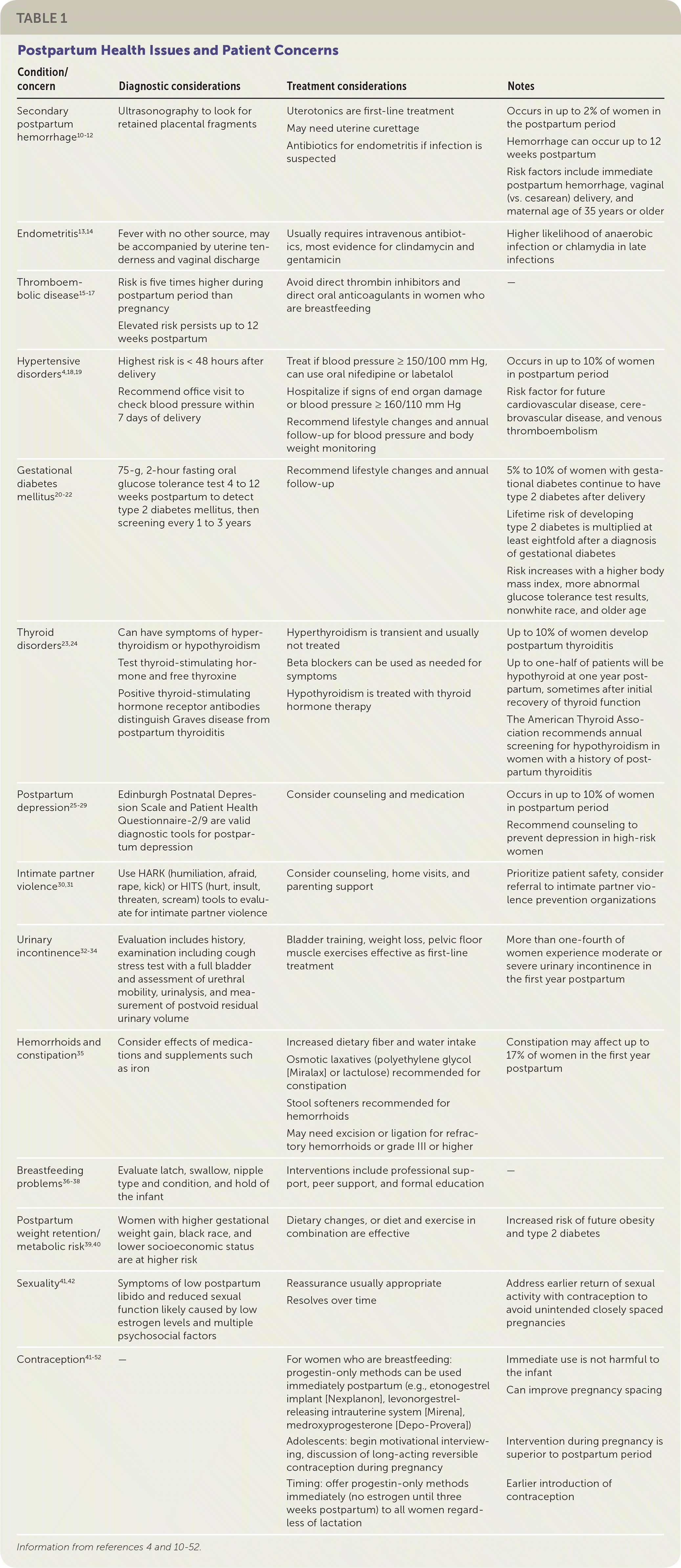
| Condition/concern | Diagnostic considerations | Treatment considerations | Notes |
|---|---|---|---|
| Secondary postpartum hemorrhage10–12 | Ultrasonography to look for retained placental fragments | Uterotonics are first-line treatment May need uterine curettage Antibiotics for endometritis if infection is suspected | Occurs in up to 2% of women in the postpartum period Hemorrhage can occur up to 12 weeks postpartum Risk factors include immediate postpartum hemorrhage, vaginal (vs. cesarean) delivery, and maternal age of 35 years or older |
| Endometritis13,14 | Fever with no other source, may be accompanied by uterine tenderness and vaginal discharge | Usually requires intravenous antibiotics, most evidence for clindamycin and gentamicin | Higher likelihood of anaerobic infection or chlamydia in late infections |
| Thromboembolic disease15–17 | Risk is five times higher during postpartum period than pregnancy Elevated risk persists up to 12 weeks postpartum | Avoid direct thrombin inhibitors and direct oral anticoagulants in women who are breastfeeding | — |
| Hypertensive disorders4,18,19 | Highest risk is < 48 hours after delivery Recommend office visit to check blood pressure within 7 days of delivery | Treat if blood pressure ≥ 150/100 mm Hg, can use oral nifedipine or labetalol Hospitalize if signs of end organ damage or blood pressure ≥ 160/110 mm Hg Recommend lifestyle changes and annual follow-up for blood pressure and body weight monitoring | Occurs in up to 10% of women in postpartum period Risk factor for future cardiovascular disease, cerebrovascular disease, and venous thromboembolism |
| Gestational diabetes mellitus20–22 | 75-g, 2-hour fasting oral glucose tolerance test 4 to 12 weeks postpartum to detect type 2 diabetes mellitus, then screening every 1 to 3 years | Recommend lifestyle changes and annual follow-up | 5% to 10% of women with gestational diabetes continue to have type 2 diabetes after delivery Lifetime risk of developing type 2 diabetes is multiplied at least eightfold after a diagnosis of gestational diabetes Risk increases with a higher body mass index, more abnormal glucose tolerance test results, nonwhite race, and older age |
| Thyroid disorders23,24 | Can have symptoms of hyperthyroidism or hypothyroidism Test thyroid-stimulating hormone and free thyroxine Positive thyroid-stimulating hormone receptor antibodies distinguish Graves disease from postpartum thyroiditis | Hyperthyroidism is transient and usually not treated Beta blockers can be used as needed for symptoms Hypothyroidism is treated with thyroid hormone therapy | Up to 10% of women develop postpartum thyroiditis Up to one-half of patients will be hypothyroid at one year postpartum, sometimes after initial recovery of thyroid function The American Thyroid Association recommends annual screening for hypothyroidism in women with a history of postpartum thyroiditis |
| Postpartum depression25–29 | Edinburgh Postnatal Depression Scale and Patient Health Questionnaire-2/9 are valid diagnostic tools for postpartum depression | Consider counseling and medication | Occurs in up to 10% of women in postpartum period Recommend counseling to prevent depression in high-risk women |
| Intimate partner violence30,31 | Use HARK (humiliation, afraid, rape, kick) or HITS (hurt, insult, threaten, scream) tools to evaluate for intimate partner violence | Consider counseling, home visits, and parenting support | Prioritize patient safety, consider referral to intimate partner violence prevention organizations |
| Urinary incontinence32–34 | Evaluation includes history, examination including cough stress test with a full bladder and assessment of urethral mobility, urinalysis, and measurement of postvoid residual urinary volume | Bladder training, weight loss, pelvic floor muscle exercises effective as first-line treatment | More than one-fourth ofwomen experience moderate or severe urinary incontinence in the first year postpartum |
| Hemorrhoids and constipation35 | Consider effects of medications and supplements such as iron | Increased dietary fiber and water intake Osmotic laxatives (polyethylene glycol [Miralax] or lactulose) recommended for constipation Stool softeners recommended for hemorrhoids May need excision or ligation for refractory hemorrhoids or grade III or higher | Constipation may affect up to 17% of women in the first year postpartum |
| Breastfeeding problems36–38 | Evaluate latch, swallow, nipple type and condition, and hold of the infant | Interventions include professional support, peer support, and formal education | — |
| Postpartum weight retention/metabolic risk39,40 | Women with higher gestational weight gain, black race, and lower socioeconomic status are at higher risk | Dietary changes, or diet and exercise in combination are effective | Increased risk of future obesity and type 2 diabetes |
| Sexuality 41,42 | Symptoms of low postpartum libido and reduced sexual function likely caused by low estrogen levels and multiple psychosocial factors | Reassurance usually appropriate Resolves over time | Address earlier return of sexual activity with contraception to avoid unintended closely spaced pregnancies |
| Contraception41–52 | — | For women who are breastfeeding: progestin-only methods can be used immediately postpartum (e.g., etonogestrel implant [Nexplanon], levonorgestrel-releasing intrauterine system [Mirena], medroxyprogesterone [Depo-Provera]) | Immediate use is not harmful to the infant Can improve pregnancy spacing |
| Adolescents: begin motivational interviewing, discussion of long-acting reversible contraception during pregnancy | Intervention during pregnancy is superior to postpartum period | ||
| Timing: offer progestin-only methods immediately (no estrogen until three weeks postpartum) to all women regardless of lactation | Earlier introduction of contraception |