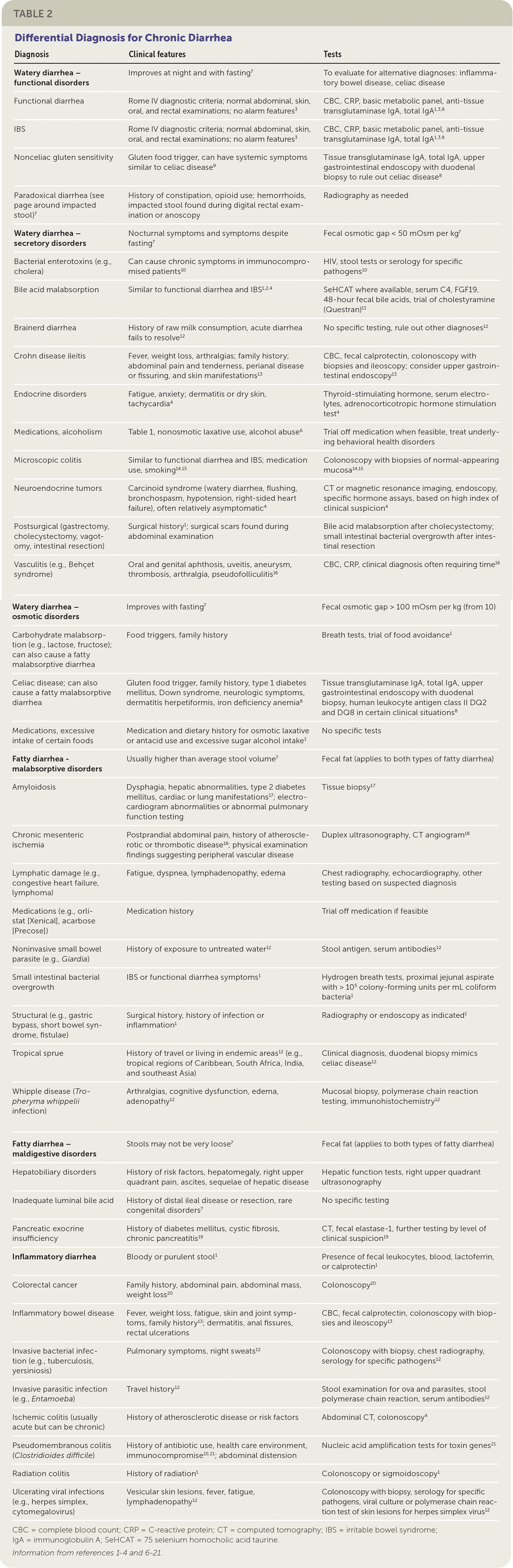
| Watery diarrhea – functional disorders | Improves at night and with fasting7 | To evaluate for alternative diagnoses: inflammatory bowel disease, celiac disease |
| Functional diarrhea | Rome IV diagnostic criteria; normal abdominal, skin, oral, and rectal examinations; no alarm features3 | CBC, CRP, basic metabolic panel, anti-tissue transglutaminase IgA, total IgA1,3,8 |
| IBS | Rome IV diagnostic criteria; normal abdominal, skin, oral, and rectal examinations; no alarm features3 | CBC, CRP, basic metabolic panel, anti-tissue transglutaminase IgA, total IgA1,3,8 |
| Nonceliac gluten sensitivity | Gluten food trigger, can have systemic symptoms similar to celiac disease9 | Tissue transglutaminase IgA, total IgA, upper gastrointestinal endoscopy with duodenal biopsy to rule out celiac disease8 |
| Paradoxical diarrhea (see page around impacted stool)7 | History of constipation, opioid use; hemorrhoids, impacted stool found during digital rectal examination or anoscopy | Radiography as needed |
| Watery diarrhea – secretory disorders | Nocturnal symptoms and symptoms despite fasting7 | Fecal osmotic gap < 50 mOsm per kg7 |
| Bacterial enterotoxins (e.g., cholera) | Can cause chronic symptoms in immunocompromised patients10 | HIV, stool tests or serology for specific pathogens10 |
| Bile acid malabsorption | Similar to functional diarrhea and IBS1,2,4 | SeHCAT where available, serum C4, FGF19, 48-hour fecal bile acids, trial of cholestyramine (Questran)11 |
| Brainerd diarrhea | History of raw milk consumption, acute diarrhea fails to resolve12 | No specific testing, rule out other diagnoses12 |
| Crohn disease ileitis | Fever, weight loss, arthralgias; family history; abdominal pain and tenderness, perianal disease or fissuring, and skin manifestations13 | CBC, fecal calprotectin, colonoscopy with biopsies and ileoscopy; consider upper gastrointestinal endoscopy13 |
| Endocrine disorders | Fatigue, anxiety; dermatitis or dry skin, tachycardia4 | Thyroid-stimulating hormone, serum electrolytes, adrenocorticotropic hormone stimulation test4 |
| Medications, alcoholism | Table 1, nonosmotic laxative use, alcohol abuse6 | Trial off medication when feasible, treat underlying behavioral health disorders |
| Microscopic colitis | Similar to functional diarrhea and IBS; medication use, smoking14,15 | Colonoscopy with biopsies of normal-appearing mucosa14,15 |
| Neuroendocrine tumors | Carcinoid syndrome (watery diarrhea, flushing, bronchospasm, hypotension, right-sided heart failure), often relatively asymptomatic4 | CT or magnetic resonance imaging, endoscopy, specific hormone assays, based on high index of clinical suspicion4 |
| Postsurgical (gastrectomy, cholecystectomy, vagotomy, intestinal resection) | Surgical history1; surgical scars found during abdominal examination | Bile acid malabsorption after cholecystectomy; small intestinal bacterial overgrowth after intestinal resection |
| Vasculitis (e.g., Behçet syndrome) | Oral and genital aphthosis, uveitis, aneurysm, thrombosis, arthralgia, pseudofolliculitis16 | CBC, CRP, clinical diagnosis often requiring time16 |
| Watery diarrhea – osmotic disorders | Improves with fasting7 | Fecal osmotic gap > 100 mOsm per kg (from 10) |
| Carbohydrate malabsorption (e.g., lactose, fructose); can also cause a fatty malabsorptive diarrhea | Food triggers, family history | Breath tests, trial of food avoidance1 |
| Celiac disease; can also cause a fatty malabsorptive diarrhea | Gluten food trigger, family history, type 1 diabetes mellitus, Down syndrome, neurologic symptoms, dermatitis herpetiformis, iron deficiency anemia8 | Tissue transglutaminase IgA, total IgA, upper gastrointestinal endoscopy with duodenal biopsy, human leukocyte antigen class II DQ2 and DQ8 in certain clinical situations8 |
| Medications, excessive intake of certain foods | Medication and dietary history for osmotic laxative or antacid use and excessive sugar alcohol intake1 | No specific tests |
| Fatty diarrhea malabsorptive disorders | Usually higher than average stool volume7 | Fecal fat (applies to both types of fatty diarrhea) |
| Amyloidosis | Dysphagia, hepatic abnormalities, type 2 diabetes mellitus, cardiac or lung manifestations17; electrocardiogram abnormalities or abnormal pulmonary function testing | Tissue biopsy17 |
| Chronic mesenteric ischemia | Postprandial abdominal pain, history of atherosclerotic or thrombotic disease18; physical examination findings suggesting peripheral vascular disease | Duplex ultrasonography, CT angiogram18 |
| Lymphatic damage (e.g., congestive heart failure, lymphoma) | Fatigue, dyspnea, lymphadenopathy, edema | Chest radiography, echocardiography, other testing based on suspected diagnosis |
| Medications (e.g., orlistat [Xenical], acarbose [Precose]) | Medication history | Trial off medication if feasible |
| Noninvasive small bowel parasite (e.g., Giardia) | History of exposure to untreated water12 | Stool antigen, serum antibodies12 |
| Small intestinal bacterial overgrowth | IBS or functional diarrhea symptoms1 | Hydrogen breath tests, proximal jejunal aspirate with > 105 colony-forming units per mL coliform bacteria1 |
| Structural (e.g., gastric bypass, short bowel syndrome, fistulae) | Surgical history, history of infection or inflammation1 | Radiography or endoscopy as indicated1 |
| Tropical sprue | History of travel or living in endemic areas12 (e.g., tropical regions of Caribbean, South Africa, India, and southeast Asia) | Clinical diagnosis, duodenal biopsy mimics celiac disease12 |
| Whipple disease (Tropheryma whippelii infection) | Arthralgias, cognitive dysfunction, edema, adenopathy12 | Mucosal biopsy, polymerase chain reaction testing, immunohistochemistry12 |
| Fatty diarrhea – maldigestive disorders | Stools may not be very loose7 | Fecal fat (applies to both types of fatty diarrhea) |
| Hepatobiliary disorders | History of risk factors, hepatomegaly, right upper quadrant pain, ascites, sequelae of hepatic disease | Hepatic function tests, right upper quadrant ultrasonography |
| Inadequate luminal bile acid | History of distal ileal disease or resection, rare congenital disorders7 | No specific testing |
| Pancreatic exocrine insufficiency | History of diabetes mellitus, cystic fibrosis, chronic pancreatitis19 | CT, fecal elastase-1, further testing by level of clinical suspicion19 |
| Inflammatory diarrhea | Bloody or purulent stool1 | Presence of fecal leukocytes, blood, lactoferrin, or calprotectin1 |
| Colorectal cancer | Family history, abdominal pain, abdominal mass, weight loss20 | Colonoscopy20 |
| Inflammatory bowel disease | Fever, weight loss, fatigue, skin and joint symptoms, family history13; dermatitis, anal fissures, rectal ulcerations | CBC, fecal calprotectin, colonoscopy with biopsies and ileoscopy13 |
| Invasive bacterial infection (e.g., tuberculosis, yersiniosis) | Pulmonary symptoms, night sweats12 | Colonoscopy with biopsy, chest radiography, serology for specific pathogens12 |
| Invasive parasitic infection (e.g., Entamoeba) | Travel history12 | Stool examination for ova and parasites, stool polymerase chain reaction, serum antibodies12 |
| Ischemic colitis (usually acute but can be chronic) | History of atherosclerotic disease or risk factors | Abdominal CT, colonoscopy4 |
| Pseudomembranous colitis (Clostridioides difficile) | History of antibiotic use, health care environment, immunocompromise10,21; abdominal distension | Nucleic acid amplification tests for toxin genes21 |
| Radiation colitis | History of radiation1 | Colonoscopy or sigmoidoscopy1 |
| Ulcerating viral infections (e.g., herpes simplex, cytomegalovirus) | Vesicular skin lesions, fever, fatigue, lymphadenopathy12 | Colonoscopy with biopsy, serology for specific pathogens, viral culture or polymerase chain reaction test of skin lesions for herpes simplex virus12 |