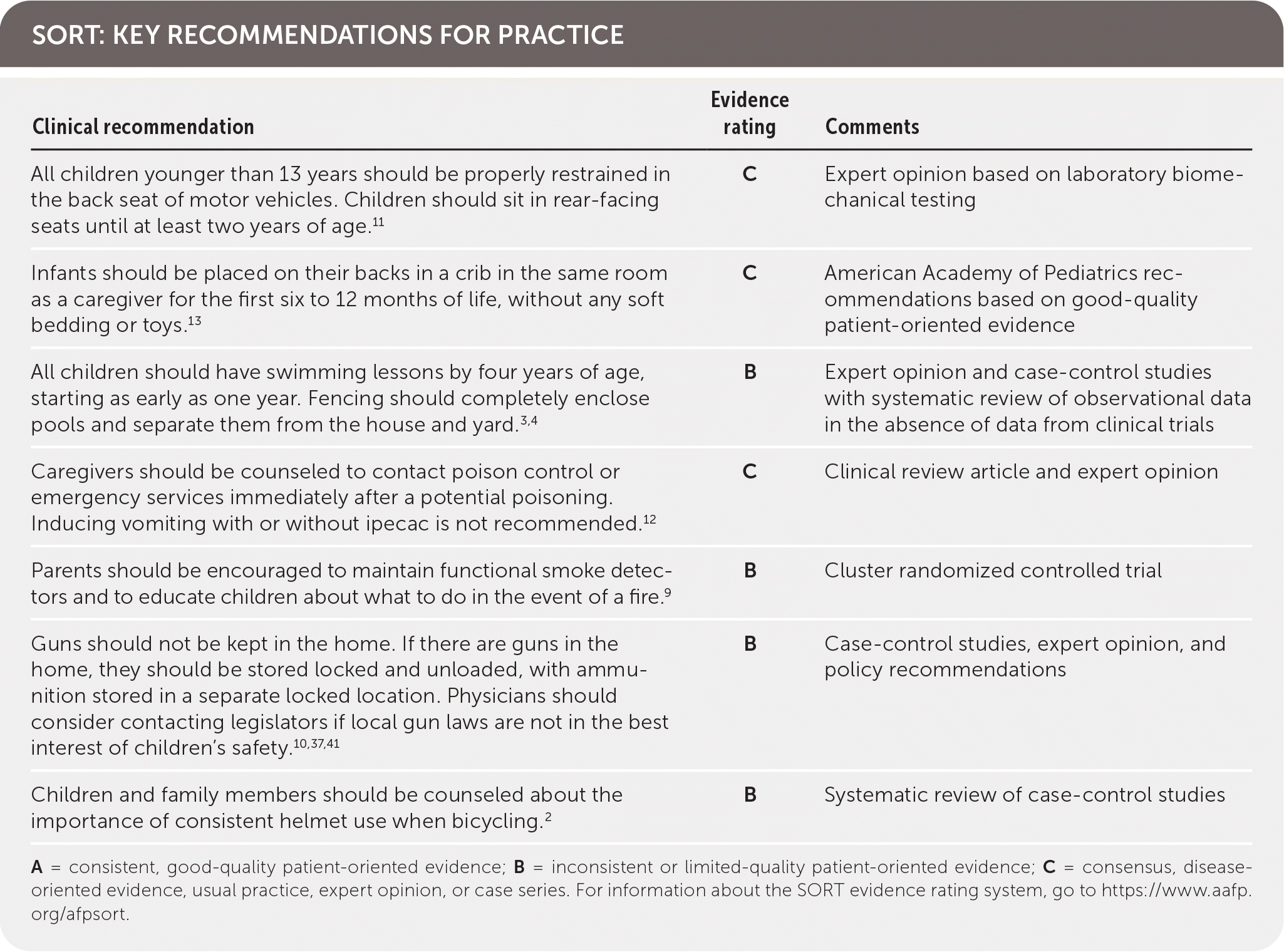
| All children younger than 13 years should be properly restrained in the back seat of motor vehicles. Children should sit in rear-facing seats until at least two years of age.11 |
C |
Expert opinion based on laboratory biomechanical testing |
| Infants should be placed on their backs in a crib in the same room as a caregiver for the first six to 12 months of life, without any soft bedding or toys.13 |
C |
American Academy of Pediatrics recommendations based on good-quality patient-oriented evidence |
| All children should have swimming lessons by four years of age, starting as early as one year. Fencing should completely enclose pools and separate them from the house and yard.3,4 |
B |
Expert opinion and case-control studies with systematic review of observational data in the absence of data from clinical trials |
| Caregivers should be counseled to contact poison control or emergency services immediately after a potential poisoning. Inducing vomiting with or without ipecac is not recommended.12 |
C |
Clinical review article and expert opinion |
| Parents should be encouraged to maintain functional smoke detectors and to educate children about what to do in the event of a fire.9 |
B |
Cluster randomized controlled trial |
| Guns should not be kept in the home. If there are guns in the home, they should be stored locked and unloaded, with ammunition stored in a separate locked location. Physicians should consider contacting legislators if local gun laws are not in the best interest of children's safety.10,37,41 |
B |
Case-control studies, expert opinion, and policy recommendations |
| Children and family members should be counseled about the importance of consistent helmet use when bicycling.2 |
B |
Systematic review of case-control studies |