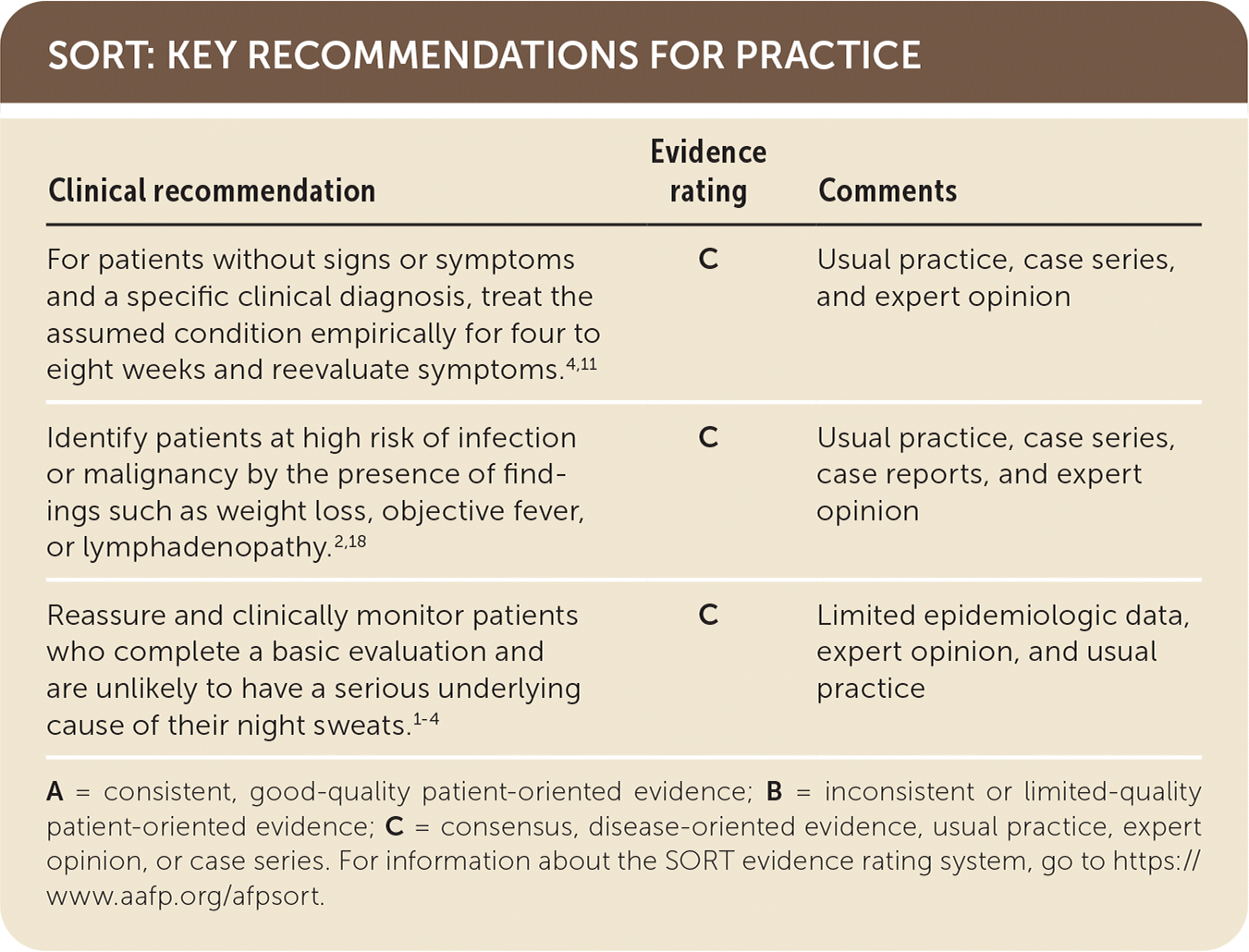
| For patients without signs or symptoms and a specific clinical diagnosis, treat the assumed condition empirically for four to eight weeks and reevaluate symptoms.4,11 |
C |
Usual practice, case series, and expert opinion |
| Identify patients at high risk of infection or malignancy by the presence of findings such as weight loss, objective fever, or lymphadenopathy.2,18 |
C |
Usual practice, case series, case reports, and expert opinion |
| Reassure and clinically monitor patients who complete a basic evaluation and are unlikely to have a serious underlying cause of their night sweats.1–4 |
C |
Limited epidemiologic data, expert opinion, and usual practice |