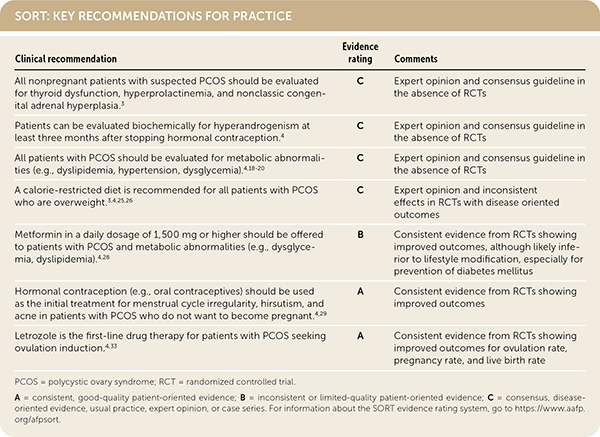
| All nonpregnant patients with suspected PCOS should be evaluated for thyroid dysfunction, hyperprolactinemia, and nonclassic congenital adrenal hyperplasia.3 |
C |
Expert opinion and consensus guideline in the absence of RCTs |
| Patients can be evaluated biochemically for hyperandrogenism at least three months after stopping hormonal contraception.4 |
C |
Expert opinion and consensus guideline in the absence of RCTs |
| All patients with PCOS should be evaluated for metabolic abnormalities (e.g., dyslipidemia, hypertension, dysglycemia).4,18–20 |
C |
Expert opinion and consensus guideline in the absence of RCTs |
| A calorie-restricted diet is recommended for all patients with PCOS who are overweight.3,4,25,26 |
C |
Expert opinion and inconsistent effects in RCTs with disease oriented outcomes. [corrected] |
| Metformin in a daily dosage of 1,500 mg or higher should be offered to patients with PCOS and metabolic abnormalities (e.g., dysglycemia, dyslipidemia).4,28 |
B |
Consistent evidence from RCTs showing improved outcomes, although likely inferior to lifestyle modification, especially for prevention of diabetes mellitus |
| Hormonal contraception (e.g., oral contraceptives) should be used as the initial treatment for menstrual cycle irregularity, hirsutism, and acne in patients with PCOS who do not want to become pregnant.4,29 |
A |
Consistent evidence from RCTs showing improved outcomes |
| Letrozole is the first-line drug therapy for patients with PCOS seeking ovulation induction.4,33 |
A |
Consistent evidence from RCTs showing improved outcomes for ovulation rate, pregnancy rate, and live birth rate |