Details for This Review
Study Population: Approximately 90,000 patients with an average age of 50 to 75 years who had hypertension and multiple comorbidities, including type 2 diabetes mellitus; participants had a resting blood pressure of greater than 140 mm Hg systolic or greater than 90 mm Hg diastolic, measured using a standard method on at least two occasions
Efficacy End Points: Total mortality, total morbidity (e.g., serious adverse events, cardiovascular events, stroke, coronary heart disease, congestive heart failure)
THE NUMBERS
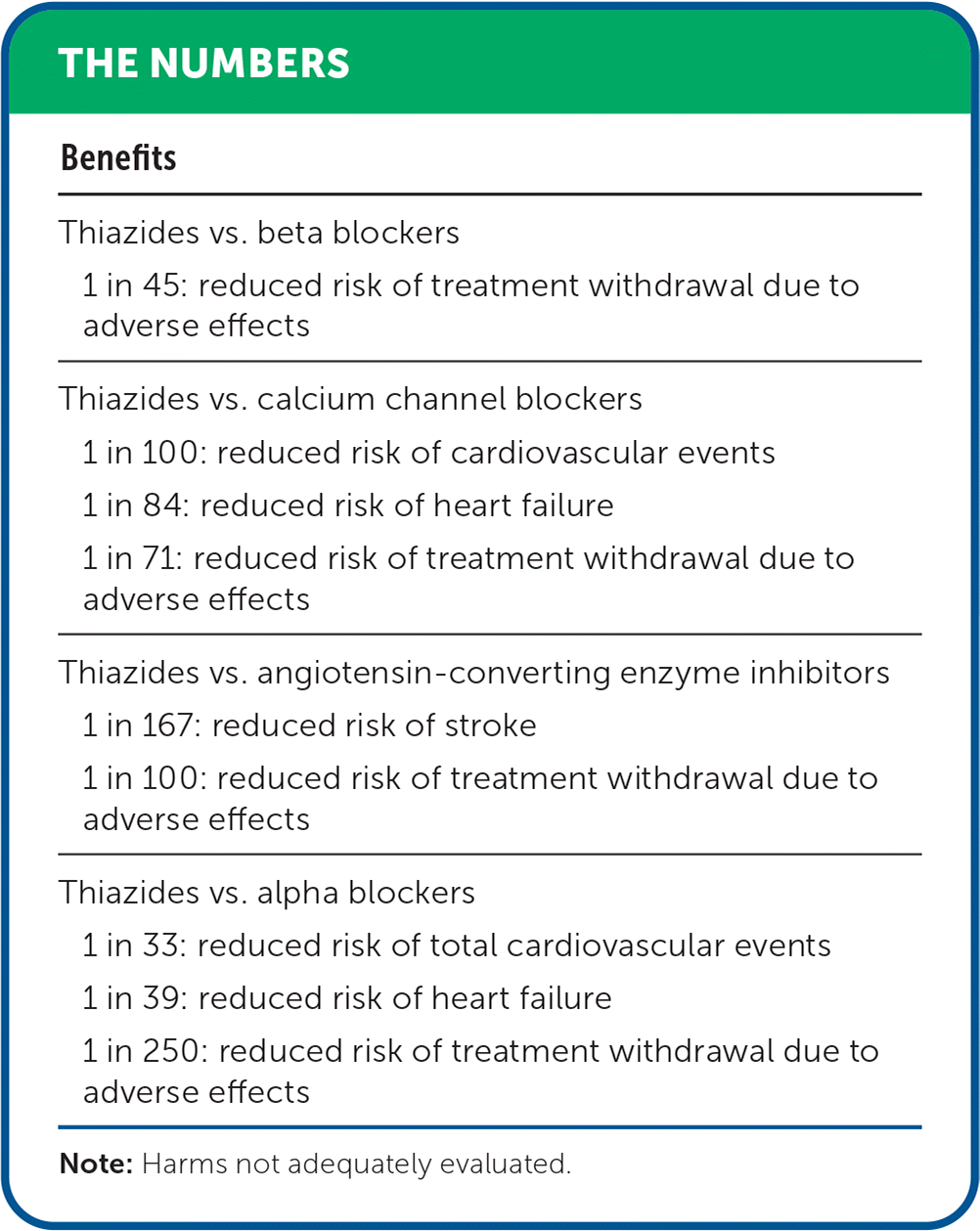
| Benefits |
|---|
| Thiazides vs. beta blockers |
| 1 in 45: reduced risk of treatment withdrawal due to adverse effects |
Thiazides vs. calcium channel blockers |
| 1 in 100: reduced risk of cardiovascular events |
| 1 in 84: reduced risk of heart failure |
| 1 in 71: reduced risk of treatment withdrawal due to adverse effects |
Thiazides vs. angiotensin-converting enzyme inhibitors |
| 1 in 167: reduced risk of stroke |
| 1 in 100: reduced risk of treatment withdrawal due to adverse effects |
Thiazides vs. alpha blockers |
| 1 in 33: reduced risk of total cardiovascular events |
| 1 in 39: reduced risk of heart failure |
| 1 in 250: reduced risk of treatment withdrawal due to adverse effects |
Note: Harms not adequately evaluated.
Narrative: Hypertension is a common chronic condition worldwide and is associated with significant cardiovascular morbidity and mortality. Poorly controlled hypertension increases the risk of heart disease, kidney disease, and stroke. Data from direct comparison between different classes of recommended first-line antihypertensives are lacking, and it is unclear whether initiating treatment with one specific class of antihypertensive medication leads to better outcomes.
This Cochrane review was undertaken to investigate whether beginning antihypertensive treatment with a thiazide or thiazide-like diuretic leads to improved health outcomes compared with other antihypertensives.1 The systematic review included 20 randomized controlled trials, each lasting at least one year, with an average duration of five years.
Compared with beta blockers, thiazides probably lead to fewer withdrawals due to adverse effects (risk ratio [RR] = 0.78; 95% CI, 0.71 to 0.85; five trials, 18,501 participants; absolute risk reduction [ARR] = 2.2%; number needed to treat [NNT] = 45; moderate-certainty evidence).
Compared with calcium channel blockers, thiazides probably decrease total cardiovascular events (RR = 0.93; 95% CI, 0.89 to 0.98; six trials, 35,217 participants; ARR = 1.0%; NNT = 100) and total risk of heart failure (RR = 0.74; 95% CI, 0.66 to 0.82; six trials, 35,217 participants; ARR = 1.2%; NNT = 84), based on moderate-certainty evidence. Low-certainty evidence demonstrated that thiazides are also associated with fewer withdrawals due to adverse effects (RR = 0.81; 95% CI, 0.75 to 0.88; seven trials, 33,908 participants; ARR = 1.4%; NNT = 71).
Compared wit h angiotensin-converting enzyme inhibitors, thiazides probably reduce total risk of strokes (RR = 0.89; 95% CI, 0.80 to 0.99; three trials, 30,900 participants; ARR = 0.6%; NNT = 167) and withdrawals due to adverse effects (RR = 0.73; 95% CI, 0.64 to 0.84; three trials, 25,254 participants; ARR = 1.0%; NNT = 100; moderate-certainty evidence).
Compared with alpha blockers, thiazides probably reduce total cardiovascular events (RR = 0.74; 95% CI, 0.69 to 0.80; two trials, 24,396 participants; ARR = 3.1%; NNT = 33) and total heart failure (RR = 0.51; 95% CI, 0.45 to 0.58; one trial, 24,316 participants; ARR = 2.6%; NNT = 39), based on moderate-certainty evidence. Low-certainty evidence showed that thiazide diuretics may also decrease the number of withdrawals due to adverse effects (RR = 0.70; 95% CI, 0.54 to 0.89; three trials, 24,772 participants; ARR = 0.4%; NNT = 250).
Based on data from the meta-analysis, there is likely no difference in total mortality between thiazide diuretics and other antihypertensives for first-line treatment (moderate-certainty evidence). No other first-line antihypertensive class showed clinically significant greater benefits than thiazides.
Caveats: This study has numerous strengths, including using only high-quality, randomized, head-to-head studies with an average follow-up period of five years. The study population was heterogeneous and generalizable to an older population with comorbidities receiving antihypertensives. Internal validity was high because studies were methodologically sound. Study limitations included a general lack of data about serious adverse events, higher industry funding, and insufficient data comparing thiazide diuretics with angiotensin II receptor blockers and direct renin inhibitors.
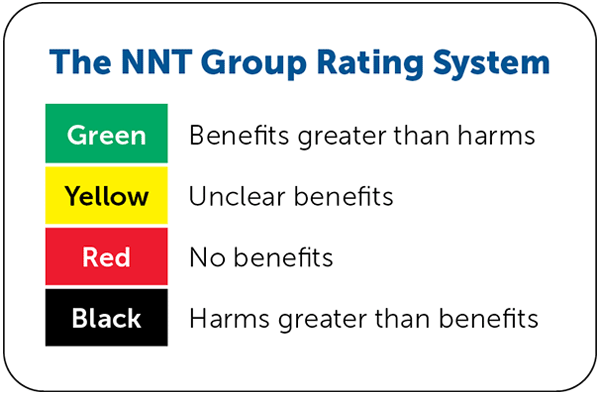
Conclusion: Given the overall morbidity benefits and reduction in the number of withdrawals due to adverse effects compared with other anti-hypertensives, we have assigned a color of green (benefits greater than harms) for thiazides as a first-line antihypertensive.