

Intimate partner violence (IPV) is a significant and preventable public health problem defined as behavior by a romantic or sex partner that causes physical, sexual, or psychological harm. Although individuals of all gender identities experience IPV, women, especially those of reproductive age, are more likely to experience severe IPV. Patients who are from a rural area or are members of a historically marginalized population, such as immigrants, refugees, or the lesbian, gay, bisexual, transgender, queer, plus community, also have increased risk of IPV. Multiple negative physical and mental health outcomes are associated with IPV. Guidelines from the US Preventive Services Task Force and other organizations recommend screening women of reproductive age for IPV and recommend against universal screening. Universal education bypasses the need for disclosure of IPV and promotes normalizing conversations about IPV using nonjudgmental language while maintaining privacy and prioritizing resource provision. Universal education focuses on a patient-centered, trauma-informed approach that provides brief education, support, and referrals to services as desired; individuals can disclose IPV on their own terms.
Intimate partner violence (IPV) is defined as any contact sexual violence (eg, rape, forced penetration, sexual coercion, unwanted sexual contact), physical violence, stalking, or psychological aggression by a romantic or sex partner.1 About 47% of women (59 million) and 44% of men (52 million) in the United States have survived IPV.1 The true prevalence of IPV is unknown due to underreporting. Women and men experience physical violence at similar rates; however, women are more likely to experience severe physical violence, stalking, contact sexual violence, or homicide by a current or former intimate partner (Table 1).1,2 Most studies do not capture the full spectrum of gender identity; therefore, gender in this article references the binary terms men and women.
WHAT’S NEW ON THIS TOPIC
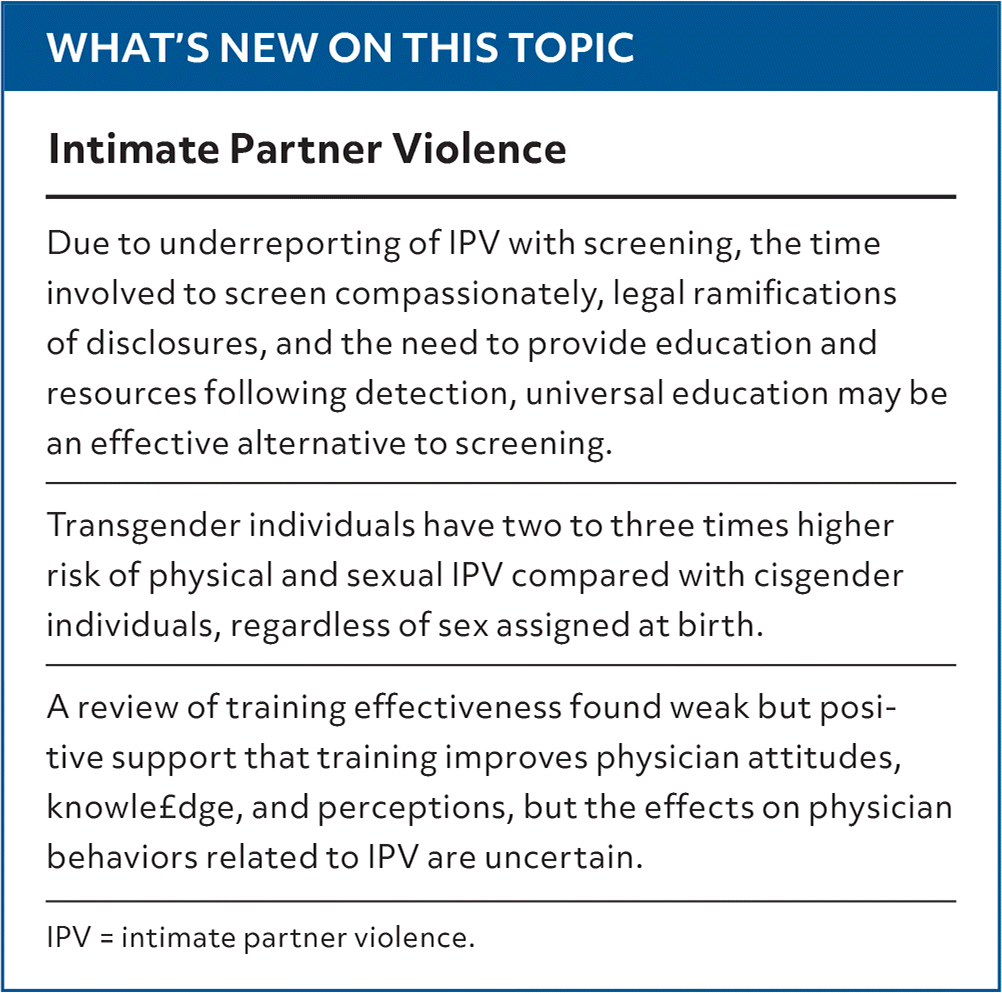
| Due to underreporting of IPV with screening, the time involved to screen compassionately, legal ramifications of disclosures, and the need to provide education and resources following detection, universal education may be an effective alternative to screening. |
| Transgender individuals have two to three times higher risk of physical and sexual IPV compared with cisgender individuals, regardless of sex assigned at birth. |
| A review of training effectiveness found weak but positive support that training improves physician attitudes, knowledge, and perceptions, but the effects on physician behaviors related to IPV are uncertain. |
IPV = intimate partner violence.
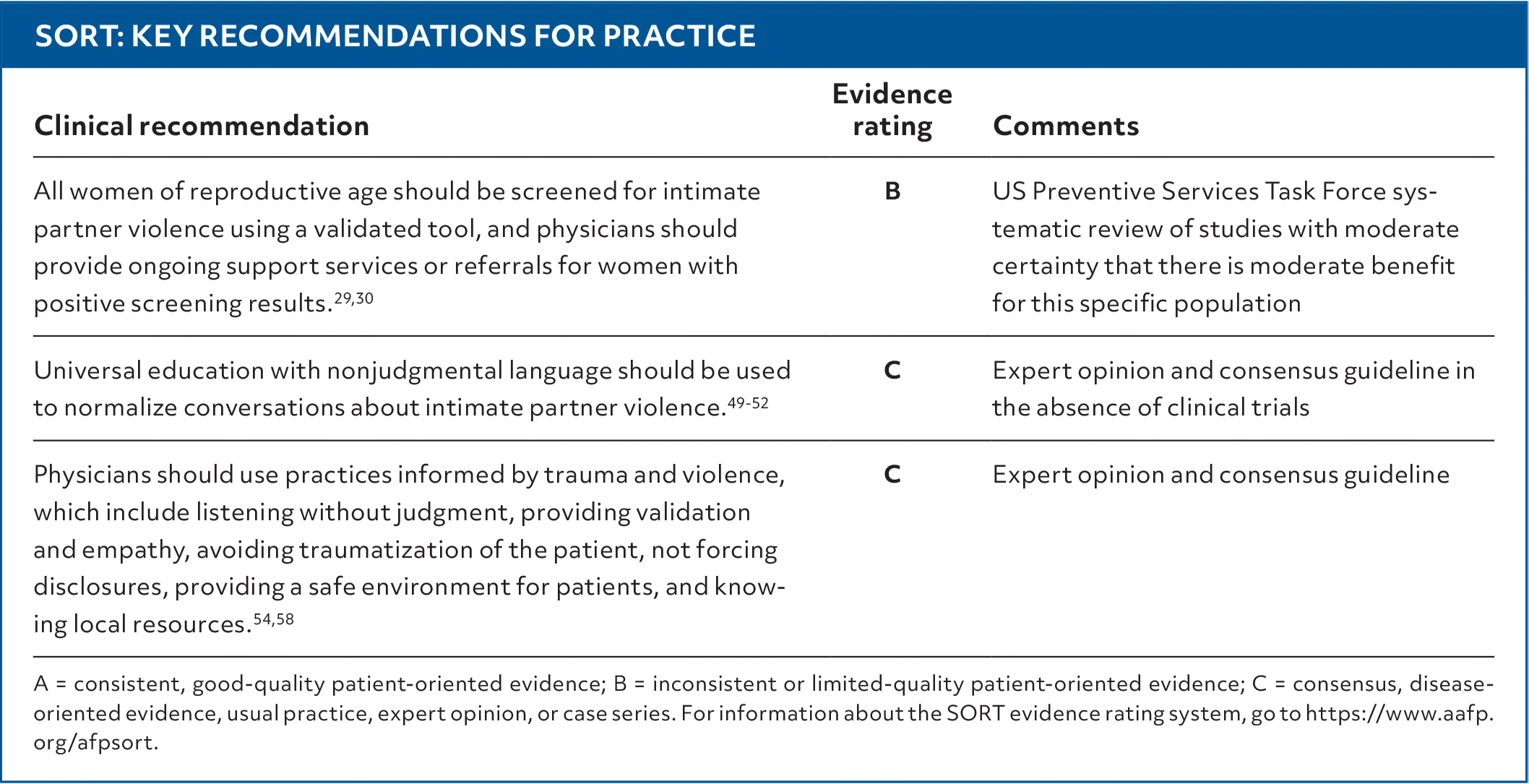
SORT: KEY RECOMMENDATIONS FOR PRACTICE
| Clinical recommendation | Evidence rating | Comments |
|---|---|---|
| All women of reproductive age should be screened for intimate partner violence using a validated tool, and physicians should provide ongoing support services or referrals for women with positive screening results.29,30 | B | US Preventive Services Task Force systematic review of studies with moderate certainty that there is moderate benefit for this specific population |
| Universal education with nonjudgmental language should be used to normalize conversations about intimate partner violence.49–52 | C | Expert opinion and consensus guideline in the absence of clinical trials |
| Physicians should use practices informed by trauma and violence, which include listening without judgment, providing validation and empathy, avoiding traumatization of the patient, not forcing disclosures, providing a safe environment for patients, and knowing local resources.54,58 | C | Expert opinion and consensus guideline |
A = consistent, good-quality patient-oriented evidence; B = inconsistent or limited-quality patient-oriented evidence; C = consensus, disease-oriented evidence, usual practice, expert opinion, or case series. For information about the SORT evidence rating system, go to https://www.aafp.org/afpsort.
Read the full article
Get immediate access, anytime, anywhere.
Choose a single article, issue, or full-access subscription.
Earn up to 14 CME credits per issue.
