To the Editor:
A 66-year-old man presented to our dermatology clinic with a worsening rash that developed 3 to 4 years earlier. His primary care physician initially diagnosed intertrigo and prescribed clotrimazole-betamethasone cream, which he used once daily during that multiyear period, obtaining multiple refills. The cream provided relief, but missed applications resulted in flare-ups, pain, blistering, and bleeding.
Examination found purpuric atrophic patches on the bilateral inguinal folds extending to the inner thighs (Figure 1). A 4-mm punch biopsy of the right inner thigh showed epidermal atrophy, hemorrhage, and complete loss of the dermis, consistent with topical steroid–induced skin atrophy. The patient was counseled on skin atrophy resulting from prolonged topical steroid use and instructed to taper off the clotrimazolebetamethasone cream and start tacrolimus ointment.
FIGURE 1.
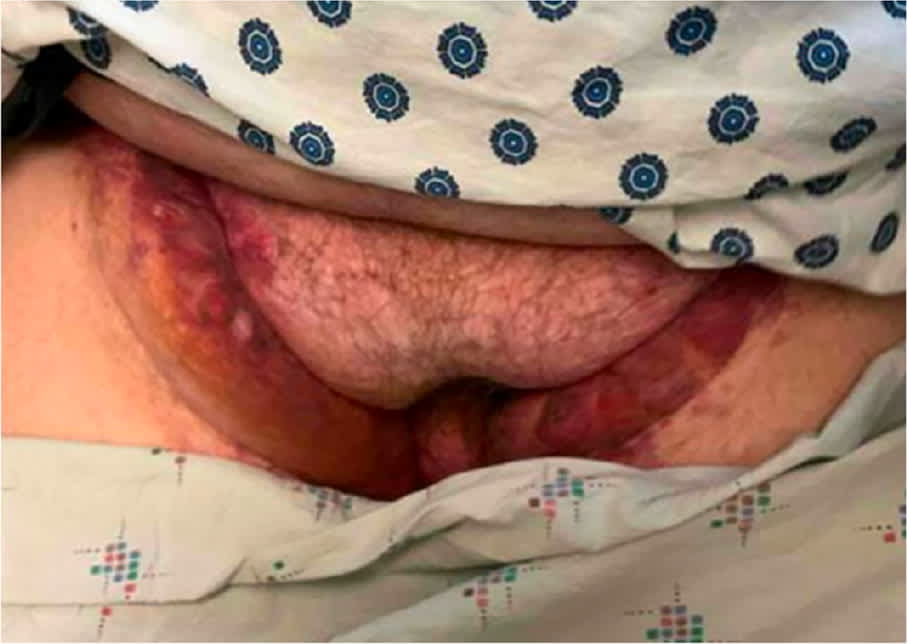
Erythematous to purpuric atrophic patches on the bilateral inner thighs.
This case highlights the potential risks of prolonged topical steroid use, especially in intertriginous areas. Skin atrophy, one of the most prevalent and consequential adverse effects of long-term topical steroid treatment, begins 3 to 14 days after initiation of use.1 Due to vasoconstriction, steroid application temporarily relieves the burning sensation caused by skin atrophy.2 Due to rebound vasodilation, the sensation is further exacerbated with steroid withdrawal.2 The risk of steroid-induced atrophy increases with higher-potency topical steroids, use on body sites with thinner skin (eg, intertriginous areas), prolonged use, and occlusion.2
Because family physicians commonly manage dermatologic conditions, counseling patients regarding safe use of topical steroids and combination topical treatments is essential. To prevent skin atrophy and other adverse effects, we recommend the following3–6: (1) consider steroid-sparing alternatives, such as topical calcineurin inhibitors, when appropriate; (2) if topical steroids are necessary, use the lowest effective potency and limit application to 2 to 4 weeks for most conditions; (3) for chronic conditions requiring longer treatment, implement a weekend-only regimen; (4) if the condition does not improve with appropriate steroid use, consider biopsy and referral to a dermatologist; (5) educate patients on proper use and potential adverse effects of topical steroids; (6) schedule regular follow-up appointments to assess effectiveness and adverse effects.
This case is a reminder of the importance of patient counseling on judicious topical steroid use and the need for regular reassessment of chronic skin conditions to prevent adverse effects.