Vasectomy is a highly effective form of permanent contraception. It is as effective as tubal sterilization and is safer, less costly, and associated with quicker recovery. In the United States, only 4% of men ages 18 to 45 years have had a vasectomy, indicating that it is underused despite the benefits. Vasectomy is typically performed in the outpatient setting, and most patients return to regular physical and sexual activity after 1 week. Opioids and antibiotics are not routinely needed. The no-scalpel vasectomy and other minimally invasive techniques for approaching and isolating the vas deferens have the lowest occurrence of adverse events such as hematoma, infection, sperm granuloma, recanalization, and chronic scrotal pain. After the vas deferens is isolated and segment is removed, mucosal cautery alone or facial interposition with mucosal cautery of both ends or abdominal end have occlusion failure rates of less than 1%. The addition of fascial interposition improves rates and decreases the time to azoospermia on semen analysis without a significant increase in adverse outcomes. Sterility is confirmed 3 months after vasectomy with a semen analysis that shows rare, nonmotile sperm (100,000/mL or fewer) on microscopy. Although vasectomy should be considered permanent, up to 6% of patients seek reversal. Successful reversal rates (return of sperm to semen) are high; however, pregnancy rates are variable.
Vasectomy is an elective, office-based procedure performed in men who do not want to conceive future children. During this procedure, a segment of the vas deferens is removed and/or cauterized, preventing sperm from entering the semen.1,2 Vasectomy has no impact on sexual experience or drive.1,2 It is more than 99% effective in preventing future pregnancies after a semen analysis confirms sterility 3 months after the procedure.1,2 In the United States, 13% of vasectomies are performed by family physicians.1–3
SORT: KEY RECOMMENDATIONS FOR PRACTICE
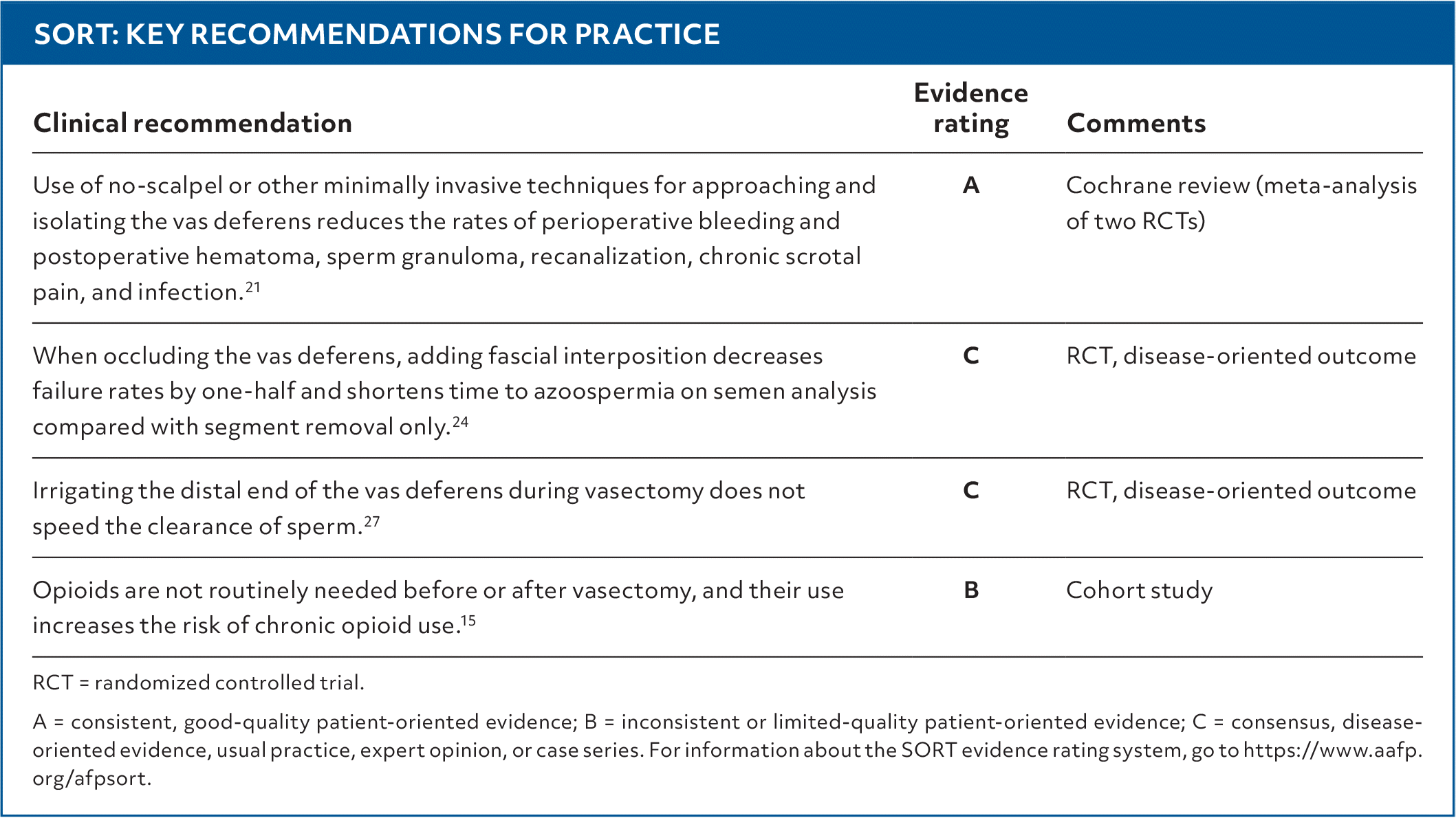
| Clinical recommendation | Evidence rating | Comments |
|---|---|---|
| Use of no-scalpel or other minimally invasive techniques for approaching and isolating the vas deferens reduces the rates of perioperative bleeding and postoperative hematoma, sperm granuloma, recanalization, chronic scrotal pain, and infection.21 | A | Cochrane review (meta-analysis of two RCTs) |
| When occluding the vas deferens, adding fascial interposition decreases failure rates by one-half and shortens time to azoospermia on semen analysis compared with segment removal only.24 | C | RCT, disease-oriented outcome |
| Irrigating the distal end of the vas deferens during vasectomy does not speed the clearance of sperm.27 | C | RCT, disease-oriented outcome |
| Opioids are not routinely needed before or after vasectomy, and their use increases the risk of chronic opioid use.15 | B | Cohort study |
RCT = randomized controlled trial.
A = consistent, good-quality patient-oriented evidence; B = inconsistent or limited-quality patient-oriented evidence; C = consensus, disease-oriented evidence, usual practice, expert opinion, or case series. For information about the SORT evidence rating system, go to https://www.aafp.org/afpsort.
Vasectomy rates in the 1980s and 1990s were steady but declined across all age groups and areas of the country from 2002 to 2017.4,5 In the United States, only 4% of men ages 18 to 45 years have had a vasectomy, indicating it is underused despite the benefits.4 Typical characteristics of men who pursue vasectomy include age older than 30 years and being in a stable relationship with two or more children.6,7 Lower education and income are associated with lower utilization of vasectomy.4,8
Read the full article
Get immediate access, anytime, anywhere.
Choose a single article, issue, or full-access subscription.
Earn up to 14 CME credits per issue.