

Vaginitis is a general term for inflammation of the vagina with symptoms such as vulvovaginal itching, burning, irritation, dyspareunia, odor, or abnormal vaginal discharge. It is a common condition that results in 5 million to 10 million office visits annually. The leading infectious causes of vaginitis are bacterial vaginosis, vulvovaginal candidiasis, and trichomoniasis. Noninfectious causes include atrophic, irritant, and inflammatory vaginitis. Bacterial vaginosis usually presents with a thin, homogenous vaginal discharge and a fishy odor. Vulvovaginal candidiasis often manifests with a white, thick, curd-like discharge, pruritus, and vulvar erythema. Trichomoniasis usually presents with a green or yellow frothy discharge, and speculum examination may reveal cervical erythema with petechiae. Noninfectious vaginitis can present with clear or purulent discharge and can be pruritic depending on the etiology. Bacterial vaginosis can be diagnosed using Amsel criteria, Gram stain, or a nucleic acid amplification test (NAAT). Vulvovaginal candidiasis can be diagnosed by visualization of yeast hyphae or budding yeast on microscopy, vaginal fungal culture, polymerase chain reaction testing, or NAAT. Trichomoniasis can be diagnosed with visualization of motile, flagellated protozoa on saline microscopy, NAAT, or DNA probe test. Bacterial vaginosis is treated with oral or intravaginal metronidazole or intravaginal clindamycin. Vulvovaginal candidiasis is managed with topical or oral antifungals. Trichomoniasis is treated with oral metronidazole or tinidazole. When treating trichomoniasis, testing for reinfection, as well as other sexually transmitted infections, is recommended. Treatments for noninfectious vaginitis include vaginal lubricants and moisturizers, topical hormones, and topical steroids, depending on the cause.
Vaginitis is a common condition in women and other people with a vagina, with at least one lifetime episode of vaginitis resulting in 5 million to 10 million office visits per year.1–3 Vaginitis has negative effects on quality of life, particularly in those who have recurrent symptoms, with some experiencing anxiety, shame, and hygiene concerns.4–7
WHAT'S NEW ON THIS TOPIC
| Studies demonstrate that patients diagnosed using nucleic acid amplification tests have fewer return visits and lower health care costs than patients diagnosed with clinical evaluation alone. |
| A recent open-label, randomized controlled trial found that women whose monogamous male partners were also treated for 7 days with oral metronidazole and 2% clindamycin cream applied to penile skin were less likely to experience bacterial vaginosis recurrence within 12 weeks compared with standard care. |
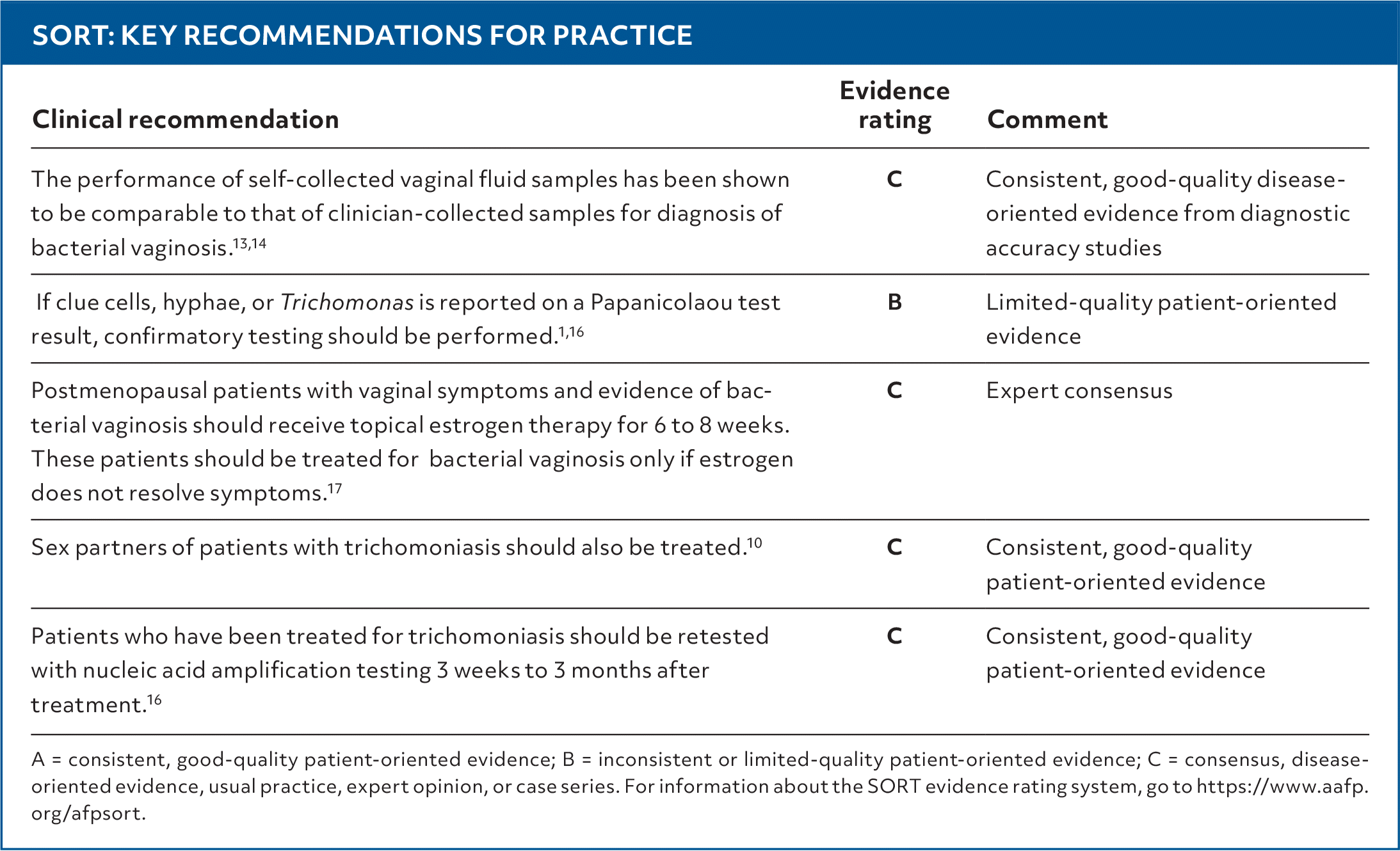
SORT: KEY RECOMMENDATIONS FOR PRACTICE
| Clinical recommendation | Evidence rating | Comment |
|---|---|---|
| The performance of self-collected vaginal fluid samples has been shown to be comparable to that of clinician-collected samples for diagnosis of bacterial vaginosis.13,14 | C | Consistent, good-quality disease-oriented evidence from diagnostic accuracy studies |
| If clue cells, hyphae, or Trichomonas is reported on a Papanicolaou test result, confirmatory testing should be performed.1,16 | B | Limited-quality patient-oriented evidence |
| Postmenopausal patients with vaginal symptoms and evidence of bacterial vaginosis should receive topical estrogen therapy for 6 to 8 weeks. These patients should be treated for bacterial vaginosis only if estrogen does not resolve symptoms.17 | C | Expert consensus |
| Sex partners of patients with trichomoniasis should also be treated.10 | C | Consistent, good-quality patient-oriented evidence |
| Patients who have been treated for trichomoniasis should be retested with nucleic acid amplification testing 3 weeks to 3 months after treatment.16 | C | Consistent, good-quality patient-oriented evidence |
A = consistent, good-quality patient-oriented evidence; B = inconsistent or limited-quality patient-oriented evidence; C = consensus, disease-oriented evidence, usual practice, expert opinion, or case series. For information about the SORT evidence rating system, go to https://www.aafp.org/afpsort.
Read the full article
Get immediate access, anytime, anywhere.
Choose a single article, issue, or full-access subscription.
Earn up to 14 CME credits per issue.
