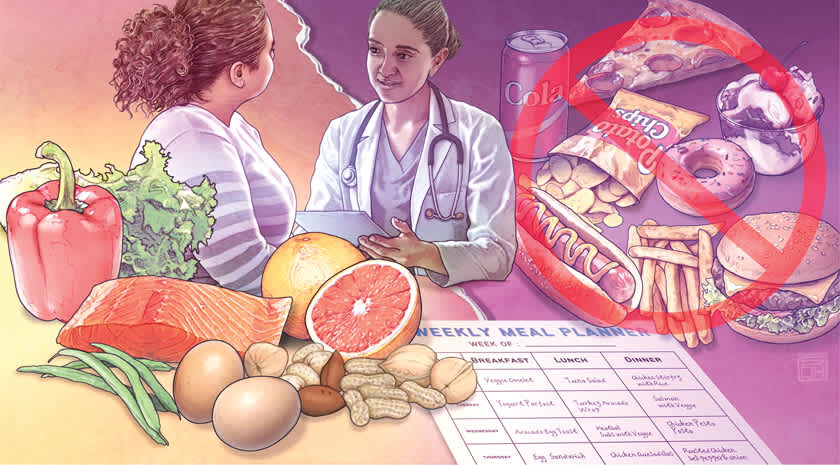
CASE SCENARIO
B.P., a 16-year-old boy with a body mass index (BMI) of 40 kg/m2 (class 3 obesity; 145% of the 95th percentile for a BMI of 27.6 kg/m2), hypertension, and metabolic dysfunction–associated steatotic liver disease (MASLD), presents for weight management follow-up. He previously participated in an adolescent weight management clinic where he engaged in intensive health behavior and lifestyle treatment for 6 months but experienced no significant weight change. B.P. has lost about 3 kg since initiating orlistat 1 month ago, but he reports frequent diarrhea. He says he often sees advertisements for semaglutide (Wegovy) and asks whether a similar medication could be prescribed for him. Is a glucagon-like peptide-1 (GLP-1) receptor agonist a safe and effective option for managing this patient's obesity? What are the psychosocial and financial implications of GLP-1 receptor agonist use in an adolescent patient?
COMMENTARY
Escalating Challenge of Adolescent Obesity
Obesity and its associated health risks in children are significant public health concerns, with prevalence reaching 19.7% between 2017 and 2020, resulting in an estimated $1.3 billion in annual medical costs.1 Adolescents with obesity face an 89% likelihood of persistent obesity as adults and an increased risk for type 2 diabetes, hypertension, hyperlipidemia, MASLD, obstructive sleep apnea, anxiety, depression, social isolation, and peer victimization.2,3 For adolescents with severe obesity (ie, a BMI that is 120% of the 95th percentile or higher or a BMI of 35 kg/m2 or higher), lifestyle management alone has demonstrated limited effectiveness.3 The American Academy of Pediatrics recommends considering pharmacotherapy for adolescents with obesity, but the introduction of potent medications (eg, GLP-1 receptor agonists) presents a host of complex psychosocial and financial questions that extend beyond clinical efficacy. Primary care clinicians must navigate these discussions and consider the adolescent's entire life context. This includes exploring family dynamics, cultural beliefs, the powerful influence of social media on body image, and the patient's own understanding of their weight and hopes for the future. Critically, initiating this therapy pathway raises the very real prospect of a lifelong commitment to medication, a significant financial burden for many families, and questions about equity of access.2,3
GLP-1 Receptor Agonists: A Critical Look at the Evidence
Two GLP-1 receptor agonists, semaglutide and liraglutide (Saxenda), are approved by the US Food and Drug Administration for treating obesity in adolescents 12 years and older with a BMI at the 95th percentile or higher. Clinical trials have shown notable BMI reductions, but long-term differences in other health-related outcomes in this population are still under investigation.4,5 A 68-week trial of semaglutide with lifestyle counseling showed an approximate BMI reduction of 16%; a 56-week trial of liraglutide showed a 5% BMI reduction compared with lifestyle interventions alone4,5 (Table 13–10). Currently, no medications are approved for obesity treatment in children younger than 12 years, but a randomized controlled trial of 82 patients 6 to 12 years of age found that liraglutide resulted in an estimated BMI reduction of 7% compared with placebo, suggesting potential future applications.11 There are no head-to-head trials of GLP-1 receptor agonists vs other pharmacologic treatments in adolescents.
Read the full article
Get immediate access, anytime, anywhere.
Choose a single article, issue, or full-access subscription.
Earn up to 14 CME credits per issue.