
Am Fam Physician. 2026;113(4):393-394
Author disclosure: No relevant financial relationships.
A 59-year-old postmenopausal woman presented for a routine gynecological examination. She reported mild dyspareunia but did not have dysuria, hematuria, or pelvic or abdominal pain. She had experienced no uterine bleeding since completing menopause 4 years earlier. Her last Papanicolaou test result 4 years earlier was negative for human papillomavirus but showed atypical squamous cells of undetermined significance.
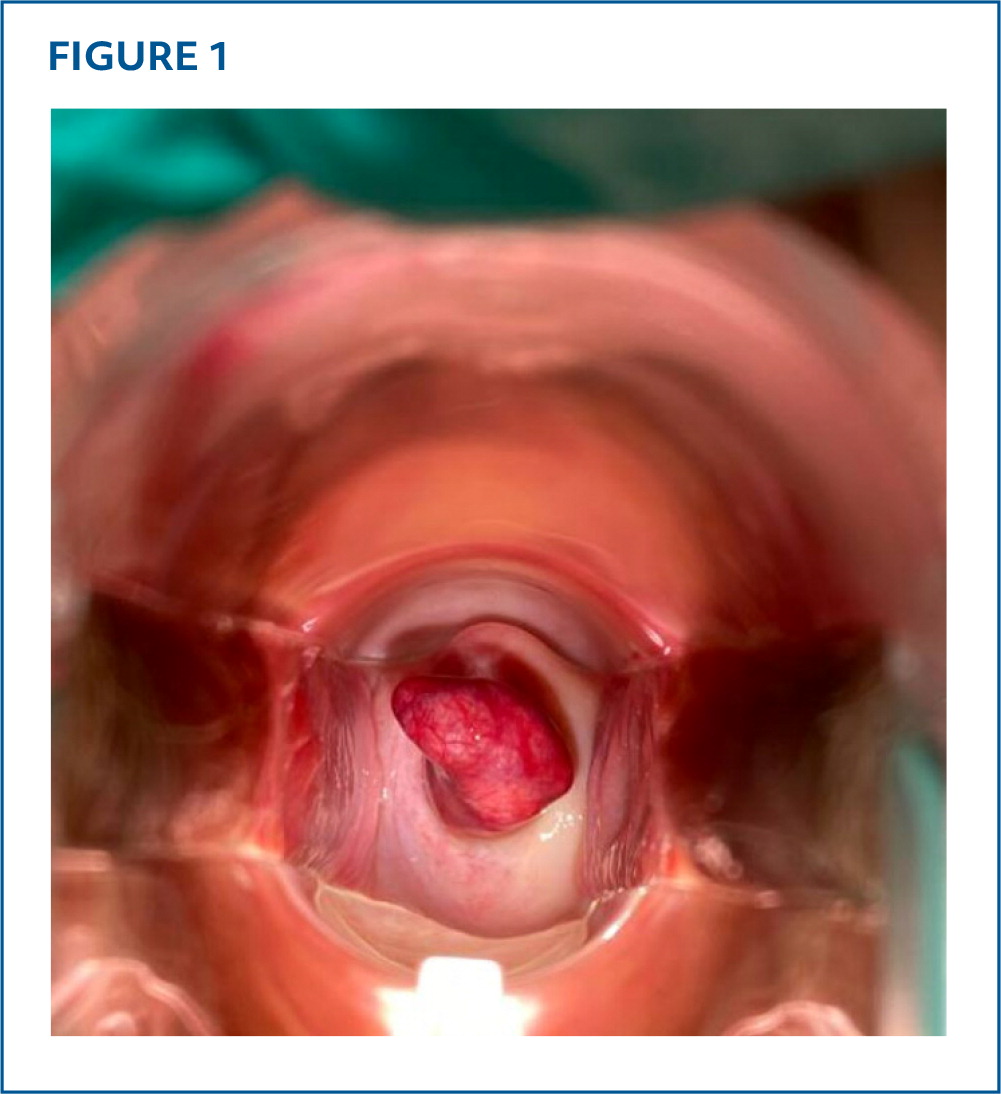
A speculum examination revealed a fleshy mass 3 cm in diameter protruding from the cervical os (Figure 1). No vaginal discharge or bleeding was noted.
QUESTION
Based on the patient's history and physical examination, which one of the following is the most likely diagnosis?
A. Cervical carcinoma.
B. Cervical polyp.
C. Endometrial carcinoma.
D. Endometrial polyp.
E. Prolapsing submucosal fibroid (leiomyoma).
DISCUSSION
Answer is D: endometrial polyp. Endometrial polyps are localized proliferations of the endometrial glands and stroma that develop within the uterine cavity. They can range in size from a few millimeters to several centimeters. They may appear as a solitary growth or as multiple lesions that occupy the entire endometrial space. Although endometrial polyps can occur at any age, they are most common between 40 and 49 years. Risk of malignant transformation has been reported to be as high as 13%.1
Subscribe
From $180- Immediate, unlimited access to all AFP content
- More than 125 CME credits/year
- Print delivery available
Issue Access
$59.95- Immediate, unlimited access to this issue's content
- CME credits
- Print delivery available
