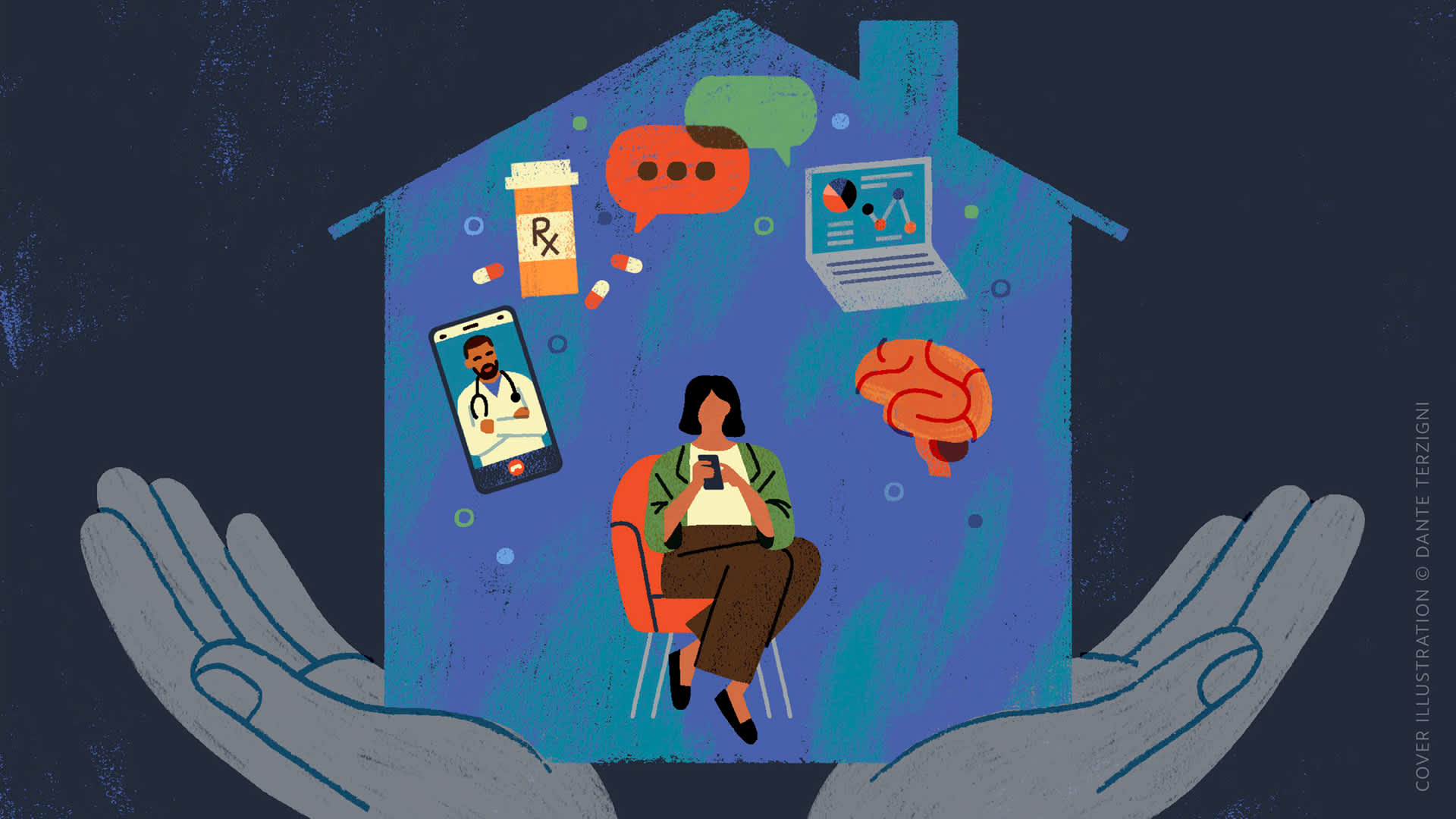

What if we treated ourselves with the same compassion we extend to others?
Think about the last time you made a mistake in your practice. Did you feel frustrated, ashamed, or like an impostor? What was your inner dialogue? Now imagine a colleague reaching out to talk about a mistake they made. How would you speak to them? Do you notice a difference?
We often apply shame and judgment to ourselves, in stark contrast to the compassion we usually extend to colleagues. When we allow this harsh inner dialogue to go unchecked, it can become a vicious cycle, with self-criticism leading to more pain, regret, and shame.1 Fortunately, there is a path out of this trap: self-compassion.
WHAT IS SELF-COMPASSION?
Self-compassion is the deliberate practice of offering yourself the same kindness you would offer a loved one in a similar situation. It has three components: self-kindness (being gentle toward oneself during adversity), common humanity (being aware that all humans face challenges), and mindfulness (being aware of the present difficulty without judging or over-identifying with it).2
This goes against traditional medical culture, which demands that we be perfect. But self-compassion can make us better doctors. It increases our ability to process uncomfortable experiences and respond with intention and humility, rather than reacting from pain and defensiveness.3 This leads to increased agency and empowerment to navigate difficult situations. Activating brain systems that regulate emotions and seek connection allows us to bring our best selves to our interactions and relationships.2,4
Self-compassion isn't about ignoring mistakes or shirking responsibility. Research suggests it actually increases our motivation to take responsibility for our actions.3
Self-compassion also helps us see mistakes more clearly. Often, they have more to do with system flaws than individual failures. Self-compassion allows us to operate from a place of emotional stability, which helps us identify systemic problems and advocate to change them.
(For help practicing self-compassion, try the exercise in Table 1.)
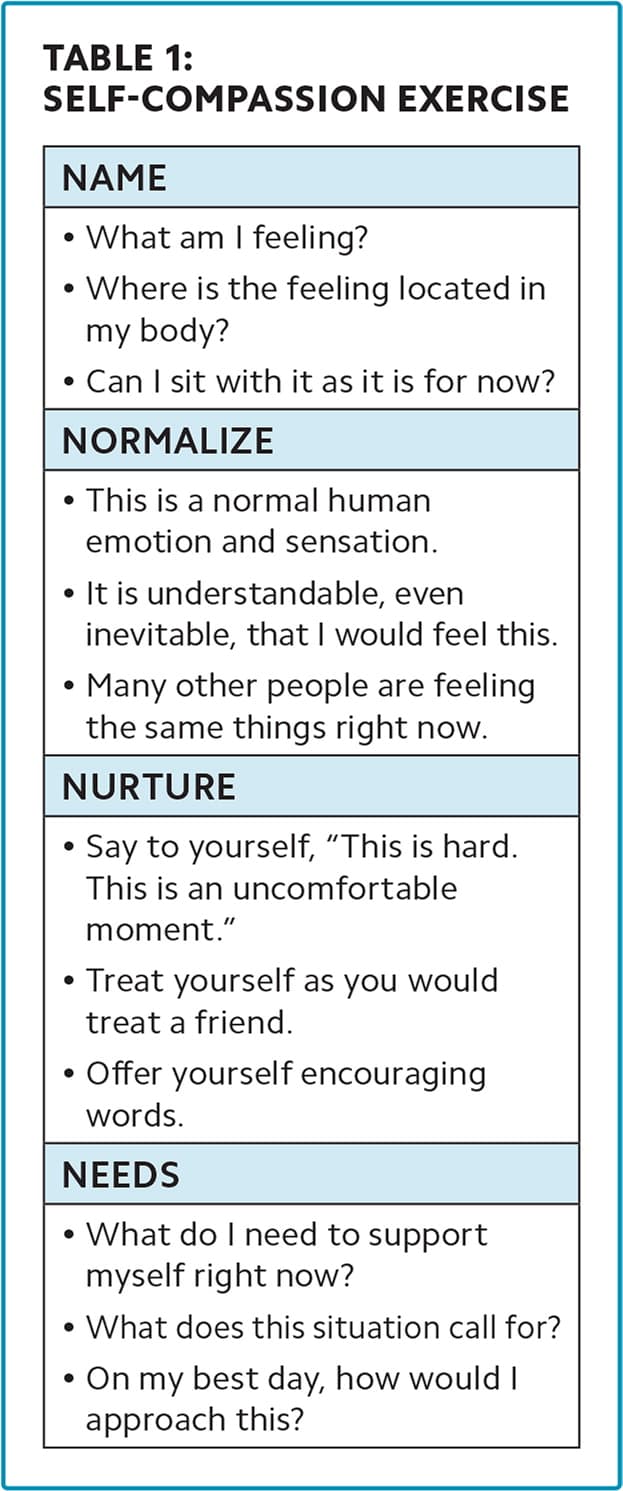
| NAME |
|
| NORMALIZE |
|
| NURTURE |
|
| NEEDS |
|
WE GET TO CHOOSE
Failures and frustrations are inevitable in a profession as complex as family medicine, but we can choose how we respond to them. Self-compassion may not be our default, but it is the better choice.
Read the full article
Get immediate access, anytime, anywhere.
Choose a single article, issue, or full-access subscription.
Earn up to 5 CME credits per issue.