
Am Fam Physician. 2002;65(12):2525-2534
Once the clinical diagnosis of Alzheimer's disease has been made, a treatment plan must be developed. This plan should include cholinesterase inhibitor therapy to temporarily improve cognition or slow the rate of cognitive decline, management of comorbid conditions, treatment of behavioral symptoms and mood disorders, provision of support and resources for patient and caregiver, and compliance with state-mandated reporting requirements for driving impairment and elder abuse. The primary caregiver can be a valuable ally in communication, management of care, and implementation of the care plan. Patient symptoms and care needs change as Alzheimer's disease progresses. In the early stage of the disease, the family physician should discuss realistic expectations for drug therapy, solicit patient and family preferences on future care choices, and assist with advance planning for future care challenges. In the middle stage, the patient may exhibit behavioral symptoms that upset the care-giver and are difficult to manage. When the patient is in the advanced stage of Alzheimer's disease, the caregiver may need support to provide for activities of daily living, help in making a difficult placement decision, and guidance in considering terminal care options. Throughout the course of the disease, routine use of community resources allows care to be provided by a network of professionals, many of whom will be specialists in Alzheimer's disease.
The management guidelines discussed in this two-part article and summarized in part I1 are designed to assist family physicians in directing the care of patients and their caregivers after Alzheimer's disease has been diagnosed. Part I addressed the assessment and monitoring of patients and caregivers. Part II focuses on the selection and provision of appropriate treatments for the multiple symptoms patients experience over the course of Alzheimer's disease.
Development of a Management Plan
A comprehensive management plan should be developed as soon as possible after Alzheimer's disease is diagnosed. This plan should encompass the values and preferences of the patient and family, and should also address comorbid conditions. As the disease progresses, the management plan should be modified to address new issues.
Management consists of both pharmacologic and nonpharmacologic interventions, as well as referrals to social service agencies and support resources such as the Alzheimer's Association.2 The family physician plays a key role in linking the family to community resources and other health care and social service providers who will help in implementing the overall care plan.
Treatment
COGNITIVE DEFICITS
Cholinesterase Inhibitors
Treatment with cholinesterase inhibitors can provide modest improvement of symptoms, temporary stabilization of cognition, or reduction in the rate of cognitive decline in some patients with mild to moderate Alzheimer's disease. Approximately 20 to 35 percent of patients treated with these agents exhibit a seven-point improvement on neuropsychologic tests (equivalent to one year's decline and representing a 5 to 15 percent benefit over placebo).3 Before treatment is initiated, it is important to communicate the expected (modest) benefits of cholinesterase inhibitors to the patient and family.
Four cholinesterase inhibitors are currently available: donepezil (Aricept), rivastigmine (Exelon), galantamine (Reminyl), and tacrine (Cognex). These agents raise acetylcholine levels in the brain by inhibiting acetylcholinesterase. No head-to-head studies have compared the efficacy of the cholinesterase inhibitors, and their main differences are their side effect profiles and administration regimens. Information about these agents is summarized in Table 1.
| Drug | Suggested dosage | Side effects | Specific cautions |
|---|---|---|---|
| Donepezil (Aricept) | Initial dosage is 5 mg once daily; if necessary, dosage can be increased to 10 mg once daily after 4 to 6 weeks. | Mild side effects, including nausea, vomiting, and diarrhea; these effects can be reduced by taking donepezil with food. Initial increase of agitation in some patients; agitation typically subsides after a few weeks. | Conflicting evidence about possible interactions with cimetidine (Tagamet), theophylline, warfarin (Coumadin), and digoxin(Lanoxin) |
| Rivastigmine (Exelon) | Initial dosage of 1.5 mg twice daily (3 mg per day) is generally well tolerated; dosage can be increased as tolerated but no more quickly than by 1.5 mg twice daily (3 mg per day) every 4 weeks to maximum of 6 mg twice daily (12 mg per day). Twice-daily dosing is as efficacious as thrice-daily dosing and has comparable tolerability. | Nausea, vomiting, diarrhea, headaches, dizziness, abdominal pain, fatigue, malaise, anxiety, and agitation; these effects can be reduced by taking rivastigmine with food. | Weight loss Interacting drugs include aminoglycosides and procainamide (Procanbid). |
| Galantamine (Reminyl) | Initial dosage is 4 mg twice daily (8 mg per day) taken with the morning and evening meals for 4 weeks; dosage is then increased to 8 mg twice daily (16 mg per day) for at least 4 weeks. An increase to 12 mg twice daily (24 mg per day) should be considered on an individual basis, depending on clinical benefit and tolerability. | Mild side effects, including nausea, vomiting, and diarrhea; these galantamine with food. No apparent association with sleep disturbances (which can occur treatments) | Contraindicated for use in patients with hepatic or renal impairment effects can be reduced by taking with other cholinergic |
| Tacrine (Cognex) and procainamide | Initial dosage is 10 mg four times daily (40 mg per day) for 4 weeks; dosage is increased to 20 mg four times daily (80 mg per day) for 4 weeks, then to 30 mg four times daily (120 mg per day) for 4 weeks, etc., until maximum tolerated dosage is achieved. Maximum dosage is 40 mg four times daily (160 mg per day). | High incidence of side effects, problems; these effects can be reduced by taking tacrine with food. | Interacting drugs include theophylline including gastrointestinal Hepatotoxicity is a problem; hence, liver tests should be performed every other week for 16 weeks and every 3 months thereafter. |
Donepezil is given once daily, beginning with a dosage of 5 mg per day, which can be increased to 10 mg per day (maximum dosage) after four weeks. Donepezil is not hepatotoxic. Adverse effects are mild (e.g., nausea, vomiting, and diarrhea) and are reduced when the medication is taken with food. Some patients may exhibit an initial increase in agitation, which subsides after the first few weeks of therapy. Studies have shown that donepezil produces clinically meaningful improvements of cognitive and global function in patients with mild to moderate Alzheimer's disease.3 Efficacy has been apparent over up to 4.9 years.4
Rivastigmine is initiated in a dosage of 1.5 mg twice daily. The dosage is increased by 1.5 mg twice daily (3 mg per day) as tolerated, but no more quickly than every four weeks, to a maximum of 6 to 12 mg per day.5 Higher dosages are more efficacious than lower dosages; no laboratory monitoring is required. Adverse effects include nausea, vomiting, diarrhea, weight loss, headaches, dizziness, abdominal pain, fatigue, malaise, anxiety, and agitation. Rivastigmine has been shown to be effective in temporarily slowing cognitive decline, improving function, and reducing behavioral and psychopathologic symptoms in patients with mild to moderate Alzheimer's disease.
The recommended starting dosage of galantamine is 4 mg twice daily, taken with morning and evening meals. After four weeks, the dosage is increased to 8 mg twice daily. An increase to 12 mg twice daily should be considered on an individual basis after assessment of clinical benefit and tolerability.6 The most common side effects are nausea, vomiting, and diarrhea. These adverse effects can be minimized by titrating the dosage gradually and taking the medication with meals. Improvement of cognitive and functional outcomes and behavioral symptoms has been shown for higher dosages of galantamine compared with placebo.
The pharmacologic characteristics and side effects of tacrine make it a second-line agent. Unlike the newer cholinesterase inhibitors, tacrine causes elevation of liver enzyme levels in 40 percent of treated patients; thus, biweekly liver tests are necessary during the period of dosage escalations and every three months thereafter. Because tacrine has a short half-life, it must be administered four times daily.7
Beneficial response to a cholinesterase inhibitor (i.e., stabilization or delayed deterioration of cognitive or behavioral problems) can be determined from the physician's global assessment of the patient, the primary caregiver's report, a neuropsychologic assessment or mental status questionnaire, or evidence of behavioral or functional changes. Brief mental status tests are relatively insensitive measures of the cognitive effects of cholinesterase inhibitors.8 Observation for six to 12 months is usually necessary to assess potential benefit.
Cholinesterase inhibitors should be discontinued if side effects develop and do not resolve, adherence is poor, or deterioration continues at the pretreatment rate after six to 12 months of treatment. Patients who do not respond to one cholinesterase inhibitor may respond to another.
Other Agents
One well-constructed study9 has shown that daily intake of 2,000 IU of vitamin E or 10 mg of selegiline (Eldepryl) may slow the progression of functional symptoms in patients with Alzheimer's disease. Current expert consensus recommends the use of vitamin E.
Epidemiologic studies have suggested that nonsteroidal anti-inflammatory drugs (NSAIDs) or estrogen replacement may delay the onset of Alzheimer's disease. Insufficient evidence is currently available to recommend treatment with NSAIDs or nutraceutical products such as Ginkgo biloba in patients with Alzheimer's disease. Substantial evidence has shown that estrogens do not benefit cognitive function after the onset of Alzheimer's disease.10
COMORBID CONDITIONS
Comorbid conditions are common in elderly patients with Alzheimer's disease, and optimal management of these disorders can reduce disability and maximize function.11 Disorders to be considered include sensory deficits (especially deficits in vision or hearing), dental problems, and other common medical conditions affecting the elderly, such as hypertension, congestive heart failure, chronic obstructive pulmonary disease, diabetes, hypothyroidism, genitourinary conditions, and arthritis.
Depression is common in older adults, including those with Alzheimer's disease, and is often untreated. Limited but acceptable clinical evidence supports the use of antidepressants in patients with depression superimposed on Alzheimer's disease. The most useful medications are those with minimal anticholinergic side effects. Selective serotonin reuptake inhibitors, such as citalopram (Celexa) and sertraline (Zoloft), appear to be effective and have few side effects; thus, they are the agents of choice for the treatment of depression in patients with dementia.12
BEHAVIORAL PROBLEMS AND MOOD DISORDERS
Behavioral symptoms such as agitation and wandering become common as Alzheimer's disease progresses.12 These behavioral symptoms are especially challenging to the primary caregiver.
Nonpharmacologic Interventions
These measures should be exhausted before drugs are used to treat behavioral symptoms and mood disorders.13 When drug therapy is required, concomitant nonpharmacologic interventions may enable a reduction in the dosage, duration, or complexity of treatment. Suggested nonpharmacologic interventions for use in patients with Alzheimer's disease are provided in Table 2.
| Provide the patient with a predictable routine (i.e., exercise, meals, and bedtime should be routine and punctual). |
| Allow the patient to dress in his or her own clothing and keep possessions. |
| Before performing all procedures and activities, explain them to the patient in simple language. |
| Simplify all tasks; break complex tasks into steps and provide instructions for each step. |
| Use distraction and redirection of activities to divert the patient from problematic situations. |
| Ensure that comorbid conditions are optimally treated. |
| Provide a safe environment (i.e., no sharp-edged furniture, no slippery floors or throw rugs, no obtrusive electric cords). |
| Equip doors and gates with safety locks. |
| Install grab bars by the toilet and in the shower. |
| Use calendars, clocks, labels, and newspapers for orientation to time. |
| Use color-coded or graphic labels (i.e., on closets, table service, drawers) as cues for orientation in the home environment. |
| Use lighting to reduce confusion and restlessness at night. |
| Avoid glare from windows and mirrors, noise from a television, and household clutter. |
| Reduce excess stimulation and outings to crowded places (overexposure to environmental stimuli can lead to agitation and disorientation). |
| Consider using a day care program for patients with Alzheimer's disease. |
| Register the patient in the Alzheimer's Association Safe Return Program. |
Caregivers can be taught strategies to reduce behavioral disturbances in patients with dementing illnesses such as Alzheimer's disease.14 One approach involves the three R's (repeat, reassure, and redirect).15 With this approach, the caregiver repeats an instruction or answer to a question as needed and redirects the patient to another activity to divert attention from a problematic situation. A predictable routine is also important and may avert certain behavioral problems. For example, scheduled toileting or prompted voiding can reduce urinary incontinence.
Patients at risk for wandering should be registered in the Alzheimer's Association Safe Return Program and should be protected by appropriate use of locked doors and gates.
Pharmacologic Treatments
Pharmacologic interventions are necessary when nonpharmacologic strategies fail to reduce behavioral symptoms sufficiently. Cholinesterase inhibitors may improve these symptoms.16 If behavioral disturbances persist despite cholinesterase inhibitor therapy, use of a psychotropic agent may be necessary.
In accordance with the principles of geriatric psychopharmacology, the psychotropic agent should be initiated in a low dosage that should be increased slowly, and the patient should be monitored for side effects. The dosage should be increased until an adequate response occurs or side effects emerge. Potential drug interactions should also be considered. After behavioral disturbances have been controlled for four to six months, the dosage of psychotropic agent should be reduced periodically to determine whether continued pharmacotherapy is required.
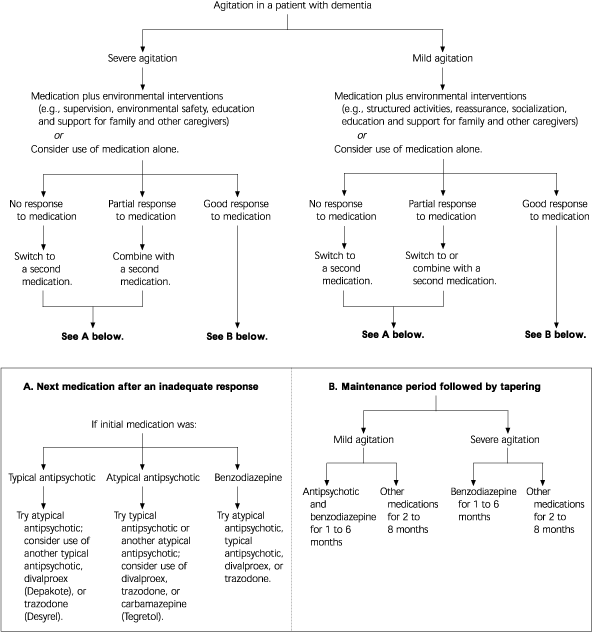
Specific target symptoms dictate the choice of psychopharmacologic agent. Some behaviors, such as wandering and pacing, are not amenable to drug therapy. Medications used to treat behavioral disturbances and mood disorders are summarized in Table 3 and Figure 1.17 Treatments for subtypes of agitation are summarized in Table 4.
| Antipsychotic drugs | ||||
| Atypical antipsychotic agents | ||||
| Recommended uses: control of problematic delusions, hallucinations, severe psychomotor agitation, and combativeness | ||||
| General cautions: diminished risk of developing extrapyramidal symptoms and tardive dyskinesia compared with typical antipsychotic agents | ||||
| Risperidone (Risperdal) | Initial dosage: 0.25 mg per day at bedtime; maximum: 2 to 3 mg per day, usually twice daily in divided doses | Comments: current research supports use of low dosages; extrapyramidal symptoms may occur at 2 mg per day. | ||
| Olanzapine (Zyprexa) | Initial dosage: 2.5 mg per day at bedtime; maximum: 10 mg per day, usually twice daily in divided doses | Comments: generally well tolerated | ||
| Quetiapine (Seroquel) | Initial dosage: 12.5 mg twice daily; maximum: 200 mg twice daily | Comments: more sedating; beware of transient orthostasis. | ||
| Typical antipsychotic agents | ||||
| Recommended uses: control of problematic delusions, hallucinations, severe psychomotor agitation, and combativeness; second-line therapy in patients who cannot tolerate or do not respond to atypical antipsychotic agents | ||||
| General cautions: current research suggests that these drugs should be avoided if possible, because they are associated with significant, often severe side effects involving the cholinergic, cardiovascular, and extrapyramidal systems; there is also an inherent risk of irreversible tardive dyskinesia, which can develop in 50% of elderly patients after continuous use of typical antipsychotic agents for 2 years. | ||||
| Haloperidol (Haldol), fluphenazine (Prolixin), thiothixene (Navane) | Dosage: varies by agent | Comments: anticipated extrapyramidal symptoms; if these symptoms occur, decrease dosage or switch to another agent; avoid use of benztropine (Cogentin) or trihexyphenidyl (Artane). | ||
| Trifluoperazine (Stelazine), molindone (Moban), perphenazine (Trilafon), loxapine (Loxitane) | Dosage: varies by agent | Comments: agents with “in-between” side effect profile | ||
| Mood-stabilizing (antiagitation) drugs | ||||
| Recommended uses: control of problematic delusions, hallucinations, severe psychomotor agitation, and combativeness; useful alternatives to antipsychotic agents for control of severe agitated, repetitive, and combative behaviors | ||||
| General cautions: see comments about specific agents. | ||||
| Trazodone (Desyrel) | Initial dosage: 25 mg per day; maximum: 200 to 400 mg per day in divided doses | Comments: use with caution in patients with premature ventricular contractions. | ||
| Carbamazepine (Tegretol) | Initial dosage: 100 mg twice daily; titrate to therapeutic blood level (4 to 8 mcg per mL) | Comments: monitor complete blood cell count and liver enzyme levels regularly; carbamazepine has problematic side effects. | ||
| Divalproex sodium (Depakote) | Initial dosage: 125 mg twice daily; titrate to therapeutic blood level (40 to 90 mcg per mL) | Comments: generally better tolerated than other mood stabilizers; monitor liver enzyme levels; monitor platelets, prothrombin time, and partial thromboplastin time as indicated. | ||
| Anxiolytic drugs | ||||
| Benzodiazepines | ||||
| Recommended uses: management of insomnia, anxiety, and agitation | ||||
| General cautions: regular use can lead to tolerance, addiction, depression, and cognitive impairment; paradoxic agitation occurs in about 10% of patients treated with benzodiazepines; infrequent, low doses of agents with a short half-life are least problematic. | ||||
| Lorazepam (Ativan), oxazepam (Serax), temazepam (Restoril), zolpidem (Ambien), triazolam (Halcion) | Dosage: varies by agent | See general cautions. | ||
| Nonbenzodiazepines | ||||
| Buspirone (BuSpar) | Initial dosage: 5 mg twice daily; maximum: 20 mg three times daily | Comments: useful only in patients with mild to moderate agitation; may take 2 to 4 weeks to become effective | ||
| Antidepressant drugs | ||||
| Recommended uses: see comments on specific agents. | ||||
| General cautions: selection of an antidepressant is usually based on previous treatment response, tolerance, and the advantage of potential side effects (e.g., sedation versus activation); a full therapeutic trial requires at least 4 to 8 weeks; as a rule, dosage is increased using increments of initial dose every 5 to 7 days until therapeutic benefits or significant side effects become apparent; after 9 months, dosage reduction is used to reassess the need to medicate; discontinuing an antidepressant over 10 to 14 days limits withdrawal symptoms. NOTE: Patients with depression and psychosis require concomitant antipsychotic medication. | ||||
| Tricyclic antidepressant agents | ||||
| Desipramine (Norpramin) | Initial dosage: 10 to 25 mg in the morning; maximum: 150 mg in the morning | Comments: tends to be activating (i.e., reduces apathy); lower risk for cardiotoxic, hypotensive, and anticholinergic effects; may cause tachycardia; blood levels may be helpful- | ||
| Nortriptyline (Pamelor) desipramine, | Initial dosage: 10 mg at bedtime; anticipated dosage range: 10 to 40 mg per day (given twice daily) | Comments: tolerance profile is similar to that for but nortriptyline tends to be more sedating; may be useful in patients with agitated depression and insomnia; therapeutic blood level “window” of 50 to 150 ng per mL (190 to 570 nmol per L) | ||
| Heterocyclic and noncyclic antidepressant agents | ||||
| Nefazodone (Serzone) | Initial dosage: 50 mg twice daily; maximum: 150 to 300 mg twice daily | Comments: effective, especially in patients with associated anxiety; reduce dose of coadministered alprazolam (Xanax) or triazolam by 50%; monitor for hepatotoxicity. | ||
| Bupropion (Wellbutrin) | Initial dosage: 37.5 mg every morning, then increase by 37.5 every 3 days; maximum: 150 mg twice daily | Comments: activating; possible rapid improvement of energy level; should not be used in agitated patients and those with seizure disorders; to minimize risk of insomnia, give second dose before 3 p.m. | ||
| Mirtazapine (Remeron) | Initial dosage: 7.5 mg at bedtime; maximum: 30 mg at bedtime | Comments: potent and well tolerated; promotes sleep, appetite, and weight gain | ||
| SSRIs | ||||
| Recommended uses: may prolong half-life of other drugs by inhibiting various cytochrome P450 isoenzymes | ||||
| General cautions: typical side effects can include sweating, tremors, nervousness, insomnia or somnolence, dizziness, and various gastrointestinal and sexual disturbances. | ||||
| Fluoxetine (Prozac) | Initial dosage: 10 mg every other morning; maximum: 20 mg every morning | Comments: activating, very long half-life; side effects may not manifest for a few weeks. | ||
| Paroxetine (Paxil) | Initial dosage: 10 mg per day; maximum: 40 mg per day (morning or evening) | Comments: less activating but more anticholinergic than other SSRIs | ||
| Sertraline (Zoloft) | Initial dosage: 25 to 50 mg per day; maximum: 200 mg per day (morning or evening) | Comments: well tolerated; compared with other SSRIs, sertraline has less effect on metabolism of other medications. | ||
| Citalopram (Celexa) | Initial dosage: 10 mg per day; maximum: 40 mg per day | Comments: well tolerated; some patients experience nausea and sleep disturbances. | ||
| Fluvoxamine (Luvox) | Initial dosage: 50 mg twice daily; maximum: 150 mg twice daily | Comments: exercise caution when using fluvoxamine with alprazolam or triazolam. | ||
| Phenethylamine | ||||
| Venlafaxine (Effexor) | Initial dosage: 37.5 mg twice daily; maximum: 225 mg per day in divided doses | Comments: highly potent; also inhibits norepinephrine reuptake | ||
| Lithium | ||||
| Recommended uses: for anticycling; can also be used to augment antidepressant drugs | ||||
| General cautions: at higher lithium dosages, elderly patients are prone to develop neurotoxicity. | ||||
| Lithium | Initial dosage: 150 mg per day | Comments: blood levels of 0.2 to 0.6 mEq per L (0.2 to0.6 mmol per L) are generally adequate and are usuallyachieved with dosage of 150 to 300 mg per day. | ||
| Electroconvulsive therapy | ||||
| Recommended uses: may be required in patients who are at risk of injuring or starving themselves, patients who are severely psychotic, and patients who cannot tolerate or do not respond to antide pressants | ||||
| Subtype | Treatment | |
|---|---|---|
| Delirium (other than medication toxicity) | Treat underlying medical condition. | |
| If medication is needed, consider typical antipsychotic. | ||
| Depression | Without psychosis: antidepressant | |
| With psychosis: antidepressant plus antipsychotic, or electroconvulsive therapy | ||
| Psychosis | Acute: atypical antipsychotic | |
| Long-term: atypical antipsychotic | ||
| Anxiety | Acute: benzodiazepine such as lorazepam (Ativan) or oxazepam (Serax) | |
| Long-term: buspirone (BuSpar) | ||
| Insomnia | Acute: trazodone (Desyrel); consider benzodiazepine such as temazepam (Restoril) or zolpidem (Ambien). | |
| Long-term: trazodone | ||
| “Sundowning” | Acute: trazodone | |
| Long-term: trazodone; consider typical or atypical antipsychotic. | ||
| Aggression or anger | Severe | |
| Acute: typical or atypical antipsychotic | ||
| Long-term: divalproex sodium (Depakote) or atypical antipsychotic | ||
| Mild | ||
| Acute: trazodone | ||
| Long-term: divalproex sodium, SSRI, trazodone, or buspirone | ||
| Osteoarthritic pain | Long-term: tricyclic antidepressant, SSRI, or trazodone | |
Patient and Caregiver Education and Support
Family education is critical for optimal management. An alliance between the family physician and the family, particularly the primary caregiver, is the principal means of ensuring that the physician's instructions are followed. A close working relationship also serves to minimize patient and caregiver distress.
After Alzheimer's disease has been diagnosed, the family physician should meet with the patient and family to answer questions and provide information about the diagnosis, prognosis, future care needs, treatment options and, in appropriate cases, potential research participation.18 The Alzheimer's Association recommends that patients be told their diagnosis to facilitate their participation in advance planning.
The family physician can help caregivers by educating them about simplifying tasks and providing meaningful activities for patients with Alzheimer's disease. Comprehensive psychoeducational training for caregivers and the use of support groups and community resources for patients and caregivers may reduce caregiver stress, improve patient behavior, and defer patient institutionalization.19 Referral for support services should be a routine component of patient care (Table 5).
|
Physician Involvement During Alzheimer's Disease
Over the course of Alzheimer's disease, medical and ethical issues arise as the patient's disability increases, new behavioral disturbances emerge, and family reactions evolve. Continuous physician involvement is critical to aiding the family throughout the disease process. The family physician can help the patient and family make critical health care decisions by using a “values discussion” to encourage them to talk about difficult topics, enhancing their knowledge and understanding of health care procedures and care options, and helping them to develop successful problem-solving strategies and incorporate the wishes of all family members.20
ADVANCE DIRECTIVES
A discussion of advance directives should be initiated as soon as possible after Alzheimer's disease is diagnosed, so that the patient can be involved to the greatest extent possible. The patient and family should be instructed to begin advance planning with regard to durable power of attorney, estate management, advance directives for management of the terminal stage of the disease, and determination of competency for making significant personal and economic decisions.21,22 Surrogates should be appointed to make medical, financial, and legal decisions for incompetent patients.
TERMINAL CARE
Alzheimer's disease is a progressive and terminal illness. Loss of basic daily functional abilities is the hallmark of the final stage of the disease. The family physician has the difficult task of helping the family make decisions about terminal care. Early discussions about “do not resuscitate” orders, the use of antibiotics for infections, and the initiation of tube feeding will help the physician understand the beliefs and preferences of the patient and family.
Futile care that may not provide comfort and may prolong the dying process should be avoided. Hospice care can be invaluable for the family of a patient with end-stage Alzheimer's disease.
REPORTING REQUIREMENTS
Advancing Alzheimer's disease is correlated with a higher risk of traffic accidents. Many states encourage physicians and other service providers to report persons who have conditions that may affect their ability to drive safely. California is the only state with a specific public policy requiring the reporting of persons with Alzheimer's disease. Pennsylvania mandates the reporting of persons with any condition that would impair driving ability.
In all but seven states, health care and social service providers are required to report elder abuse. The states with voluntary reporting are Colorado, New Jersey, New York, North Dakota, Pennsylvania, and South Dakota. Laws about reporting and requirements concerning this reporting vary by state. The Web site for the National Center on Elder Abuse (www.elderabusecenter.org) provides links to individual states for specific information on reporting requirements and procedures.
During office visits, the family physician should be alert for unusual patient injuries, should assess caregiver distress and coping mechanisms, and should observe patient-caregiver interaction. Behavioral disturbances in the patient should be monitored and addressed, because behavioral symptoms are a predictor of elder abuse.23