Day 3 FMX conference recap

Featured FMX story
Recognizing family medicine award winners
Quick session takeaways
We know you can’t make every session, so we’re creating short summaries with the most important details! You can also find the full session recordings 24-48 hours after in the FMX mobile app!
A sample of October 22 sessions
Why this matters to family physicians
Menopause is a significant health transition that affects far more than reproductive health. With approximately 80% of women experiencing symptoms and many spending a third of their lives in menopause or postmenopause, family physicians have an important opportunity to improve patients' quality of life through informed, individualized care.
Yet menopause symptoms are often overlooked, dismissed or attributed to other conditions. Hot flashes may be the most recognizable symptom, but sleep disturbances, brain fog, mood changes and sexual health concerns can profoundly affect patients' relationships, careers and overall well-being.
Family physicians are uniquely positioned to address these challenges because they understand their patients' histories, relationships and health needs across the lifespan. The presenters emphasized moving beyond reassurance toward actively listening, validating symptoms and offering evidence-based treatment.
Evolving guidance on menopausal hormone therapy reinforces the importance of evaluating treatment timing, delivery methods and individual risk factors. Nonhormonal medications and lifestyle interventions also offer meaningful options, particularly when aligned with patients' preferences and circumstances.
Ultimately, effective menopause care requires more than managing symptoms. It means recognizing menopause as a whole-person health transition, addressing long-term cardiovascular and bone health risks, and partnering with patients to develop realistic treatment plans that support their well-being.
Five key takeaways
1. Ask directly about menopause symptoms. Don't wait for patients to mention hot flashes. Proactively ask about sleep, mood, concentration, sexual health and other changes, recognizing that symptoms may occur even when menstrual history cannot establish menopausal status.
2. Reconsider hormone therapy through an individualized lens. The presenters highlighted updated guidance supporting hormone therapy for appropriate patients with bothersome vasomotor symptoms. Consider timing relative to menopause onset, route of administration, risk factors and patient preferences rather than automatically avoiding treatment.
3. Offer evidence-based alternatives. Nonhormonal medications, including newer therapies targeting vasomotor symptoms, can provide relief for patients who cannot or prefer not to use hormones. Match treatment to the patient's primary concerns and consider medication risks, interactions and monitoring requirements.
4. Make lifestyle recommendations realistic. Exercise, strength training, nutrition, sleep, stress management and social connection are important components of menopause care. However, recommendations should reflect each patient's resources, environment and daily responsibilities rather than creating an overwhelming list of additional tasks.
5. Validate symptoms and make support visible. Avoid dismissing concerns simply because laboratory results are normal. Listen to patients' experiences, acknowledge their symptoms and use shared decision-making to develop a treatment plan. Be mindful of cultural differences and disparities in access to menopause treatment.
Memorable quote
"Support is a clinical skill, not a soft extra."

Why this matters to family physicians
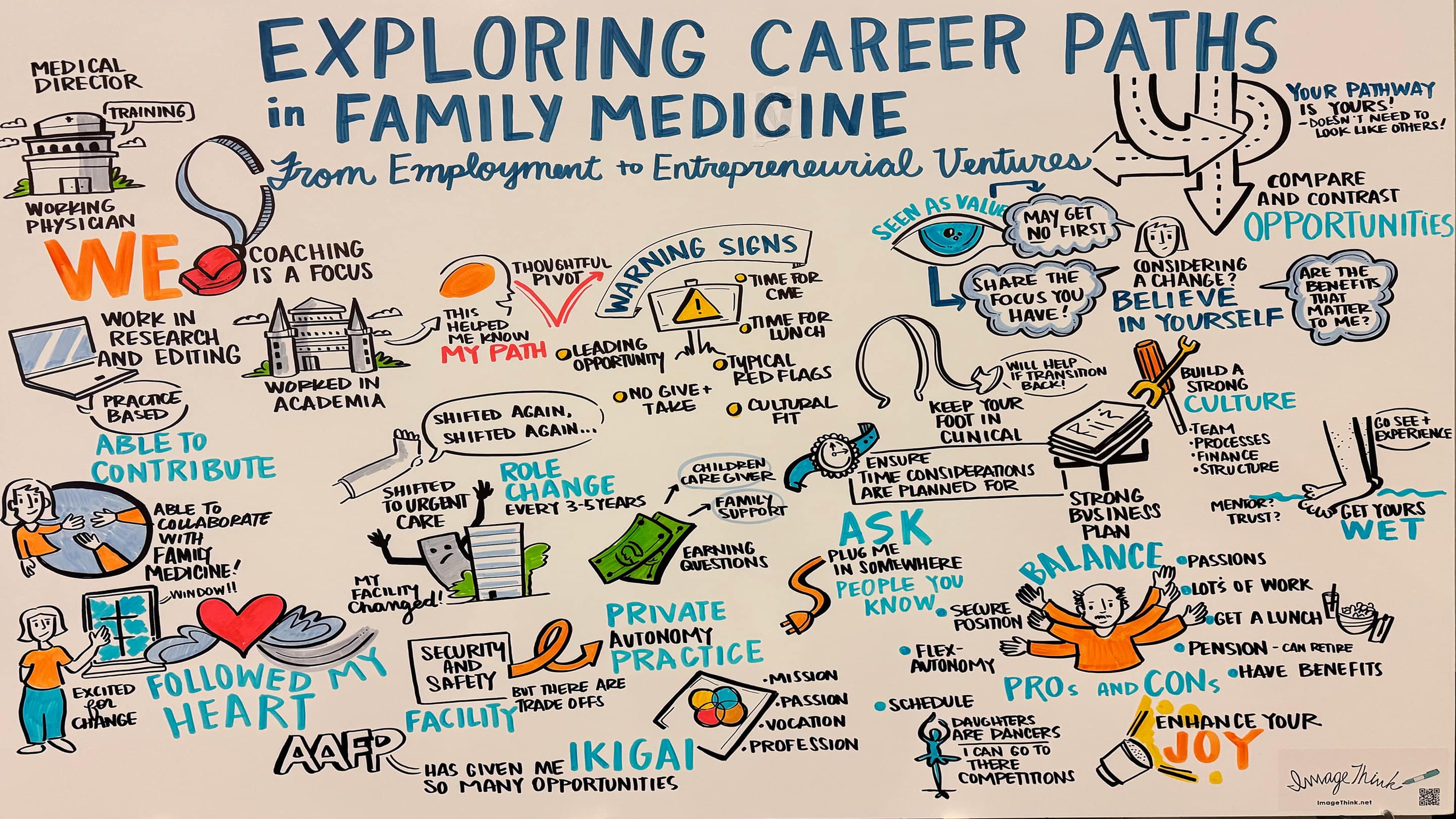
One of the greatest advantages of family medicine is the flexibility to build a career that evolves with your interests, priorities and stage of life. Yet many family physicians may feel limited by traditional employment models or uncertain about how to pursue opportunities that offer greater autonomy, professional satisfaction or work-life balance.
In this panel discussion, family physicians shared their experiences navigating careers in federally qualified health centers, academic medicine, private practice, urgent care, administration, research and leadership. Their stories reinforced that there is no single path to a fulfilling career—and that changing direction doesn't necessarily mean leaving medicine.
Whether motivated by burnout, a desire for greater independence, family responsibilities or new professional interests, the panelists emphasized the importance of understanding what brings you joy, recognizing your strengths and finding a practice environment that aligns with your values.
They also highlighted the practical realities of career transitions, including financial planning, evaluating organizational culture, negotiating protected time and building professional relationships that open doors to new opportunities.
The overarching message was empowering: Family medicine training provides a foundation for an extraordinary range of career possibilities. Physicians don't have to remain in a role that no longer fits. With thoughtful planning, mentorship and a willingness to explore, they can redefine their careers throughout their professional lives.
5 key takeaways
1. Your career can evolve as your priorities change. Different stages of life may call for different practice models, responsibilities or schedules. A career transition can help you rediscover professional satisfaction without abandoning the work you love.
2. Evaluate more than compensation when considering a new opportunity. Look closely at organizational culture, autonomy, schedule flexibility, mentorship, benefits and support for professional development. Ask current employees whether the organization follows through on its commitments.
3. Build relationships that create opportunities. Professional networks, state chapters, AAFP involvement and mentorship can connect physicians with career paths they might never have considered. Panelists encouraged physicians exploring a change to talk openly with colleagues about their interests.
4. Understand the trade-offs of different practice models. Private practice can offer greater autonomy but requires financial planning and operational responsibility. Academic and employed positions may provide benefits, institutional support and protected time, but can also involve organizational constraints.
5. Identify what brings you joy—and pursue opportunities that support it. Reflect on your strengths, interests and the aspects of practice that energize or drain you. Explore different settings, shadow other physicians and consider nonclinical roles in education, research, leadership or advocacy.
Memorable quote
"Don't feel like you have to follow everybody else. Your pathway is your pathway."
Why this matters to family medicine
Sleep is essential to physical, cognitive and emotional health, yet sleep disturbances are among the most common concerns family physicians encounter. With up to 75% of adults experiencing sleep issues and an estimated 15% struggling with chronic insomnia, primary care physicians have an important opportunity to identify and address problems that affect patients’ overall health and quality of life.
This presentation emphasized that sleep is more than the number of hours spent in bed. Deep sleep and REM sleep support memory consolidation, tissue repair, emotional regulation and cardiovascular health. Disruptions can have significant consequences, making sleep an important part of preventive care.
Family physicians are uniquely positioned to uncover the many factors contributing to poor sleep, including medications, menopause, chronic pain, sleep apnea, lifestyle habits and underlying health conditions. A comprehensive assessment that considers both daytime behaviors and nighttime routines can reveal opportunities for intervention.
Importantly, effective treatment doesn't always require medication. Cognitive behavioral therapy for insomnia (CBT-I) is recommended as first-line treatment for chronic insomnia, with practical strategies that physicians can introduce during routine visits. By helping patients understand their sleep patterns and adopt evidence-based approaches, family physicians can improve sleep quality while reducing reliance on potentially harmful long-term medications.
5 key takeaways
1. Make sleep a routine part of preventive care. Sleep quality affects cardiovascular health, cognition and emotional regulation. Assess sleep duration, consistency, nighttime awakenings and daytime habits—not just how many hours patients spend in bed.
2. Look for underlying causes before prescribing sleep medications. Common medications, including certain SSRIs, SNRIs and beta blockers, can disrupt sleep. Menopause, chronic pain and other health conditions may also contribute to insomnia.
3. Use CBT-I as the first-line treatment for chronic insomnia. Strategies include consistent sleep schedules, stimulus control, relaxation techniques and limiting time spent awake in bed. Encourage patients to put away electronic devices 30–60 minutes before bedtime.
4. Don't overlook obstructive sleep apnea. Snoring shouldn't automatically be dismissed as harmless. Screening tools such as STOP-BANG can help identify patients who need further evaluation. Home sleep studies are useful, but in-lab testing may be necessary for more complex sleep disorders.
5. Be thoughtful about sleep medications and supplements. Z-drugs such as zolpidem can increase sleep duration but carry risks, particularly for older adults. Consider safer treatment options when appropriate, and recognize that supplements such as magnesium may provide limited benefit without an underlying deficiency.
Memorable quote
"Sleep is not a light switch. It's not just about the amount of hours that you're asleep. Sleep is an active brain process."

Why this matters to family physicians
Family physicians spend their careers caring for others, often while navigating their own professional challenges in isolation. Burnout, moral distress, compassion fatigue and the pressures of practicing medicine can leave physicians feeling disconnected from their colleagues, their profession and the work that once brought them joy.
But what if one of the most powerful tools for improving physician well-being is something as simple as connecting with another physician?
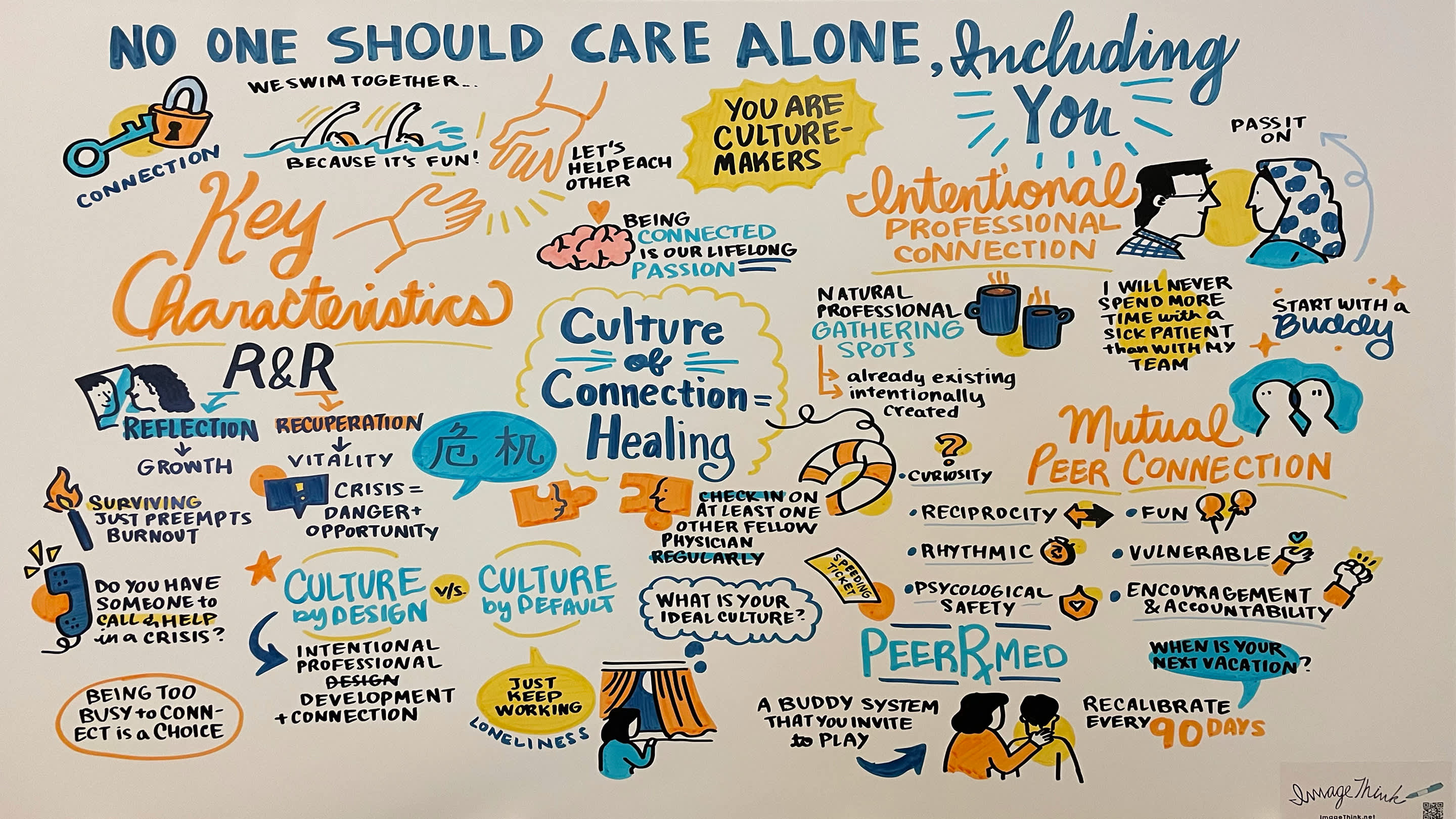
This presentation challenges the culture of medicine that encourages physicians to push through difficulties independently and rarely acknowledge their own struggles. While addressing systemic issues remains essential, building meaningful professional relationships is another important way to support well-being.
The speaker emphasizes that connection shouldn't happen only during a crisis. Regular, intentional interactions with trusted colleagues create opportunities for encouragement, reflection, vulnerability and mutual support. These relationships can help physicians process difficult experiences, rediscover meaning in their work and move beyond simply surviving toward thriving.
Through practical strategies, including a structured physician buddy system, family physicians can begin building a culture where professional connection becomes a routine part of practicing medicine rather than another obligation.
The message is simple: Caring for patients is demanding work, but no physician should have to navigate that journey alone.
Five key takeaways
1. Make professional connection intentional. Don't leave relationships with colleagues to chance. Create a culture where checking in with one another is an expected and valued part of practicing medicine.
2. Build relationships before a crisis happens. Peer support shouldn't be limited to responding to adverse events or professional distress. Regular connections build the trust and psychological safety needed for honest conversations when challenges arise.
3. Small interactions can make a meaningful difference. A quick check-in during a morning huddle, an encouraging text or a conversation over coffee can strengthen relationships. Connection doesn't always require a significant time commitment.
4. Create space for vulnerability, not just problem-solving. Meaningful peer relationships involve listening, sharing difficult experiences, offering encouragement and reflecting together. Physicians need colleagues who understand their journey, not just people who can offer solutions.
5. Try the 90-90-90 approach to peer connection. The speaker's PeerRxMed model encourages physicians to connect with a colleague for as little as 90 seconds each week, spend up to 90 minutes together monthly and reconnect every 90 days to reflect and plan ahead.
Memorable quote
"It's not about fixing each other, it's about helping each other."
Why this matters to family physicians
Family physicians are among the most trusted sources of health information, putting them in a unique position to address misinformation, vaccine hesitancy and growing skepticism about science and medicine.
During this FMX mainstage discussion, experts in public health, immunology and science communication explored how the COVID-19 pandemic, political polarization, social media and artificial intelligence have changed the way patients consume health information—and whom they trust.
The panel emphasized that rebuilding trust requires more than presenting accurate information. It means listening without judgment, acknowledging uncertainty, understanding patients' concerns and communicating evidence in ways that resonate with their experiences.
As patients increasingly turn to online influencers and AI for medical guidance, family physicians have an opportunity to help them distinguish credible information from misleading claims. That responsibility is especially important as declining confidence in vaccines threatens decades of progress in preventing infectious diseases.
Ultimately, the conversation reinforced that family physicians don't need to win every argument to make a difference. Their greatest influence comes from the relationships they build, the curiosity they encourage and their ability to turn complex science into meaningful conversations that help patients make informed decisions.
Five key takeaways
1. Trust is earned, not demanded. Patients need to believe their physician is competent, transparent and genuinely acting in their best interest. These qualities are foundational to productive conversations about health.
2. Lead with curiosity rather than correction. When patients bring misinformation or questions from online research, acknowledge their concerns before evaluating the information together. Respecting the question doesn't mean validating an inaccurate answer.
3. Communicate uncertainty with confidence. Science evolves as new evidence emerges. Instead of saying "trust the science," explain what is known, what remains uncertain and why recommendations may change.
4. Recognize that AI is changing patient conversations. Patients are increasingly using AI and social media to research health concerns. Family physicians can help interpret that information, identify inaccuracies and guide patients toward evidence-based decisions.
5. Focus on being effective, not just being right. Accurate information matters, but how it's communicated determines whether patients understand and act on it. Empathy, accessible language and ongoing relationships can be more influential than winning a debate.
Memorable quote
"Being right is a standard that I hold myself to. Being effective is my goal in a conversation."