
Family Medicine Week: Celebrating ‘the unique beauty of our work’
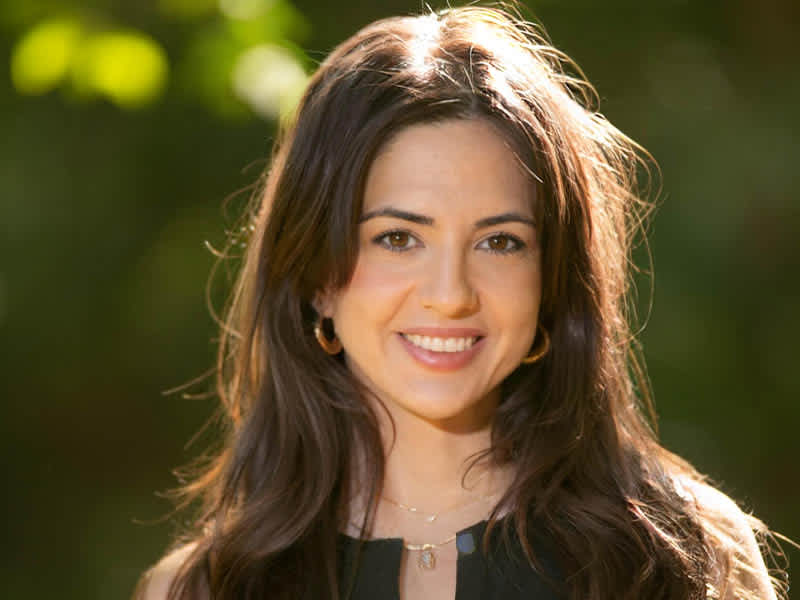
By Elizabeth Kazarian, MD
Family Medicine Week, Sept. 29-Oct. 4, is the perfect time to share with you, my colleagues, a thought I often have that I’m sure you do, too: I want everyone to understand how beautiful family medicine is.
The beauty of our specialty, like the care we deliver, is multifaceted. To mark this week, I want to emphasize one of the brightest facets, trust. It’s our professional currency. We build trust with our patients and our communities every day. And the relationships family physicians build with one another, especially through the Academy, bind our specialty’s exceptional history to its exciting future.
Especially on the eve of FMX, Family Medicine Week lets us celebrate these connections and reflect on our work.
Building big trust out of ‘micro’ moments
Family medicine practices are grounded in continuity. Our patients come back. Often, we work together as partners to figure out how to solve health challenges, and every encounter on that journey contains small moments that build trust. These micro moments set up larger aha moments, which emerge from that trust and are the base for a truly longitudinal relationship centered on progress.
That molecular buildup of trust lets a patient start feeling comfortable. We can have a real conversation because they know I’m not judging them. When a patient tells me they’re excited to be there and talk about their health, I know it’s all adding up.
The AAFP’s observance of Family Medicine Week began in 2024, at the direction of a 2023 Congress of Delegates resolution that urged every AAFP chapter to participate in a “coordinated promotion of the family medicine specialty.”
Trust lets us dig deeper
For me, that trust and nonjudgment make a crucial difference when I work with patients on obesity issues, one of my focus areas that naturally intersects with family medicine.
We’re working against so much stigma in obesity medicine. So many people attribute this chronic disease to individual moral failure, despite all we know today about systemic and other factors.
I’m thinking of a moment I had the other day with a young patient who has had obesity since she was a child. The first time I ever saw her, she asked me, “Why do I have this? Why is this happening to me?” She told me she had seen many doctors of various specialties since she was a child, and they’d basically limited their counsel to “Eat less, exercise more.”
Those words put the onus back on the patient. I see people who have been trying for years to heed this advice, never having had a conversation about how to address a multitude of contributing factors. For one of my patients, childhood trauma with an abusive parent led to using food as a coping mechanism. Now we’re able to address underlying issues that help that patient feel less isolated and more in control.
Every time, this starts with trust, with both of us able to ask open-ended questions and then work together toward better health.
Using disagreement to build trust
During an annual visit with a Medicare patient a couple of weeks ago, we looked together at a high PSA on his labs, which didn’t make sense in the context of the long-term tracking we’d been doing. I usually advise that we test again because what’s most typical is a false positive. This patient wanted to instead get an immediate prostate MRI and a urology referral.
This is where the shared decision-making comes in.
I said, “I definitely hear you, and I understand that this test result is scary,” and I suggested a compromise. I didn’t order the MRI, but I did send him out with the referral, and he agreed to repeat the PSA test.
His second test came back normal, and he ended up not going to the urologist. The next time I saw him, he said, “You were right.”
I recognize that he may have had some implicit bias coming into our visit; I’m a woman and a younger physician. But when it comes to these situations, I know that I'm equipped because of my education and training. All of us in this specialty, at every stage, lean into our knowledge and experience, and we’re able to tell our patients, We’re trained to treat you, and we are going to do that and do it well.
Mentorship is everything—go get it
My training has included great mentors at every stage, from high school through undergraduate and medical school and residency. My trust in these mentors has helped make me confident in my own trustworthiness, as a physician and, now, as a mentor myself.
I sought out mentorship, and I coach residents to do the same. You can’t maximize your learning if you’re shy about this. I love that medicine is collaborative. I believe in publicly asking questions and talking about evidence.Reaching out and asking for mentorship—asking questions, no matter what your level of training—builds trust with everyone around you because you’re being transparent.
The first time I met the doctor from whom I wanted to learn more about obesity medicine, I was direct. I said, “I'm looking for a mentor. I really want to learn more about this and I want to stay in touch with you and work in clinic with you, not just during electives.”
She was excited to hear that, glad to have a mentee. She said, “Of course.”
Now that I'm in private practice, my mentor is one of the partners. He's been here for 25 years. I’m an attending and I’m board certified, but I’m still learning. When I see patients all day, do my own coding, see things pop up, I have questions. His office is next to mine, so I just pop over and say, “Hey, what do you think about this?”
Mentorship is a continuum of trust—you trust your mentor, and your mentor also trusts you, your desire to learn and to be guided. These relationships contribute to our clinical trustworthiness.
Patients who trust us can start to set aside misinformation
I recently saw a patient who told me that her birth control had ruined her fertility and her cycle. I asked some open-ended questions, and she said an online source had led her to this conclusion.
Moments such as this are our opportunities to push back against the flood of bad information we’re all dealing with in our practices. It’s a micro moment that can clear the path to understanding.
In this case, I laid out the different kinds of evidence that inform clinical guidance: preclinical studies, cohort studies, observational data. And then I explained that I recommend only the highest level of evidence to my patients because that's what any of us deserves and because it’s how I can ensure the highest level of safety.
I want to have these conversations, but they’re never about me. It’s about treating the patient as a person and communicating information, not delivering a message. I believe I got through to her, and I think it increased our trust.
The majority of health-related videos being shared across Instagram are not evidence-based. That’s why I’ve started addressing medical misinformation on social media. I’m a young millennial, so this is native technology for me, a basic language—Instagram, Facebook, TikTok. The algorithms serve me health care content because that’s obviously a primary interest for me, and I see firsthand how much misinformation streams across these platforms. I’m meeting patients where they are, including the places where they’re getting bad information.
I’m also spreading good, positive information about family medicine. I love telling people that we are the backbone of the entire health care system, that we save more lives than any other specialty. I set out to make family medicine cool on Instagram, as a resident. If I could hold grand rounds with doctors on social media, I would. I never expected to get 66,000 followers, but that just goes to show there’s value in being a trusted source. There’s a massive appetite for truth, for voices ready to counter the barrage of online misinformation.
It really is beautiful
For Family Medicine Week, I’ll say it again: Our all-encompassing, holistic, crucial specialty is also beautiful. The trust we build in the exam room emerges into the community, one patient at a time. That bond is the heart of our specialty. I wish everybody in the United States had a family doctor. Why do I have a family doctor? Because trust means I’m never alone in my health.
I invite you to share your own stories of trust and connection on the AAFP’s Family Medicine Week page.
Elizabeth Kazarian, MD, practices in Arlington and Falls Church, Virginia.
Disclaimer
The opinions and views expressed here are those of the authors and do not necessarily represent or reflect the opinions and views of the American Academy of Family Physicians. This blog is not intended to provide medical, financial, or legal advice.