

Details for This Review
Study Population: A total of 98,816 mother-infant pairs across 103 studies, which included healthy pregnant women who intended to breast-feed and recently delivered (vaginal or cesarean) healthy, term infants; of the studies, 17% involved low- and middle-income countries; exclusion criteria included chronic illnesses such as diabetes mellitus, HIV, and obesity
Efficacy End Points: Primary outcomes: cessation of any or exclusive breastfeeding at four to six weeks postpartum and at six months postpartum; secondary outcomes: cessation of any or exclusive breastfeeding at two months, three to four months, nine months, and 12 months postpartum; maternal satisfaction with care and feeding method; all-cause neonatal and infant mortality; and maternal mental health
Harm End Points: No specific harms were identified or reported
THE NUMBERS
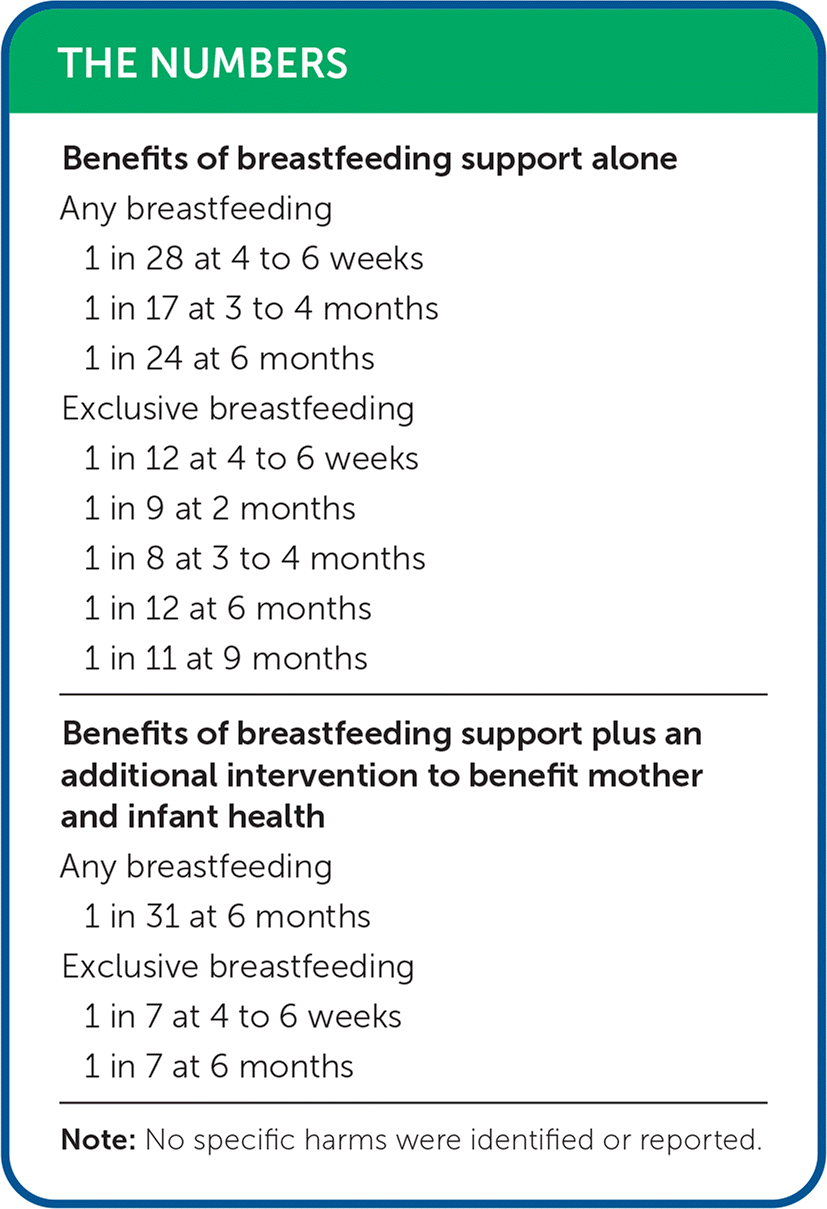
| Benefits of breastfeeding support alone |
| Any breastfeeding |
| 1 in 28 at 4 to 6 weeks |
| 1 in 17 at 3 to 4 months |
| 1 in 24 at 6 months |
| Exclusive breastfeeding |
| 1 in 12 at 4 to 6 weeks |
| 1 in 9 at 2 months |
| 1 in 8 at 3 to 4 months |
| 1 in 12 at 6 months |
| 1 in 11 at 9 months |
| Benefits of breastfeeding support plus an additional intervention to benefit mother and infant health |
| Any breastfeeding |
| 1 in 31 at 6 months |
| Exclusive breastfeeding |
| 1 in 7 at 4 to 6 weeks |
| 1 in 7 at 6 months |
Note: No specific harms were identified or reported.
Narrative: Human breast milk is well established as the most beneficial source of nutrition for infants. The World Health Organization and the American Academy of Pediatrics recommend breastfeeding exclusively until six months post-partum and providing breast milk in addition to age-appropriate complementary foods until at least 24 months postpartum. Despite these recommendations, breast-feeding is often stopped well before 24 months postpartum. Breastfeeding support may be a key element for improving rates of initiation and increasing duration of breastfeeding globally.
This review sought to evaluate the benefits of breastfeeding support to reduce the rates of stopping any breastfeeding or stopping exclusive breastfeeding at multiple end points. For this review, “breastfeeding support alone” is defined as any interaction that promoted or encouraged breastfeeding outside of usual care. Support interventions ranged from words of encouragement from health care professionals or trained lay persons to in-person visits with trained professionals. Support communication included in-person visits, group visits, and texts and emails. “Breast-feeding support plus” is defined as breastfeeding support that was part of a larger comprehensive maternal and child health benefit intervention program.
There was moderate-certainty evidence that providing breastfeeding support alone reduced the risk of stopping any breastfeeding (risk ratio [RR] = 0.93; 95% CI, 0.89 to 0.97; absolute risk difference [ARD] = 4.2%; number needed to treat [NNT] = 24) and exclusive breastfeeding (RR = 0.90; 95% CI, 0.88 to 0.93; ARD = 8.4%; NNT = 12) at six months. It also reduced the risk of stopping any breastfeeding (RR = 0.88; 95% CI, 0.79 to 0.97; ARD = 3.7%; NNT = 28) and exclusive breastfeeding (RR = 0.83; 95% CI, 0.76 to 0.90; ARD = 8.8%; NNT 12) at four to six weeks. In addition, there was moderate-certainty evidence that breastfeeding support alone reduced the risk of stopping exclusive breastfeeding (RR = 0.81; 95% CI, 0.74 to 0.89; ARD = 11.6%; NNT = 9) at two months and reduced the risk of stopping any breastfeeding (RR = 0.87; 95% CI, 0.81 to 0.93; ARD = 6%; NNT = 17) and exclusive breastfeeding (RR = 0.81; 95% CI, 0.77 to 0.85; ARD = 13.9%; NNT = 8) at three to four months. There was low-certainty evidence that breastfeeding support alone reduced the risk of stopping breastfeeding at nine months (RR = 0.87; 95% CI, 0.78 to 0.97; ARD = 9.8%; NNT = 11).
Read the full article
Get immediate access, anytime, anywhere.
Choose a single article, issue, or full-access subscription.
Earn up to 14 CME credits per issue.
