brand logo

Am Fam Physician. 2024;109(2):185-187

This clinical content conforms to AAFP criteria for CME.

Author disclosure: No relevant financial relationships.

Key Points for Practice

• Anorexia nervosa is best treated by monitored renourishment with psychotherapy. Most patients without worsening symptoms can receive outpatient treatment, especially with family support.

• Bulimia nervosa is best treated with CBT and fluoxetine, 60 mg daily.

• Binge-eating disorder is best treated with CBT or interpersonal psychotherapy with antidepressant medications or lisdexamfetamine when pharmacotherapy is indicated. Lisdexamfetamine has been studied mostly in patients who have obesity.

From the AFP Editors

Eating disorders affect nearly 2% of Americans during their lifetime and are more common in women and individuals in the LGBTQ+ community. Eating disorders commonly occur in patients with diabetes mellitus, depression, anxiety, post-traumatic stress disorder, substance use disorders, obsessive-compulsive disorder, and attention-deficit/hyperactivity disorder, all of which increase mortality risk. These disorders can be difficult to recognize, and the American Psychiatric Association (APA) has released guidelines aimed to reduce the harm from eating disorders.

Screening

The U.S. Preventive Services Task Force reports insufficient evidence for routine screening for eating disorders in adolescents and adults. The American Academy of Pediatrics recommends asking all adolescents about eating patterns and body image. The APA recommends screening as part of an initial psychiatric evaluation.

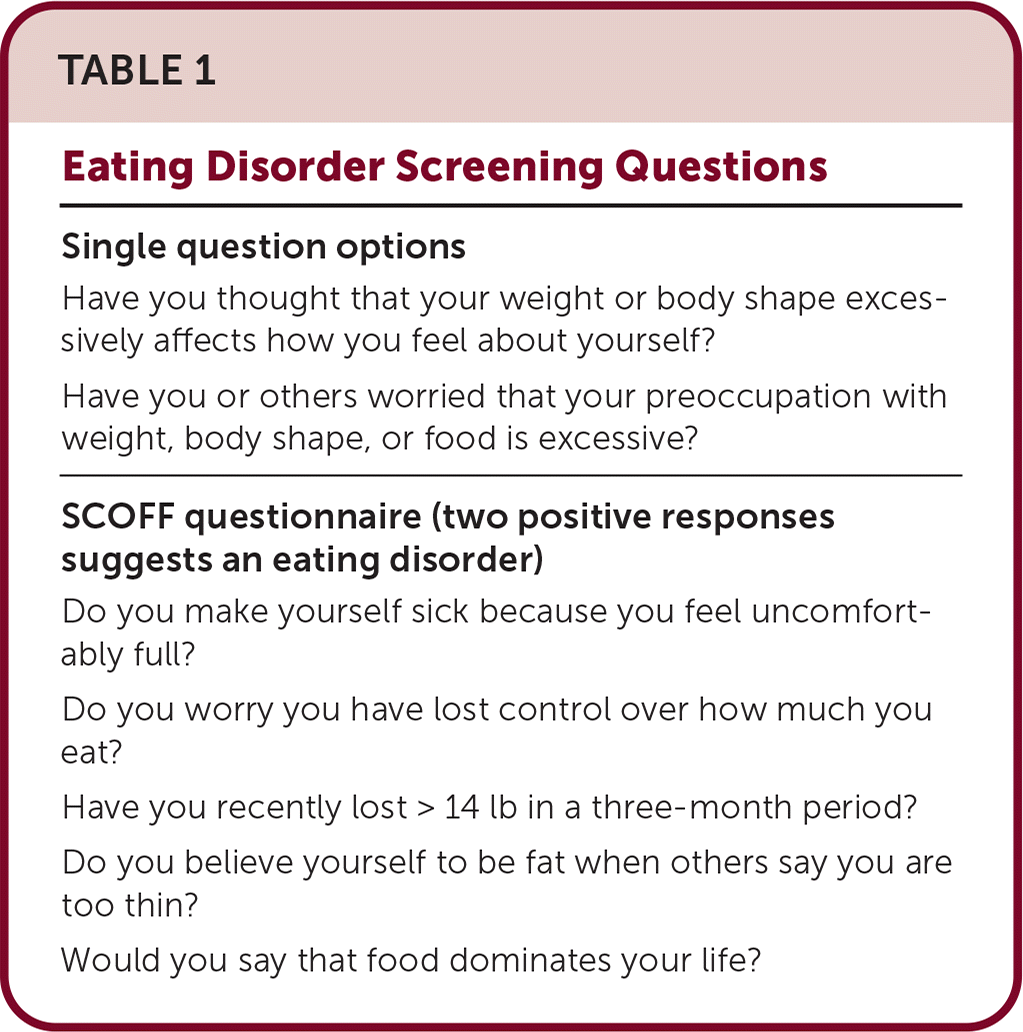
People with eating disorders often lack insight into the presence or severity of disease, and physicians may overlook an eating disorder in patients with a normal body mass index. Single-question screening or the SCOFF questionnaire (two positive responses suggests an eating disorder) is recommended when there is not time for a formal screening questionnaire (Table 1).

Single question options
Have you thought that your weight or body shape excessively affects how you feel about yourself?
Have you or others worried that your preoccupation with weight, body shape, or food is excessive?
SCOFF questionnaire (two positive responses suggests an eating disorder)
Do you make yourself sick because you feel uncomfortably full?
Do you worry you have lost control over how much you eat?
Have you recently lost > 14 lb in a three-month period?
Do you believe yourself to be fat when others say you are too thin?
Would you say that food dominates your life?

Evaluation

Physicians should ask about maladaptive eating, including food changes and behaviors, eating rituals, binge eating, and purging. Patients with eating disorders often report abdominal discomfort with eating, constipation, early satiety, bloating, nausea, and heartburn, which are often signs of starvation and disordered eating rather than gastrointestinal disease. Menstrual irregularities are common with disordered eating.

Because patients often underreport symptoms, family members may notice concerning behaviors first. The degree of weight loss should be noted, based on growth-chart curves for children, because of risks of refeeding. Patients may have bradycardia, hypotension, or hypothermia. Physical examination may show proximal or temporal muscle wasting, ankle and pedal edema, lanugo hair, hair loss, dry skin, vitamin deficiencies, parotid gland enlargement, dental erosions, callouses on the dorsum of the hand, or evidence of self-injurious behaviors.

Laboratory analysis should include a complete blood count, electrolytes, liver enzymes, and renal function tests, but normal results do not necessarily exclude an eating disorder. Electrocardiography is recommended for all patients with restrictive eating disorder or severe purging behavior and in those taking medications known to prolong QTc intervals.

Treatment

Most patients can be monitored with outpatient care, where they can remain with their families and continue with school or work. Careful monitoring should include an office weight check at least weekly after voiding and with shoes and outerwear removed. To ensure patients are not artificially increasing weight with water, checking urine-specific gravity should be considered. Patients with indications suggesting a worsening course should be moved to a higher level of care (Table 2).

Close to weight where medical instability previously occurred
Difficulties in collaborating with the treatment program
Electrolyte abnormalities
Low weight related to target weight
Medical complications of purging
Rapid, recent weight loss
Severe co-occurring psychiatric symptoms
Vital sign abnormalities

Anorexia Nervosa

After medical stabilization in patients with anorexia nervosa, nutritional rehabilitation and weight restoration are critical components of treatment. If consistent weight increases can be maintained, outpatient weight restoration is appropriate with the support of family. A nurturing emotional environment is important for renourishment.

Individualized target weights should be established with the patient, despite likely patient hesitancy to accept this goal. An initial body mass index target of 20 kg per m2 is often used for adults, whereas adolescent targets depend on growth-chart curves. Weight restoration normally takes several months, and a goal of gaining 1 to 2 lb per week is realistic in outpatient programs. Consultation with and direction from a registered dietitian are important during renourishment.

Refeeding syndrome is the most serious complication of renourishment and may present with rhabdomyolysis, hemolytic anemia, seizures, cardiac arrhythmias, and sudden death. Hypophosphatemia is a characteristic marker of refeeding syndrome. Initial calorie prescriptions of 1,500 to 2,000 kcal per day and eventual intake of 3,000 to 4,000 kcal per day are effective and do not appear to lead to refeeding syndrome.

Although changes in body shape and function during renourishment can be distressing for the patient, these can be offset by improvement in psychological complications of semi-starvation. Physical activity is important but may have to be limited early in renourishment and when compulsive exercise is an element of weight-control behaviors.

Medications do not aid weight gain. Selective serotonin reuptake inhibitors (SSRIs) are effective for psychological comorbidities but do not improve weight gain. Olanzapine (Zyprexa) may be helpful, but its effectiveness is limited by adverse effects. Bupropion and medications that prolong QTc intervals should be avoided if there are purging behaviors. Hormonal treatments do not appear to improve weight gain.

Psychotherapy can be moderately effective in normalizing eating and weight-control behaviors. Cognitive behavior therapy (CBT) focuses on cognitive distortions surrounding food and weight and implementing an experimental model of change. Enhanced CBT uses a more formalized, manual-based program. Focal psychodynamic therapy places a greater focus on relationships and insight rather than cognitions and behaviors. Supportive management by other health care professionals using workbooks and telephone coaching can be beneficial. For adolescents, family-based therapy involving caregiver education is recommended.

Bulimia Nervosa

For bulimia nervosa, eating disorder–focused CBT should be combined with an SSRI. Use of fluoxetine, 60 mg daily, has the most evidence, including in patients who have symptoms that do not improve with psychotherapy. Other SSRIs can be used if fluoxetine is not tolerated, but bupropion and citalopram should be avoided.

CBT can be delivered individually or in a group. Some evidence suggests that guided self-help using a manual or the internet can be helpful. Family-based therapy can be beneficial for adolescents or adults who live with a caregiver or family member who can participate in treatment.

Binge-Eating Disorder

Patients with binge-eating disorder can also benefit from therapy and medication. Antidepressant medications reduce binge eating even in the absence of depressive or anxiety symptoms. Lisdexamfetamine (Vyvanse) has been associated with modest short-term benefit in patients with binge-eating disorder who are obese. Topiramate can reduce binge eating but leads to more adverse effects than other medications.

Eating disorder–focused CBT and interpersonal psychotherapy are effective for binge-eating disorder. Interpersonal psychotherapy involves evaluating past and current symptoms and relating them to the patient's interpersonal and social context.

ScoreCriteria
YesFocus on patient-oriented outcomes
YesClear and actionable recommendations
YesRelevant patient populations and conditions
YesBased on systematic review
YesEvidence graded by quality
YesSeparate evidence review or analyst in guideline team
YesChair and majority free of conflicts of interest
NoDevelopment group includes most relevant specialties, patients, and payers (no payers or patients)
Overall – useful

Guideline source: American Psychiatric Association

Published source: Crone C, Fochtmann LJ, Attia E, et al. The American Psychiatric Association Practice Guideline for the Treatment of Patients with Eating Disorders. Fourth edition. American Psychiatric Association; 2023.

The views expressed are those of the author and do not necessarily reflect the official policy or position of the Naval Undersea Medical Institute, Uniformed Services University of the Health Sciences, U.S. Navy, U.S. Department of Defense, or U.S. government.

Coverage of guidelines from other organizations does not imply endorsement by AFP or the AAFP.

This series is coordinated by Michael J. Arnold, MD, MHPE, Assistant Medical Editor.

A collection of Practice Guidelines published in AFP is available at https://www.aafp.org/afp/practguide.

Continue Reading

More in AFP

More in PubMed

Copyright © 2024 by the American Academy of Family Physicians.

This content is owned by the AAFP. A person viewing it online may make one printout of the material and may use that printout only for his or her personal, non-commercial reference. This material may not otherwise be downloaded, copied, printed, stored, transmitted or reproduced in any medium, whether now known or later invented, except as authorized in writing by the AAFP.  See permissions for copyright questions and/or permission requests.