Hyperthyroidism is characterized by overproduction of thyroid hormone in the thyroid gland and affects 1.3% of adults in the United States. Thyrotoxicosis is a state of thyroid hormone excess and may be caused by hyperthyroidism, thyroiditis, or exogenous administration. The most common symptoms of hyperthyroidism are weakness, palpitations, weight loss, and heat intolerance, and the most common signs are a palpable goiter, tachycardia, muscle weakness, and tremor. A low thyroid-stimulating hormone (thyrotropin) level has a high sensitivity and specificity for diagnosing thyrotoxicosis. The most common cause of hyperthyroidism is the autoimmune condition Graves disease, typically diagnosed by the presence of thyroid eye disease, which is pathognomonic, or thyrotropin receptor antibodies. Other causes of hyperthyroidism are toxic multinodular goiter, toxic adenoma, and thyroiditis, which can be differentiated by the pattern of uptake on a radioactive iodine scan. Thionamides (most commonly methimazole) typically induce remission of Graves disease and can control hyperthyroidism caused by multinodular goiter and toxic adenoma. Radioactive iodine resolves hyperthyroidism in more than 90% of patients with Graves disease and toxic multinodular goiter, with hypothyroidism developing in most patients 1 year after treatment. Thyroidectomy is the treatment of choice for patients with compressive symptoms from an obstructive goiter.
Hyperthyroidism is characterized by overproduction of thyroid hormone in the thyroid gland and affects 1.3% of adults in the United States.1 Thyrotoxicosis is a state of thyroid hormone excess and may be caused by hyperthyroidism, thyroiditis, or exogenous administration of thyroid hormone.2,3 Thyrotoxicosis typically is characterized by a hypermetabolic state as a result of excess thyroid hormone activity.
SORT: KEY RECOMMENDATIONS FOR PRACTICE
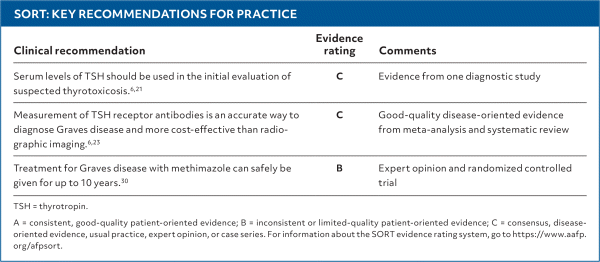
| Clinical recommendation | Evidence rating | Comments |
|---|---|---|
| Serum levels of TSH should be used in the initial evaluation of suspected thyrotoxicosis.6,21 | C | Evidence from one diagnostic study |
| Measurement of TSH receptor antibodies is an accurate way to diagnose Graves disease and more cost-effective than radiographic imaging.6,23 | C | Good-quality disease-oriented evidence from meta-analysis and systematic review |
| Treatment for Graves disease with methimazole can safely be given for up to 10 years.30 | B | Expert opinion and randomized controlled trial |
TSH = thyrotropin.
A = consistent, good-quality patient-oriented evidence; B = inconsistent or limited-quality patient-oriented evidence; C = consensus, disease-oriented evidence, usual practice, expert opinion, or case series. For information about the SORT evidence rating system, go to https://www.aafp.org/afpsort.
ETIOLOGY
The most common cause of hyperthyroidism is Graves disease followed by toxic multinodular goiter, toxic adenoma, and thyroiditis.4 Thyroiditis subtypes include subacute lymphocytic thyroiditis, granulomatous thyroiditis, and other less common variants.5,6 More information on thyroiditis is available in a previous American Family Physician (AFP) article.3
Graves Disease
Graves disease is an autoimmune disease caused by stimulating antibodies to the thyroid-stimulating hormone (thyrotropin; TSH) receptors, resulting in an increase in synthesis and release of thyroid hormone. There is an increased risk of Graves disease in patients with a family history of thyroid disease, and it is 4 times more common in females than in males.7 Thyroid eye disease is pathognomonic to Graves disease, occurring in approximately 1 in 4 patients.7 Thyroid eye disease is more common in current smokers and more severe in males and older patients.8
Read the full article
Get immediate access, anytime, anywhere.
Choose a single article, issue, or full-access subscription.
Earn up to 14 CME credits per issue.