

Family physicians oversee the complex care of premature infants after discharge from the neonatal intensive care unit, taking into consideration the degree of prematurity and unique complications that can occur. Early family engagement is critical for these infants. Before hospital discharge, at least two caregivers should demonstrate the ability to appropriately feed and provide necessary care for the infant. Premature infants are at risk of hypoxic-ischemic encephalopathy, periventricular leukomalacia, retinopathy of prematurity, bronchopulmonary dysplasia, necrotizing enterocolitis, and intraventricular hemorrhage. Routine vaccination is recommended. This includes newer prevention options for respiratory syncytial virus (eg, nirsevimab [Beyfortus]) and the prenatal vaccine Abrysvo. Growth of premature infants is monitored using corrected age and may improve with use of breast milk fortifiers or enriched formulas. Premature infants are also at risk for neurodevelopmental disabilities, including cerebral palsy, intellectual disability, and vision and hearing impairment. Developmental screening using corrected age is recommended at ages 9, 18, and 30 months, with screening for autism spectrum disorder at 18 and 24 months.
In 2023, approximately 10% of all births in the United States were preterm (occurring at less than 37 weeks’ gestation).1 Such births can be further classified as late preterm (34 to 36 6/7 weeks), moderately preterm (32 to 33 6/7 weeks), very preterm (28 to 31 6/7 weeks), and extremely preterm (less than 28 weeks).1,2 [corrected] These and other common terms related to the care of premature infants are defined in Table 1.2,3 Various medical and neurodevelopmental morbidities are possible across the spectrum of prematurity, which may profoundly affect the newborn and family.
WHAT’S NEW ON THIS TOPIC
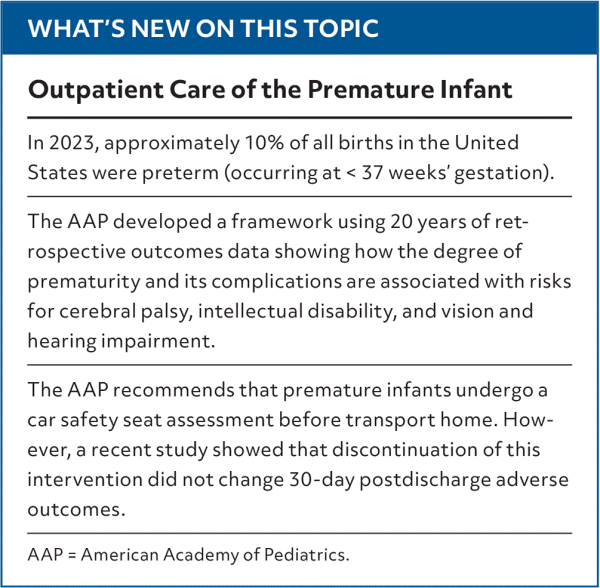
AAP = American Academy of Pediatrics.
SORT: KEY RECOMMENDATIONS FOR PRACTICE
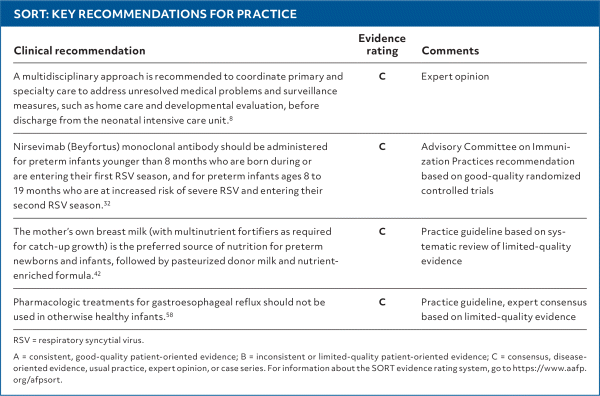
| Clinical recommendation | Evidence rating | Comments |
|---|---|---|
| A multidisciplinary approach is recommended to coordinate primary and specialty care to address unresolved medical problems and surveillance measures, such as home care and developmental evaluation, before discharge from the neonatal intensive care unit.8 | C | Expert opinion |
| Nirsevimab (Beyfortus) monoclonal antibody should be administered for preterm infants younger than 8 months who are born during or are entering their first RSV season, and for preterm infants ages 8 to 19 months who are at increased risk of severe RSV and entering their second RSV season.32 | C | Advisory Committee on Immunization Practices recommendation based on good-quality randomized controlled trials |
| The mother’s own breast milk (with multinutrient fortifiers as required for catch-up growth) is the preferred source of nutrition for preterm newborns and infants, followed by pasteurized donor milk and nutrient-enriched formula.42 | C | Practice guideline based on systematic review of limited-quality evidence |
| Pharmacologic treatments for gastroesophageal reflux should not be used in otherwise healthy infants.58 | C | Practice guideline, expert consensus based on limited-quality evidence |
RSV = respiratory syncytial virus.
A = consistent, good-quality patient-oriented evidence; B = inconsistent or limited-quality patient-oriented evidence; C = consensus, disease-oriented evidence, usual practice, expert opinion, or case series. For information about the SORT evidence rating system, go to https://www.aafp.org/afpsort.
Read the full article
Get immediate access, anytime, anywhere.
Choose a single article, issue, or full-access subscription.
Earn up to 14 CME credits per issue.
