A 35-year-old woman reported feeling pressure in her lower neck and chest a few hours after meals. The symptoms had started several months prior. The sensation was worse with dry foods, such as bread. She had a history of chronic idiopathic urticaria, which was well controlled with cetirizine. She was not allergic to any medications.
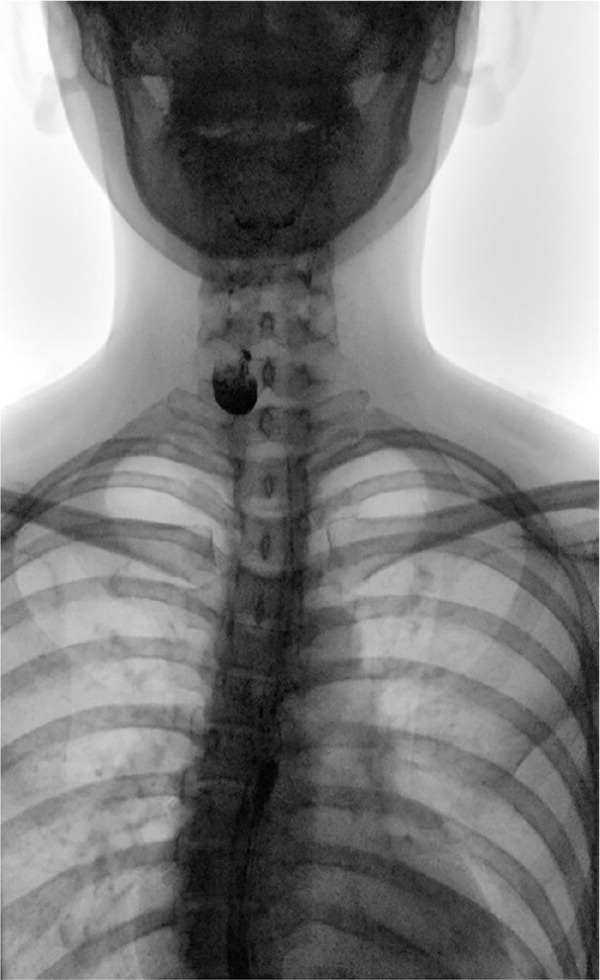
Although the patient did not report weight loss, she had lost 3% of her body weight on chart review. Physical examination did not reveal oropharyngeal or abdominal abnormalities. A barium swallow test was ordered (Figure 1).
FIGURE 1
QUESTION
Based on the patient’s history and physical examination, which one of the following is the most likely diagnosis?
- A. Eosinophilic esophagitis.
- B. Esophageal cancer.
- C. Esophageal stricture.
- D. Esophageal webs.
- E. Zenker diverticulum.
DISCUSSION
The answer is E: Zenker diverticulum, an outpouching of esophageal mucosa and submucosa through the posterior esophageal wall between the thyropharyngeus and cricopharyngeus muscles. The condition is thought to be caused by increased hypopharyngeal pressure secondary to incomplete opening of the upper esophageal sphincter. Zenker diverticulum is most common in men 70 to 80 years of age. It presents with dysphagia, regurgitation of undigested foods, and halitosis. When untreated, the most common complications include chronic cough, aspiration, and weight loss.
The diagnosis is confirmed by barium swallow test, but ultrasonography can be used in patients who have difficulty swallowing barium. In symptomatic patients with a diverticulum greater than 1 cm in diameter, surgical endoscopic correction is the definitive treatment.1,2
Eosinophilic esophagitis is a chronic immune disorder in which the esophageal mucosa becomes eosinophil rich due to repeated antigen exposure. It is most common in men 20 to 40 years of age and is strongly correlated with atopy. The repeated inflammation causes dysphagia and dyspepsia. The most typical presenting symptom is food impaction. Treatment includes dietary changes to avoid antigen exposure and use of proton pump inhibitors and swish-and-swallow steroid suspensions. Refractory cases may require esophageal dilation.3
Esophageal cancer is the sixth most common cause of cancer-related death worldwide, accounting for 1 in 20 deaths. Risk factors include male sex, chronic gastroesophageal reflux, central obesity, and Barrett esophagus. Patients with early-stage esophageal cancer are usually asymptomatic. Dysphagia occurs in later stages.4
Esophageal strictures are uncommon and more prevalent in older patients. Most cases (70%–80%) are caused by inflammation from chronic gastroesophageal reflux disease. Most patients present with dysphagia when eating solid foods but may progress to having difficulty swallowing semisolids and liquids. Strictures are 10-fold more common in White vs Black or Asian people.5
Esophageal webs are thin membranes of squamous epithelium that transect the esophageal lumen. Although most patients with esophageal webs are asymptomatic, the degree of luminal obstruction typically correlates with symptom severity. Patients may present with intermittent dysphagia when eating solid foods. The condition is treated with endoscopic esophageal dilation.6
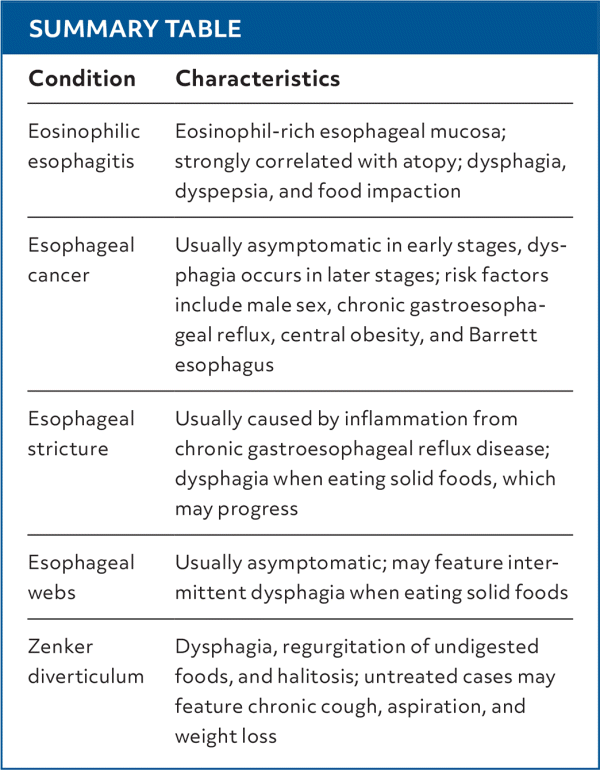
SUMMARY TABLE
| Condition | Characteristics |
|---|---|
| Eosinophilic esophagitis | Eosinophil-rich esophageal mucosa; strongly correlated with atopy; dysphagia, dyspepsia, and food impaction |
| Esophageal cancer | Usually asymptomatic in early stages, dysphagia occurs in later stages; risk factors include male sex, chronic gastroesophageal reflux, central obesity, and Barrett esophagus |
| Esophageal stricture | Usually caused by inflammation from chronic gastroesophageal reflux disease; dysphagia when eating solid foods, which may progress |
| Esophageal webs | Usually asymptomatic; may feature intermittent dysphagia when eating solid foods |
| Zenker diverticulum | Dysphagia, regurgitation of undigested foods, and halitosis; untreated cases may feature chronic cough, aspiration, and weight loss |
Read the full article
Get immediate access, anytime, anywhere.
Choose a single article, issue, or full-access subscription.
Earn up to 14 CME credits per issue.