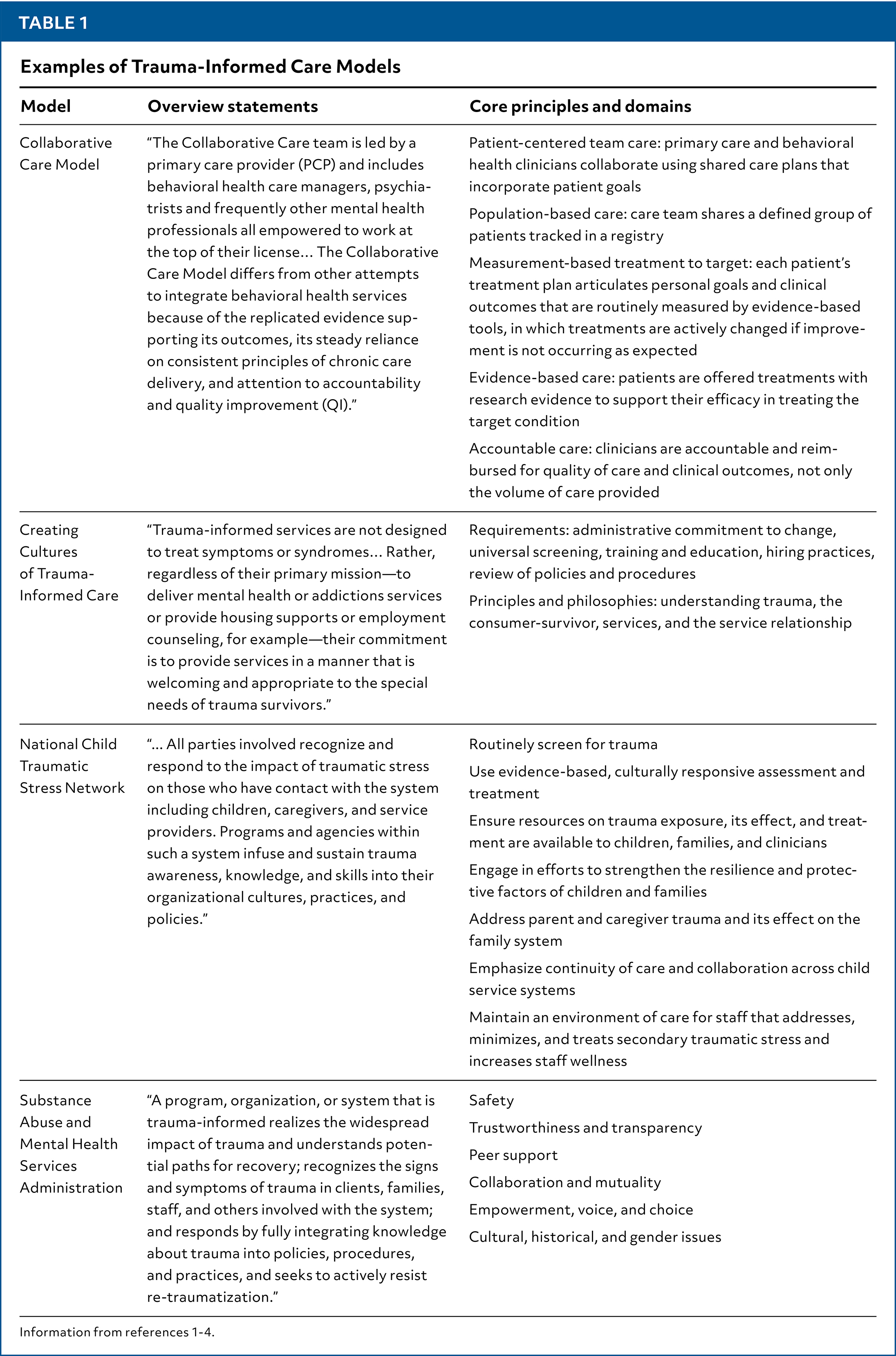
Exposure to trauma (eg, community violence, interpersonal violence, child maltreatment) has been associated with many adverse mental and physical health outcomes. The Substance Abuse and Mental Health Services Administration defines trauma-informed care as a set of principles that reflects awareness of trauma exposure and its effects.1 Evidence-based guidelines exist for the treatment of trauma-related conditions such as posttraumatic stress disorder. However, little information about the effects of these specific models on overall health system outcomes is available. One challenge is that definitions and models of trauma-informed care vary (Table 11–4).
TABLE 1. Examples of Trauma-Informed Care Models
| Model | Overview statements | Core principles and domains |
|---|---|---|
| Collaborative Care Model | “The Collaborative Care team is led by a primary care provider (PCP) and includes behavioral health care managers, psychiatrists and frequently other mental health professionals all empowered to work at the top of their license… The Collaborative Care Model differs from other attempts to integrate behavioral health services because of the replicated evidence supporting its outcomes, its steady reliance on consistent principles of chronic care delivery, and attention to accountability and quality improvement (QI).” | Patient-centered team care: primary care and behavioral health clinicians collaborate using shared care plans that incorporate patient goals Population-based care: care team shares a defined group of patients tracked in a registry Measurement-based treatment to target: each patient's treatment plan articulates personal goals and clinical outcomes that are routinely measured by evidence-based tools, in which treatments are actively changed if improvement is not occurring as expected Evidence-based care: patients are offered treatments with research evidence to support their efficacy in treating the target condition Accountable care: clinicians are accountable and reimbursed for quality of care and clinical outcomes, not only the volume of care provided |
| Creating Cultures of Trauma-Informed Care | “Trauma-informed services are not designed to treat symptoms or syndromes… Rather, regardless of their primary mission—to deliver mental health or addictions services or provide housing supports or employment counseling, for example—their commitment is to provide services in a manner that is welcoming and appropriate to the special needs of trauma survivors.” | Requirements: administrative commitment to change, universal screening, training and education, hiring practices, review of policies and procedures Principles and philosophies: understanding trauma, the consumer-survivor, services, and the service relationship |
| National Child Traumatic Stress Network | “... All parties involved recognize and respond to the impact of traumatic stress on those who have contact with the system including children, caregivers, and service providers. Programs and agencies within such a system infuse and sustain trauma awareness, knowledge, and skills into their organizational cultures, practices, and policies.” | Routinely screen for trauma Use evidence-based, culturally responsive assessment and treatment Ensure resources on trauma exposure, its effect, and treatment are available to children, families, and clinicians Engage in efforts to strengthen the resilience and protective factors of children and families Address parent and caregiver trauma and its effect on the family system Emphasize continuity of care and collaboration across child service systems Maintain an environment of care for staff that addresses, minimizes, and treats secondary traumatic stress and increases staff wellness |
| Substance Abuse and Mental Health Services Administration | “A program, organization, or system that is trauma-informed realizes the widespread impact of trauma and understands potential paths for recovery; recognizes the signs and symptoms of trauma in clients, families, staff, and others involved with the system; and responds by fully integrating knowledge about trauma into policies, procedures, and practices, and seeks to actively resist re-traumatization.” | Safety Trustworthiness and transparency Peer support Collaboration and mutuality Empowerment, voice, and choice Cultural, historical, and gender issues |
To better understand the landscape of trauma-informed care, the Agency for Healthcare Research and Quality contracted with the Minnesota Evidence-Based Practice Center to produce the 2025 report Trauma Informed Care: A Systematic Review, sponsored by the National Institute of Mental Health.5 The review examines how trauma-informed care and its components are defined and describes the evidence on effectiveness and potential harms of its models and components. Here we summarize the evidence from this review and propose pragmatic approaches for primary care clinicians.
SUMMARY OF THE EVIDENCE
Twelve studies from 16 publications met criteria for inclusion in the systematic review. Most of the studies included staff training on trauma-informed care that ranged from a single 2-hour session to multiple sessions spanning 12 months. Study populations included children, adolescents, and adults in the United States, Canada, and Switzerland in various settings, including residential homes, psychiatric hospitals, primary care, and child welfare services.5
Categories of interest included trauma-specific (eg, incidence of retraumatization), organization- or system-level, (eg, referral wait times), patient- or client-centered (eg, self-reported quality of life), and harms (eg, increase in patient aggression) outcomes. Outcome follow-ups were conducted from 30 days to nearly 5 years after trauma-informed care.5
All studies were assessed as having high risk of bias, and high variability across the interventions precluded quantitative synthesis of the data. The evidence was insufficient to reach conclusions about the effects of trauma-informed care for any outcome.5
This systematic review is a reminder that implementation in clinical practice can sometimes outpace research evidence. Numerous studies have presented descriptions of theory-based trauma-informed care models, yet no universally consistent operationalization was observed in the larger literature (Table 11–4). The systematic review calls for more rigorous causal research and prioritization of trauma-informed care from funding agencies.
PRAGMATIC APPROACHES
Although an evidence base for trauma-informed care has yet to be established, related knowledge exists. First, when working with patients who have a history of trauma, clinicians can consider the comorbidities associated with trauma, such as adverse social determinants of health (eg, housing instability, lower socioeconomic status), and offer to connect patients with available resources, such as behavioral health care and community organizations.
Second, to prevent occupational burnout and compassion fatigue in delivering trauma-informed care, clinicians need to rely on a collaborative, integrated team approach. Case managers, mental health clinicians, allied health care professionals, patient support networks (eg, family members, friends, caregivers), and clinician support networks (eg, peer consultants, family members, friends) should be involved.
Third, when deciding whether to implement any components of trauma-informed care, clinicians can use clinical judgment within their specific settings to assess the potential net benefit. Depending on the clinical setting and prevalence of trauma-related conditions, it may be advisable to implement systems-level changes or incorporate more trauma-informed communication strategies into daily practice. Trauma-informed care will likely be most effective when embedded in a systems-level framework. In resource-limited settings, it is fundamental to remember that systems comprise individuals, and for a system to change, individuals within it must change first.
CONCLUSION
Lack of strong evidence does not mean there is no evidence at all. Following the criteria outlined in the systematic review, more rigorous studies are needed before researchers can draw definitive conclusions regarding trauma-informed care and its effectiveness.
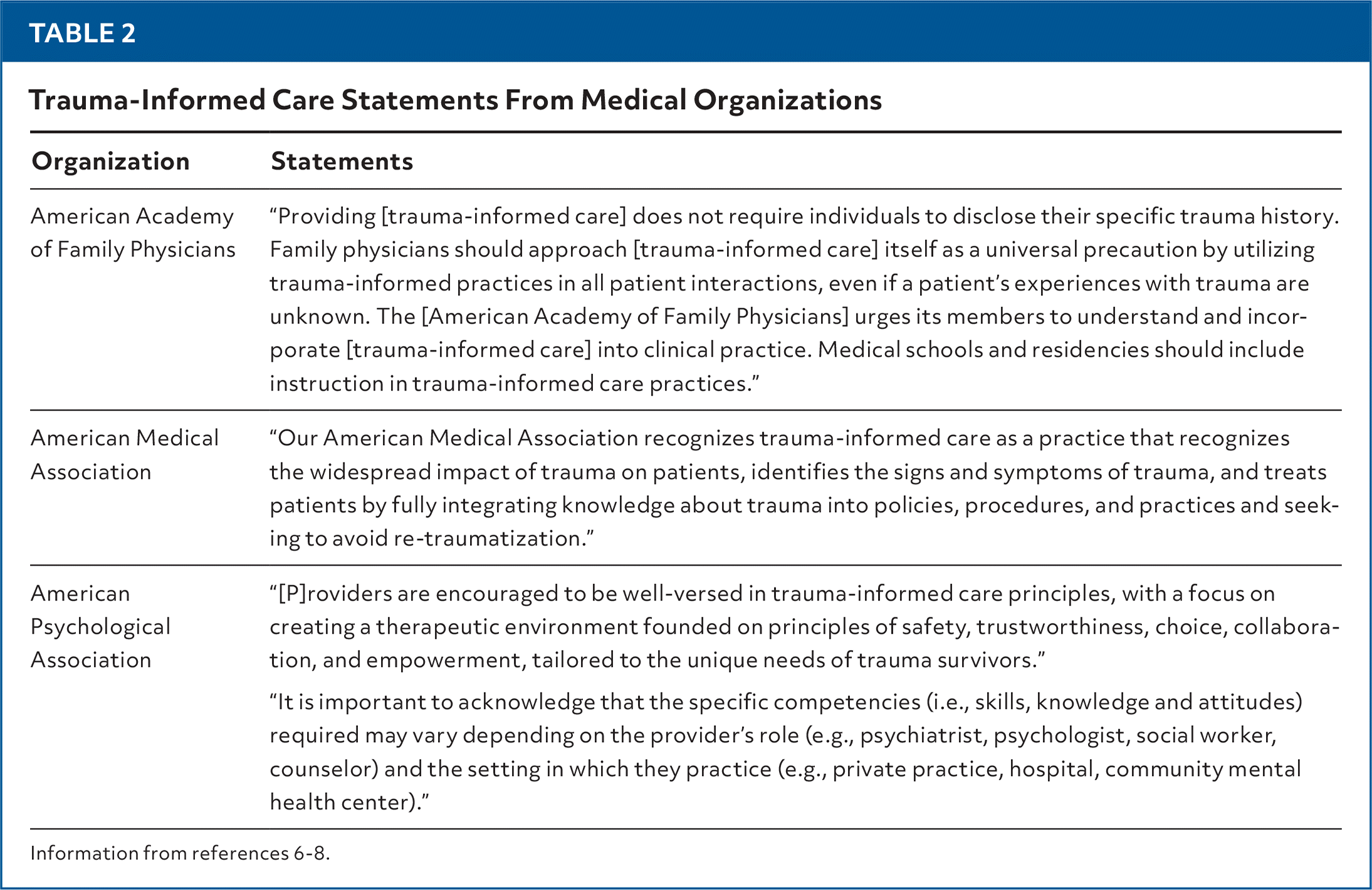
Yet this does not prevent family physicians from using their clinical expertise to shape individual patient outcomes using trauma-informed care. We encourage family physicians to review the trauma-informed care statements published by the American Academy of Family Physicians and other groups (Table 26–8), collaborate in decision-making processes with allied health care professionals, and reserve time outside of work for self-care.
TABLE 2. Trauma-Informed Care Statements From Medical Organizations
| Organization | Statements |
|---|---|
| American Academy of Family Physicians | “Providing [trauma-informed care] does not require individuals to disclose their specific trauma history. Family physicians should approach [trauma-informed care] itself as a universal precaution by utilizing trauma-informed practices in all patient interactions, even if a patient's experiences with trauma are unknown. The [American Academy of Family Physicians] urges its members to understand and incorporate [trauma-informed care] into clinical practice. Medical schools and residencies should include instruction in trauma-informed care practices.” |
| American Medical Association | “Our American Medical Association recognizes trauma-informed care as a practice that recognizes the widespread impact of trauma on patients, identifies the signs and symptoms of trauma, and treats patients by fully integrating knowledge about trauma into policies, procedures, and practices and seeking to avoid re-traumatization.” |
| American Psychological Association | “[P]roviders are encouraged to be well-versed in trauma-informed care principles, with a focus on creating a therapeutic environment founded on principles of safety, trustworthiness, choice, collaboration, and empowerment, tailored to the unique needs of trauma survivors.” “It is important to acknowledge that the specific competencies (i.e., skills, knowledge and attitudes) required may vary depending on the provider's role (e.g., psychiatrist, psychologist, social worker, counselor) and the setting in which they practice (e.g., private practice, hospital, community mental health center).” |