Since insulin was discovered in 1923, there have been remarkable innovations in diabetes care. For 75 years, American Family Physician (AFP, and originally published under the name of GP) has provided readers with updates about these innovations. Table 1 highlights key events in the history of diabetes care.1–10
TABLE 1. Key Advances in Diabetes Care Since 1950
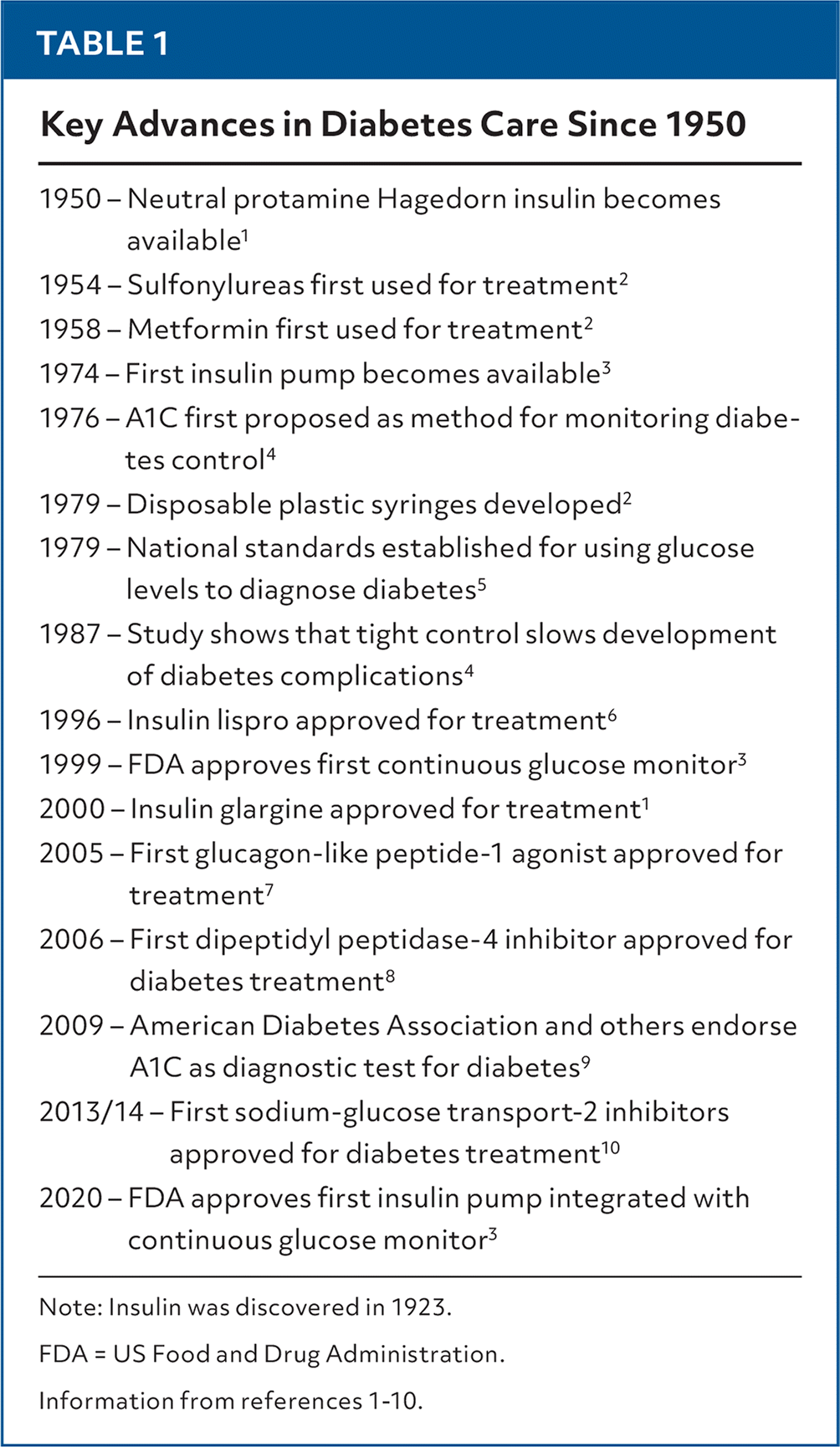
| 1950 – Neutral protamine Hagedorn insulin becomes available1 |
| 1954 – Sulfonylureas first used for treatment2 |
| 1958 – Metformin first used for treatment2 |
| 1974 – First insulin pump becomes available3 |
| 1976 – A1C first proposed as method for monitoring diabetes control4 |
| 1979 – Disposable plastic syringes developed2 |
| 1979 – National standards established for using glucose levels to diagnose diabetes5 |
| 1987 – Study shows that tight control slows development of diabetes complications4 |
| 1996 – Insulin lispro approved for treatment6 |
| 1999 – FDA approves first continuous glucose monitor3 |
| 2000 – Insulin glargine approved for treatment1 |
| 2005 – First glucagon-like peptide-1 agonist approved for treatment7 |
| 2006 – First dipeptidyl peptidase-4 inhibitor approved for diabetes treatment8 |
| 2009 – American Diabetes Association and others endorse A1C as diagnostic test for diabetes9 |
| 2013/14 – First sodium-glucose transport-2 inhibitors approved for diabetes treatment10 |
| 2020 – FDA approves first insulin pump integrated with continuous glucose monitor3 |
Note: Insulin was discovered in 1923.
FDA = US Food and Drug Administration.
In the early 1950s, before any oral diabetes drugs were available, a GP article pointed out to readers that having overweight patients lose weight was an important part of diabetes management.11 When the first long-acting insulin became available, GP updated readers on this new modality.12
Articles in the 1960s discussed new drugs, like phenformin, an early relative of metformin (the latter remains in common use),13 and offered reviews of early sulfonylureas like chlorpropamide, tolbutamide, and acetohexamide.14,15
In 1970, AFP articles began offering “post-graduate study credit” (now known as continuing medical education). This included an eight-part course on the overall management of diabetes. Interestingly, all the articles mentioned to this point were written by internal medicine physicians, because there had not yet been graduates of residency programs from the new specialty of family medicine.16
The February 1980 edition of AFP featured a comprehensive review on “Management of Noninsulin-dependent Diabetes Mellitus” as a part of its “Practical Therapeutics” series. It covered the diagnostic criteria at the time (fasting plasma glucose greater than 140 mg/dL [7.77 mmol/L] on more than one occasion, or at least 200 mg/dL [11.1 mmol/L] on an oral glucose tolerance test). It also defined diabetes as either insulin-dependent or non–insulin-dependent, rather than our current terminology of type 1 and type 2. Management advice included recommendations regarding a nutritious and calorically balanced diet, exercise (although noting little supporting evidence at that time), and the use of insulin (regular, long-acting, lente, protamine zinc, and ultralente) as well as sulfonylureas.17
In 1999, AFP featured another article, this time on the management of type 2 diabetes, the term superseding non– insulin-dependent diabetes. It updated readers on new diagnostic criteria (fasting glucose more than 125 mg/dL [6.94 mmol/L] on more than one occasion, although random values more than 200 mg/dL were still considered diagnostic). While continuing to stress dietary modification and exercise as first-line treatments, the article updated readers on medications that had been approved by the US Food and Drug Administration since 1980. These included metformin, the alpha-glucosidase inhibitors acarbose and miglitol, the thiazolidinedione troglitazone, and the meglitinide repaglinide. In addition to sulfonylureas, readers were encouraged to consider a combination of two oral agents before initiating insulin for glycemic control.18
Since 2000, AFP has been documenting the rising prevalence of diabetes and the newly coined prediabetes in the US population.19,20 Especially alarming has been the rapid increase of type 2 diabetes in children.21,22 The diagnosis of prediabetes, while not yet accepted by all clinicians, has been noted as a new standard.20 The increasing prevalence has led to expanded screening guidelines for diabetes, including in pregnant women and children.23–26 Prediabetes as a diagnosis continues to generate controversy because there is no evidence that treating prediabetes with medications decreases patient-oriented outcomes like mortality or macro- or microvascular complications.27
AFP also has documented a dramatic expansion in the therapeutic options for treating diabetes over the past 25 years.28 These included the proliferation of synthetic insulins,29 new oral medication classes,30 and, more recently, highly effective noninsulin injectable diabetes medications.31 Some of the newer classes, such as glucagon-like peptide-1 agonists and sodium-glucose transport-2 inhibitors, offer significant cardiovascular benefits and renal protection.32,33 These medications are now becoming mainstays of treatment even in patients without diabetes and, as pointed out in a recent review, they are acceptable as first-line therapy for type 2 diabetes in patients who have complications like kidney dysfunction.34–36 As treatment options continued to increase, AFP emphasized a focus on patient-oriented outcomes when treating diabetes.37,38
AFP has also provided readers with information about how technology has become important in diabetes care. This has included continuous glucose monitoring, which has become widespread and is associated with small improvements in glucose control,39 along with telemedicine that expands access to physician and nurse check-ins, decreases travel requirements, and incorporates a patient-centered approach to diabetes care.40 A collection of recent diabetes content can be found on the AFP website.
WHAT AFP MEANS TO ME
AFP provides portable, easy access to resources for solid medical information. The website search function is easy to navigate so that I can quickly find answers to clinical questions that I may experience in the trenches of my busy urgent care practice. It is also a good way to both earn and track CME hours. Keep up the good work!
Dr. Steve Dudley
The authors thank Eli Hoelscher, one of AFP’s associate editors, for searching the archives and retrieving copies of AFP articles that were published before PubMed became available in 1996.
Editor’s Note: The authors are editors of AFP.