Michael Harding, MD, MPH
Medical editing fellow for AFP and a staff physician at Oklahoma City Indian Clinic in Oklahoma City. Send correspondence to michael.h@okcic.com.
7:15 am
I listen to the AFP podcast on my 30-minute commute. It’s a great way to learn during a busy day.
8:00 am
A fourth-year student in the Tribal Track joins me for clinic. She’s learning how we care for Oklahoma’s heterogeneous American Indian population. We see a man experiencing homelessness with carcinoid syndrome from an abdominal neuroendocrine tumor. Because he feared that the clinical trial his oncology team recommended had ulterior motives, he avoided care until his diarrhea and weight loss became unbearable.
10:30 am
I see a patient who recently started buprenorphine. He’s in early recovery after intranasal fentanyl use for 2 years. We celebrate his progress and shift our focus to his ongoing stimulant use.
1:00 pm
I join my weekly Zoom meeting with AFP’s Editor-in-Chief. She walks me through the editorial process for review articles and recommends some background reading for my first assignment.
3:00 pm
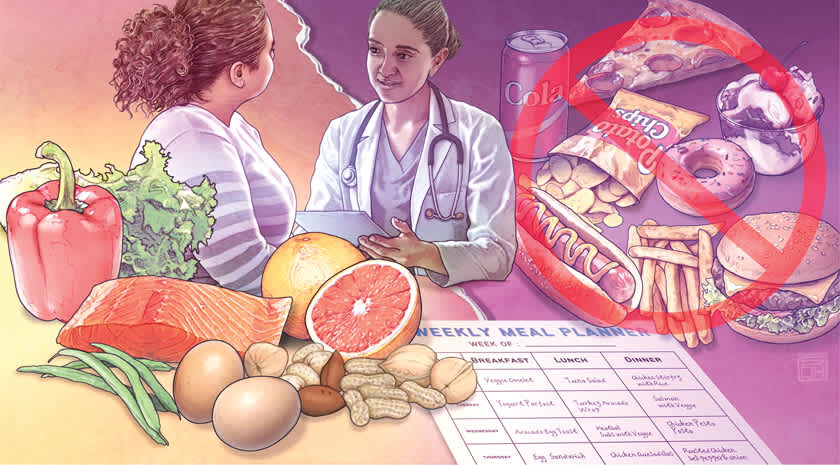
Our clinic recently received short-term funding to improve hypertension control by pairing antihypertensives with culturally tailored education on diet (based on the DASH diet and My Native Plate), physical activity, and avoidance of commercial tobacco. The Keep Tobacco Sacred movement distinguishes between sacred, ceremonial use of tobacco and harmful use of commercial products. I present our results virtually to colleagues from the CDC.
8:30 pm
I put my kids to bed and start drafting next month’s AFP Clinical Answers, a section designed to provide concise, practical guidance on a range of topics. I am grateful that the AFP’s Medical Editing Fellowship lets me combine clinical practice with my academic medicine interests.
Michelle Nelson, MD, FAAFP
Contributing editor for AFP and clinical assistant professor at Michigan State University, College of Human Medicine, East Lansing. Send correspondence to michelle.nelson@mymichigan.org.
6:00 am
I finish reviewing some Practice Guidelines for AFP. Working with colleagues to create a clear, practical synopsis of the guidelines is one of the most satisfying parts of editing.
9:00 am
I arrive at the rural health clinic where I volunteer. A woman with a persistent cheek lesion returns to the clinic after two rounds of cryotherapy have not been effective. She prefers being treated at a local clinic rather than seeing a dermatologist who is farther away. I perform a saucerization to remove the lesion after we discuss her preferences. She leaves reassured.
10:30 am
My next patient with shoulder pain arrives to complete FMLA paperwork. He says that he would like to limit prescription opioid use because his primary care physician explained the risks. The importance he places on his physician’s advice stays with me.
12:00 pm
Earlier in the week, I saw a patient with heart failure. I noticed a subtle, upward displacement of the globe in the left eye. A CT was performed and revealed a mass. I follow up with my hospitalist colleague who obtained an MRI, confirming an isolated meningioma. I feel relief and gratitude for colleagues who act quickly to change the course of care.
1:00 pm
I am the clinic’s certified medical coder, and I review and submit charges. The office manager shows me that an insurance company has misaddressed our checks and spends the afternoon on the phone trying to correct it. I have come to realize family medicine is equal parts science, service, and stubborn persistence.
5:00 pm
My husband and I go blueberry picking on the last day of the season. We debate which variety bakes best into pies. Moments like this remind me that balance between patient care and the quiet joys of life matters.