

As a significant portion of the US population ages, family physicians are seeing more adults older than 65. A recommended framework for geriatric assessment is the 4Ms: What Matters, Medication, Mentation, and Mobility. Clinicians should speak with patients and their families about what matters to them most in daily life and in their medical care. Clinicians should review medications to identify inappropriate drugs for discontinuation. They should also check for necessary medications that are missing or used incorrectly. For mentation, tools such as the Mini-Cog should be used for assessment when cognition is a concern. Abnormal results should prompt an evaluation for modifiable causes, mild cognitive impairment, and dementia. Mentation should also be addressed with screening for depression and factors that might predispose the patient to delirium. For mobility, clinicians should screen for fall risk with the Stopping Elderly Accidents, Deaths, and Injuries tool. Patients with positive results should be evaluated further and be instructed to begin exercise interventions, including physical therapy.
Family physicians are seeing more older adults in their daily practice as a large portion of the US population ages. In 2019, adults older than 65 accounted for 36% of office visits, and that percentage continues to increase.1
To assess the complex health needs of this population, family physicians should use the age-friendly health systems model, which is based on the 4Ms framework: What Matters, Medication, Mentation, and Mobility2 (Figure 13). These four topics are relevant regardless of a patient's specific medical problems. An expanded 5Ms model adds Multicomplexity, which is an approach to help patients address experiencing a variety of coexisting health conditions.4 The 4Ms model and 5Ms model offer an approach to the care of older adults that adds new components to disease-oriented models.
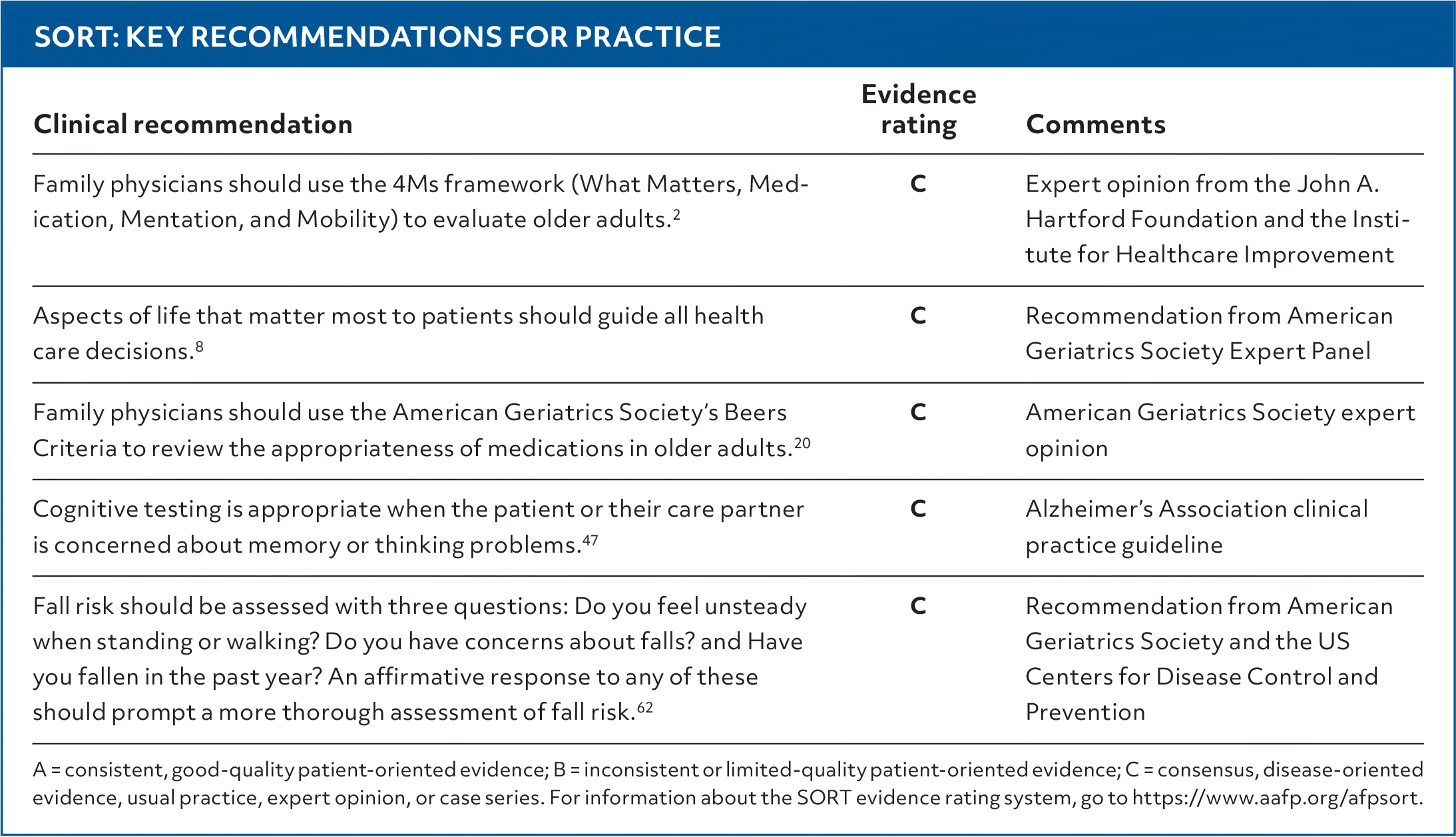
SORT: KEY RECOMMENDATIONS FOR PRACTICE
| Clinical recommendation | Evidence rating | Comments |
|---|---|---|
| Family physicians should use the 4Ms framework (What Matters, Medication, Mentation, and Mobility) to evaluate older adults.2 | C | Expert opinion from the John A. Hartford Foundation and the Institute for Healthcare Improvement |
| Aspects of life that matter most to patients should guide all health care decisions.8 | C | Recommendation from American Geriatrics Society Expert Panel |
| Family physicians should use the American Geriatrics Society's Beers Criteria to review the appropriateness of medications in older adults.20 | C | American Geriatrics Society expert opinion |
| Cognitive testing is appropriate when the patient or their care partner is concerned about memory or thinking problems.47 | C | Alzheimer's Association clinical practice guideline |
| Fall risk should be assessed with three questions: Do you feel unsteady when standing or walking? Do you have concerns about falls? and Have you fallen in the past year? An affirmative response to any of these should prompt a more thorough assessment of fall risk.62 | C | Recommendation from American Geriatrics Society and the US Centers for Disease Control and Prevention |
A = consistent, good-quality patient-oriented evidence; B = inconsistent or limited-quality patient-oriented evidence; C = consensus, disease-oriented evidence, usual practice, expert opinion, or case series. For information about the SORT evidence rating system, go to https://www.aafp.org/afpsort.
Read the full article
Get immediate access, anytime, anywhere.
Choose a single article, issue, or full-access subscription.
Earn up to 14 CME credits per issue.
