During a system upgrade from Friday, Dec. 5, through Sunday, Dec. 7, the AAFP website, on-demand courses and CME purchases will be unavailable.

  • Vibe Check #2: Is Family Medicine Right For Me?

    Get an inside look at family medicine from physicians who’ve been where you are — and discover if it’s the right specialty for you.

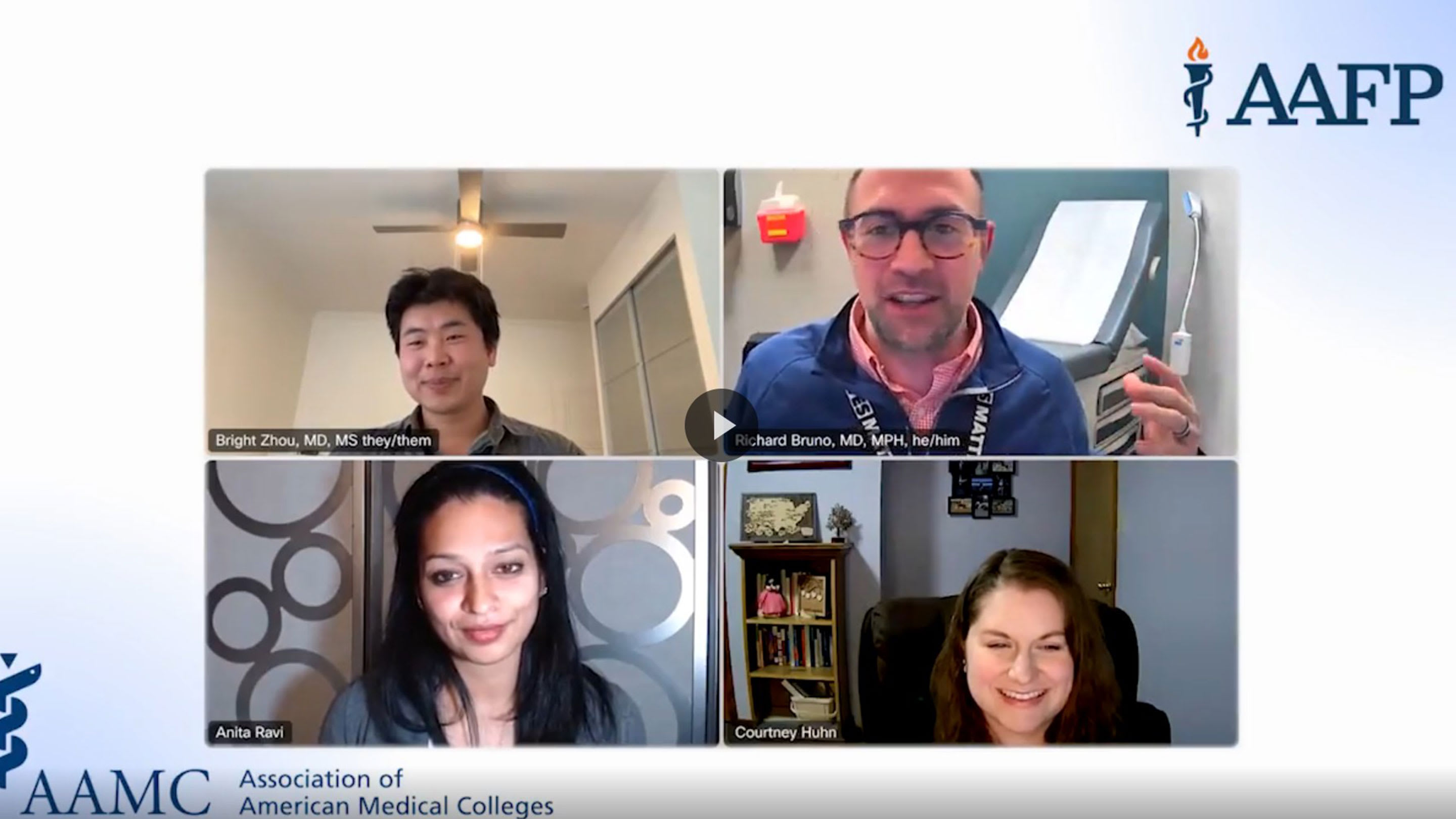
    Part of the Vibe Check: Is Family Medicine Right for Me? webinar series, presented by the AAFP in partnership with the Association of American Medical Colleges (AAMC), this session features inspiring family physicians who share their career journeys, the versatility of family medicine, and insights into choosing the right medical specialty.

    What You'll Learn:

    • How family medicine offers diverse career paths, including geriatrics, preventive medicine, and public health
    • The role of family physicians in navigating complex healthcare systems
    • Strategies for physician well-being and preventing burnout
    • The importance of advocacy and leadership in shaping healthcare

    Who Should Watch?

    • Medical students exploring specialty options
    • Residents considering fellowships or subspecialties
    • Anyone passionate about holistic, patient-centered care

    Watch the webinar recording above or read the full transcript below to get inspired by the real-life stories of family physicians shaping the future of healthcare!


    Welcome and Introductions

    Dr. Bright Zhou (host) Hello everyone. Welcome, and thank you so much for joining us for our second series In the "Vibe Check: Is Family Medicine Right For Me?" webinar series. This webinar is brought to you by the American Academy of Family Physicians, in partnership with the Association of American Medical Colleges. My name is Bright Zhou. I use they/them pronouns. I'm a new faculty member at the USC Family Medicine Residency program, but I'm also, tonight, especially happy to be your host for this evening.

    Dr. Bright Zhou (host) I'm so excited to introduce y'all to this next hour of panelists. We have really awesome family physicians who are providing truly innovative patient care.

    As all our panelists tonight are well aware, choosing a medical specialty is one of the most significant decisions a medical student will make, and it will lead to significant outcomes to their wellness and satisfaction later in life and in their chosen career. So the AAMC, the Association of American Medical Colleges, created this Careers in Medicine planning program to help all of our students and to help those who advise them. The Careers in Medicine, or CIM, offers tools to help guide students through self-assessments and research about specialty and practice options. CIM is designed to turn this vocational theory about "what is my job" into something that is more actionable, to help our medical students make two significant career decisions. First, what specialty to choose. And second, which residency program to pursue that specialty in.

    CIM is a AAMC member benefit, and it's free to most US MD, DO and Canadian students and advisors. This four-phase career planning model here on the slide is the foundation of our CIM program. Phase two is our Explore Options, which includes specialty profiles for over 160 specialties and subspecialties. This page right here that's listed shows our specific family medicine specialty profile with eight tabs of information. This right now is our overview tab which shows information that's most interesting to students typically as they start to explore specialties and practice options. And lastly, each spring, our CIM also hosts a virtual specialty forum where medical students can view resources, chat with residents, specialty representatives and AAMC staff, as well as attend a live presentation and Q&A with physicians about their specialty choice.

    I'm glad you are all here to hear from our physicians about family medicine. So we encourage all of you all to start your self-assessments and specialty explorations. Please feel free to use the AMC's CIM or Careers in Medicine program, and all U.S. MD and DO students, as well as their advisors, have access to this program. And to get started, please refer to careersinmedicine.aamc.org. All right. So now for the main event of why we are all here. We're going to hear from three fabulous family physicians who each have very exciting and different careers that highlight just how expansive our specialty really is. And I'd love to start with our first panel is tonight, Dr. Courtney Huhn. 


    Panelist #1 – Dr. Courtney Huhn: Journey Into Family Medicine and Geriatrics

    Dr. Courtney Huhn Thanks for having me. I'm excited to be here with you all. I would like to just start and run through my Careers in Medicine pathway and talk to you all a little bit about that, and then there will be some opportunities for questions.

    I first knew that I wanted to go into medicine when I was really young, probably like many of you. I didn't know what that looked like. No one in my family is in a medical field. No nurses, no doctors. And so this was novel for me. But I actually started working at a family medicine doctor's office locally when I was in high school -- that was my first job. I started as a file clerk, and I was spinning the racks and hole punching papers and putting them in paper charts. So it was at that time, and seeing what they did in the impact that that family physician made on the community, that I decided that I definitely wanted to go into medicine.

    I went on I worked there through undergraduate and obviously stopped when I went into medical school so I could focus on my education and the time needed for that. But I knew that I wanted to take care of people, and I really knew that it wanted to be in a primary care sense. So initially I was trying to decide between peds, family medicine and internal medicine. And as I went through those first few years of medical school, I really started to tease out that I liked pediatrics and geriatrics, which obviously you could get with both of those or with family medicine. And so I chose those two areas or those two populations as particular areas of interest, I think, because they're often areas where the individual, the patients are more frail and more at risk of of things happening -- illness and other things. And so, to me, that was a really great fit. And so, I really started to dive into that. And what it boiled down to as we started to narrow my path -- which my real love was geriatric medicine -- was, did I really want to look at the whole person -- as part of their community, as part of their family -- the whole structure of who they were, and then dive into the details? Or did I want to start with some of the details and zoom back out? And I found myself really being a big picture person and understanding individuals as to how they fit in their community and their family. As part of a system. And so, that's why family medicine called to me.

    Dr. Courtney Huhn I did a geriatric fellowship after my family medicine residency, which was a really great fit, and it gave me that additional expertise when I was trying to decide where I wanted to go to residency. One of the first factors, which I think is true for many of us, is location. I was married, and I had my first child just days before match day. So that was a key factor for me, and the opportunity to do a geriatrics fellowship within family medicine really meant a lot. So, I was looking for somewhere close to home where I would still have family support. We wouldn't have to uproot our family. But there was a lot of really great residency programs close to me, which was a huge asset.

    I started to look into, "What did I want?" What was I looking for? What was my future career path? And one of the things I kept coming back to was I really loved teaching, and I really loved leadership. So, I was grateful for the opportunity to be involved with AAFP leadership as a resident and student. And I knew that that was going to be key for me going forward. So, the Academic Medical Center seemed like a really great fit where I had trained, and so I was grateful to be able to match at the University of Kansas Family Medicine Residency and also did my fellowship there.

    What was nice about that is it gave me that academic setting where I was able to really integrate with other specialties. Have more leadership opportunities in that way, but also do outreach in the community and really establish my skills as a leader and an educator. So, those were really important things for me as I went through. After all of my training, I stayed on as faculty for a short time, full time faculty, and then I ended up actually transitioning to a career at the VA focused on geriatric medicine. And so, I mostly do long term and skilled care as well as dementia care now. So, I've really been able to tailor my practice to that specific clinical interest.

    But beyond that, I've really been able to dive into leadership development and administration. And my role over the years I've been with VA has evolved, and now I have the opportunity to help support geriatric specialists, family docs, and other health professionals taking care of veteran patients with dementia and or in our VA nursing homes and help support them throughout the country. So, I do programing, quality improvement and leadership development things for those individuals. So, it's given me a really great opportunity to grow those skills and grow in my career.

    I also get to maintain a volunteer faculty appointment at KU and work with residents and geriatric medicine fellows and do teaching still. So, it was a nice transition for me as I went into and throughout this last few years of my career to evolve those skills and grow them as I grew in my interests and passions. 


    Follow-Up Questions for Dr. Huhn

    Dr. Bright Zhou (host) Thank you for so much for sharing Dr. Huhn. I related a lot to your story personally as the first in my family in medicine and also specifically about having family medicine as one of my early exposures to the medical field. I'm reflecting on how you're talking about systems, and you're talking about how, whether you were a student, a resident, a fellow, and now in your current physician role, you're looking at your patients and how they fit in within systems. And you yourself have now created this expertise and this role for yourself within a system. So you're reflecting what your own patients are going through themselves. I think a lot of people who are thinking about family medicine hear a lot about the systems that we work within, and that it's a very complicated healthcare system. And I'm curious, just given your expertise in this area, can you just talk a little bit briefly about that? What would you say to a student who's saying, "Hey, I'm really interested in family medicine? I just heard it's a lot of paperwork, or it's a lot of navigating administrative health care systems." As someone with that expertise that you hold.

    Dr. Courtney Huhn This this is a dangerous question, Bright. Because I could go on and on. Here's one of the analogies that I often like to use. I think of us as individuals, as the plants. And then you have the gardener, and then you have the garden, right? And so as a leader, you get to see all of our patients as plants in this big garden of complexities. And there's a lot of influences that factor in, whether we want to talk about the nuance of the weather and the soil and what the all of those things factor in, as well as how they're tended to and how they're cared for. I think that is a nice analogy for looking at things. But I think what is most important, as we talk about systems, and one of the reasons why family medicine was so important to me as a path, was because we are so well equipped to look at complex things in a holistic way.

    Honestly, I find it a little bit of a fun and entertaining way to to look at those systems and try to tease it out where we can make impact, because if all I did is look at the plant, you're going to miss a whole lot of things that can be impacting that in either a favorable or not favorable way. And that's true of patients and their health. If we think about this -- and that's why I love quality improvement and those things so much -- because as a family doc, we get to use our brains that are well trained to do this, to really dive in and say, "Okay, well, now we need to adjust the amount of sunlight or if we if fixed that, then the plant doesn't have to work as hard." Because we're making that environment better.

    So anyway, all that to say, when you're thinking of administrative paperwork and the problems there, I think you're right. And I think when people envision the administrative burdens, it's there in all specialties. But I think in family medicine, you get the education and training to really grow your skills in navigating systems and being effective in that for your patients. 


    Training in Geriatrics as a Family Physician

    Dr. Bright Zhou (host) I can tell that you have a green thumb with that analogy. That actually brought up another question. You had mentioned that pediatrics and geriatrics were your love as a student, and now, I assume, you're mostly focused on the geriatric population. For those of us who are interested in fellowships or for those residents even who are interested in fellowships, what do you think being a family physician approaching geriatrics, what are some of those unique areas that you can offer with your training and with your background as a family physician?

    Dr. Courtney Huhn That's a great question. Specific to geriatrics, obviously, these are complex, frail, individuals -- medically complex. And sometimes, other factors play into their complexity. But what I love is that I get to work closely with internal medicine trained geriatrics colleagues as well. And when we are approaching the same patients at times, it's funny to see how our brains are trained differently -- both good and equally valuable. But it just reaffirms for me that geriatrics was the exact right decision for the way I think.

    I think my skills from family medicine that have translated beautifully to geriatrics is that exact piece of how they fit in their family system. What is the support like? Also, looking at one of the big things we talk about in geriatrics is age-friendly health care. And one of the key principles of that is what matters most to the person. And that's a very family medicine skill. I think that's what we do every day. And so it's not just, "You have to fix this because that's what's needed." It's, "You get to fix this because that's what they want." Or you don't address that because that's not inline with what matters to them. And so, that's one of the family medicine skills that I went into my geriatrics career with. 


    Family Medicine, Knowledge and Well-being

    Dr. Bright Zhou (host) That that resonates with me so much. And also with your earlier points about identifying the systems and having that expertise of, what does the patient want? What does a patient not want, but also how can we leverage the system to help them achieve those goals? 

    So the AAFP, for those of us who don't know, the AAFP does have a Leading Physician Well-being program, which feels very relevant to what we've been talking about, not only for our patients, but also for ourselves. And so, my question that I also am seeing one of our participants asking, is about just how much knowledge we all have in family medicine. And just there's so much that you need to know: the knowledge we hold with our patients; ways we can advocate on their behalf because of our knowledge of systems; our knowledge of pathophysiology, etc. How does that impact your well-being, having to be on top of so many things? What are your thoughts there?

    Dr. Courtney Huhn Yeah, that's a great question and a tricky one. I think you're right. It can be overwhelming when you're going to any medical field. All of you that are students or residents, the fact that you're here means that you're used to dealing with that overwhelm, because for an average person, that's an overwhelming possibility. And the Leading Physician Well-being program was huge for me. I entered that during the pandemic when I was doing nursing home care. They were very heavily affected early on and throughout the pandemic, so that was definitely a time when my wellness (and my well-being as a whole) was impacted.

    I think as a physician, it is of utmost importance for us to be attentive to how we're feeling, how we're processing, and if those feelings are imposter syndrome or our intimidation or overwhelm or anxiety, fear -- whatever those may be -- understand that those are completely normal. You have a ton of tools and resources to help yourself, your colleagues and your friends and family as you go through those. I think that was key for me. I'd always been someone who was nose to the grind -- you just keep working. And in the pandemic, I was like, "Well, this isn't working anymore." I love to say, "What got me there won't get me where I want to go ultimately." And so, what needed to happen was a little bit of vulnerability and a little bit of acknowledging that those feelings happen, and what can we do to take care of them. And so, I did get to spend a lot of time. It's a yearlong program that was fantastic, if anybody is interested. Learn those techniques for focusing on our wellness and practice those, and then learn how to implement those as a leader, which was really powerful.

    Dr. Courtney Huhn One tip I'll give for your wellness is gratitude practice. It's the easiest, most straightforward thing that has actual evidence. And had I been prepared, I would have had the articles ready to cite. But actual evidence supports you. And so there's many apps and things for just writing down three good things. But I would empower you to do three very specific moments of your day, not just three things you're grateful for. Not just, "I'm grateful for my family," but three very specific moments of each day that were meaningful or that you're grateful for. That is such a powerful practice and will really help your wellbeing. 

    Dr. Bright Zhou (host) I really appreciate that, Dr. Huhn, and I feel like there's  something so familiar, even though this is our first time ever meeting. This is what that ethos of family medicine, in terms of navigating the complexity of medicine, requires: A) a deep understanding of the system, which we get with our training, and B) knowing when to reach out, when to let your community uplift you, as you said, when to take your nose off the grind and have other people help you and learning how to practice that gratitude. I feel like this is very much family medicine. Thank you so much for sharing your story. 

    Next, we're going to hear from Doctor Bruno. 


    Panelist #2 – Dr. Richard Bruno: Advocacy, Preventive Medicine, and Public Health

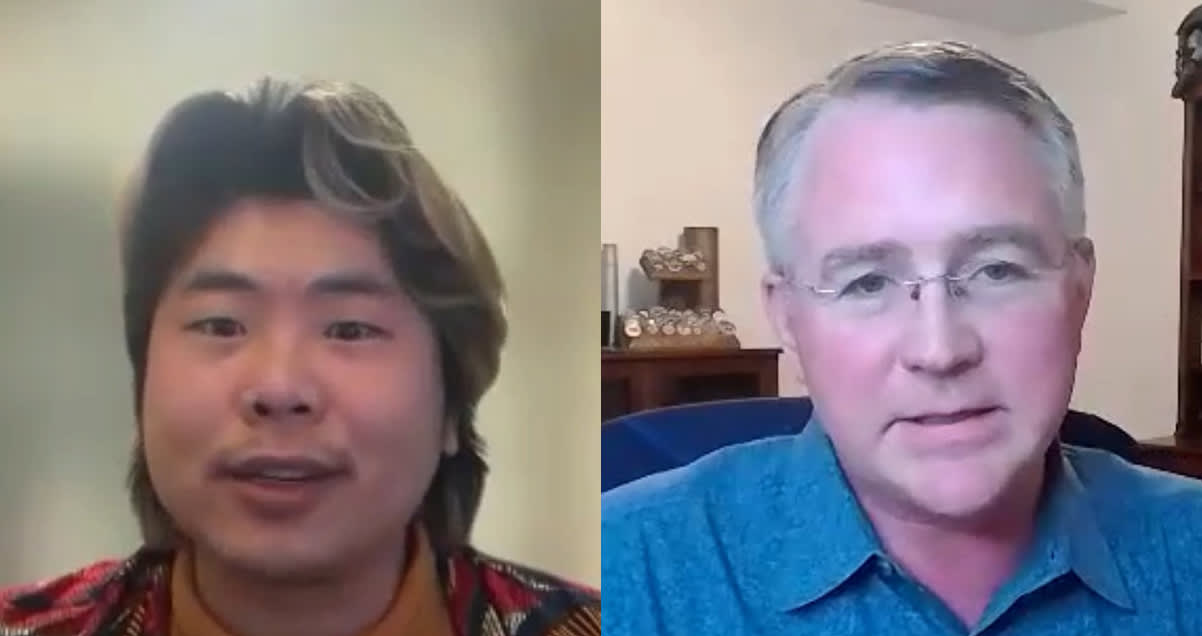
    Dr. Richard Bruno Thank you. And thanks to Dr. Huhn. Always inspiring to hear your story, too. Thanks so much for sharing. I'm Bruno. He/him pronouns. I'm family medicine and preventive medicine trained. And I've come to you from Portland, Oregon, here in the harm reduction clinic. I'm so grateful to be able to chat with you about family medicine, one of my great loves.

    I came to family medicine in sort of a roundabout way. I, as a junior high student, was volunteering at a camp for kids with disabilities in Little Rock, Arkansas (where I grew up), and I was taking care of kids with diabetes, cancer, spinabifida, autism and it was just wonderful to be able to provide assistance for their medical needs. I really started to think about going into the field of medicine at that point and got into the research angle as my way into medicine. I was a clinical trials coordinator for a while. I worked in the sleep lab hooking people up for sleep studies. And instead of going the research PhD route, I was like, "I want to do medicine. I want to take care of people and be present and helpful for them in their most vulnerable times.".

    Dr. Richard Bruno So I got into med school. One of my good friends from high school died of a brain tumor that probably wouldn't have killed them if they'd had health insurance. And so, I started thinking about all the systematic and systemic problems in our medical system that really drive unhealthy behaviors and contribute as unhealthy factors in people's lives. And being without health insurance was one of those. And so, I started devoting some of my work becoming a better advocate and ally for my patients, because I felt like if we could create a universal health care system, we could support people to be able to get access to health care they needed.

    I got into the advocacy angle and became active with AAFP and started writing resolutions at National Conference (now FUTURE). And I think National Conference has an incredible array of folks there and really helped build up the profession. I really found my tribe, so to speak, in terms of just finding a way to be a better advocate and ally for my patients, and which I found to be actually burnout prevention, getting back to the previous points. I think when we can feel like we are doing something to change the system, we feel it can help counteract some of the burden day-to-day clinical work can sometimes give us.

    Dr. Richard Bruno So I really focused on becoming involved in the AAFP. It became like a home for me. I became the National Conference chair, I became a member of the board of directors (resident). There's always ways to get involved in whatever area or passion you have within family medicine through AAFP. So always, always a wonderful place to do that work.

    I went to residency in family medicine/preventive medicine. It was a combined residency trying to train hybrid docs to be able to do primary care and public health interventions. It's basically three years of family medicine residency and two years of preventive medicine residency into four years -- we combined it together. You get your MPH as part of that. So, I'll put a little plug for that and a combined program if you want to get super efficient with your training. It's a great way to do that. And for me, it was, as former AAFP President Ted Epperly says, becoming the kind of doctor that your community needs. And I felt like my community needed a doctor who could not only provide medical care, but also help change the systematic factors that are influencing people's health. So that was a wonderful way to do that.

    Dr. Richard Bruno I finished residency, went out and started working for some federally qualified health centers and did the National Health Service Corps loan repayment program. I was working in some underserved clinics in Baltimore, where I really started cutting my teeth with HIV medicine and addiction medicine. Getting boarded, getting specialized in those things that I feel like my patients needed in the community I was serving.

    And then I moved back to Portland, Oregon, where I'd gone to medical school, and I ended up working for a health care for the homeless organization. I was trying to find some of those under-resourced folks in the community to be helpful for, and I set up some programs that were designed to help people get access to buprenorphine in walk-in clinics -- low cost, low barrier, immediate access to care through a walk-in clinic without an appointment. And just trying to streamline some of those processes, make it easier for people to get that kind of care that they needed.

    And then about a year ago, I transitioned over to my county health department. So I worked for Multnomah County Health Department, which is about 813,000 people in the greater Portland, Oregon metropolitan area. The health department is really designed to help work on those larger population health interventions. And so, I became the health officer there, kind of like a health commissioner. And that's my job now, is that I work on larger population health interventions. I oversee the medical examiner's office, the emergency medical services, all the ambulances in the county and emergency preparedness.

    And then I go to work a lot. I work on opioid overdose prevention and response. Recently, I've been working on some work with mobile vans, which I find is a really fascinating new angle, as well as bringing some good stewardship to some AI tools that we're starting to use in public health and in medicine as well.

    Dr. Richard Bruno And then I'm also able to stay clinical. I get to work in our HRD clinic. I'm here in our harm reduction clinic today. And I work shifts our SDI clinic and on our mobile van, where we can get out into the community and bring care to people where it's most needed, and often to people who have trouble getting into traditional brick and mortars. Finding ways to get access to care by having to get on public transportation or other ways can be significant barriers for people.

    Dr. Richard Bruno I'm here now doing what I thought I wanted to do: take care of patients but also work on some of the larger population health issues. And I always kind think back to some of the core concepts of family medicine as some of the big drivers for me. And if you look at some of the research of Barbara Starfield, she analyzed countries that had a robust primary care infrastructure and showed that they had better overall outcomes. And so, she came up with something called the "4Cs" of primary care. And I think family medicine is the most pure primary care. And so, those are like first contact, the coordination between multiple specialists, the comprehensiveness of family medicine. We can do a wide array of things, diagnostics and treatment and and other tools. And then my favorite is the continuity of care. It's the longitudinal relationships that you develop with people over time. You talk to the people who have been able to deliver a baby and then take care of them as a child and then deliver their baby. There's multigenerational, womb to tomb, cradle-to-grave spectrum that family medicine really embodies and really does very well.


    A Day in the Life of Dr. Bruno

    Dr. Richard Bruno I'll end by giving you a quick little synopsis of one of my days. It was one of those days where you're doing so many different things. It's like, "Oh my gosh, how did I even make it through that day?" But it was one of the days where I thought, "wow, this really embodies this family medicine and preventive medicine ethos." 

    I started off my day with a meeting, which is what I sometimes do. And I was meeting with a group called Project Nurture that does help for pregnant people who are struggling with substance use disorder. It provides resources and care for pregnant people in that situation.

    Dr. Richard Bruno Then I dropped off my 11-year-old son at his middle school, and he had baked a cake the night before. I helped him do a model of the animal cell as a cake. And so he had all these little organelles, like Twizzlers for the DNA and things like that. And so I dropped them off. Edible and educational  little project that he did.

    Dr. Richard Bruno I met with our regional public health leadership group about coordinating pertussis and H5n1 avian flu responses across five counties in our area. I attended a press conference with my senator, Jeff Merkley, about our Bull Run reservoir for healthy and clean water. I stopped by our medical examiner's office, our tuberculosis team, community Immunization program team, and SDI clinics to say hi and check out my other employees there.

    I discussed an extended-release buprenorphine program in jails because some of my colleagues run the corrections health. And got to meet up with them and some of the other addiction docs in town. I met with my behavioral health director to talk about broad behavioral health issues going on in our county, including mental health and substance use dual diagnosis and how we can better care for those folks who need higher levels of care. 

    Dr. Richard Bruno Saw patients in the HIV clinic, and I did a toenail removal procedure there because my patient didn't want to go to a podiatrist. He's like, "Dr. Bruno, I want you to do it." And I'm like, "Uh, I haven't done one in a few years -- just a sec." And let me go look on YouTube real quick to remember how to do it. It's like riding a bike, right? You get back in and get back on the saddle. He was really grateful that I was able to remove his toenail, and it worked really well.

    Dr. Richard Bruno But then I got a call over the overhead that somebody was overdosing outside of the clinic and outside the health department. And so I ran outside and was able to help somebody who had overdosed. When I arrived, somebody was giving chest compressions and had already given somebody one dose of naloxone. But the person had a pulse. So I was like, "Hold on, don't do the chest compressions -- he's just not breathing." So, we need to support his breathing. So we did some rescue breathing, got additional doses of naloxone. He started breathing again. The EMS arrived and took him to the hospital.

    Dr. Richard Bruno And then next, I filmed an Instagram reel for our communications folks about the rising levels of pertussis in our community. We still have over a thousand cases of pertussis in Oregon over the last 12 months. So, we're still trying to do a lot of communications about that. I gave a talk to our medical school MDM program students who are interested in public health. And also we started assembling naloxone kits for a group called Portland Street Medicine so they could get more naloxone out in the community to people who need it.

    That gives you a quick overview of some of the amazing things you can do as a community provider, as somebody who's devoted to trying to find best ways to use their skill set, to be a good ally for your patients and be the kind of doctor that your community needs.


    Reflections from the Host

    Dr. Bright Zhou (host) Amazing. I wish that I could actually have my video while you were talking, but that would've been distracting because you brought me on a journey. I was aweing over the animal cell cake. I was in awe over the work that you do. Thank you so much for sharing.

    I know oftentimes when we introduce our path into medicine, we don't realize the impact. But I wanted to take a moment to acknowledge the friend that brought you into medicine in the first place, who passed away, and your passion to bring health care access to people is so reflected in that memory, and I just wanted to take a moment to acknowledge that. What you said was, "I got into family medicine to bring health care access to people who don't have it." And I don't think anyone would question that that is what you are doing every single day. I just wanted to take a moment to really thank you for that.

    And this is also my first time meeting Dr. Bruno. So I don't have any knowledge of your past. But I do think that is so powerful. And I think that reflects so much of the kind of people that we are -- and that family physicians are -- in that dedication. So thank you for for that part. I wanted to make sure that we touched on that.

    Dr. Richard Bruno Wow.

    Dr. Bright Zhou (host) The other part that I wanted to say, I'm also feeling a lot of calls to your story as well, is definitely echoing your plug for the National Conference, now known as FUTURE. So all of our students who want to see all of the different scopes of what our family physicians are doing, that is a great conference. As as someone also who was a resident chair of that conference, I can only second what you said, Dr. Bruno.

    And you touched upon a lot of the questions that we got from our students. A lot of students choose to go into family medicine because of their ability to directly impact a patient's life. And you also, with your preventative health background, work at different public health broader systems level.

    Can you help walk us through why you're in such a unique place were you're involved with all levels of care? There were some questions about incarceration medicine, some questions about caring for those who are unhoused, some questions about direct mobile van medicine that you're talking about. What is the thought process that you have as you navigate health care delivery and all the different forms that exist? And what advice would you give someone who's just starting out, who wants to maximize that healthcare impact for as many people who deserve to have health care -- universal health care? How can they best think about which settings should they want to work in, whether it's in FQHC, whether it's a jail, a mobile van? What kind of advice would you give to that person? 


    Advice on Choosing Clinical Settings for Impact

    Dr. Richard Bruno Yeah. Great question, Doctor Zhou. For folks who are interested in any of the things that you just mentioned, I think just try it out, you know, like try and find a preceptor or find somebody who's doing the kind of stuff that seems cool to you. And see if you can either, like set up a rotation or maybe just stop by on your own. But try and understand kind the work that they're doing and some of the challenges that they're seeing and what they what their hope is for the future.

    Dr. Richard Bruno I get really excited when I talk about solutions for big, complex public health problems. Because it allows me to do some convening, right? I kind of see myself as a convener, but also like a silo buster. I'm seeing that this organization and that organization and this hospital and that clinic are doing great work. But they're not always talking to each other. So how can I, as a family doc in the community start to convene people to talk about what really are some of the important, complex problems that they're having? What are some of the gaps? And what can we do with our medical knowledge, with our knowledge of systems -- and some elbow grease -- to nudge better futures for the folks that we take care of every day. Because it can be frustrating, right? I mean, you're taking care of somebody and you're maybe prescribing some medicine, but that's just not going to get them over the finish line, right? You can maybe get their A1C down a little bit with some meds. But really, it's the fact that they live in a food swamp that has like, you know, you're inundated with fast food all the time, or they're the 2 or 3 bus lines from a grocery store in a food desert, and it's just not getting them access to the proper foods that they need to be healthier.

    Dr. Richard Bruno So it really just falls on us, I think, to take their stories and elevate them to the people who have the power to pull those levers and make those changes -- policy changes or legislation changes -- and just create a better society for people to be healthier people in general. So, I think family docs have this great honor and privilege of, not only knowing about all our patients most intimate details and secrets that they share with us, but we also have a calling to share those stories in an appropriate way with those folks that can make those bigger changes. Or, if we can't, do it yourself. Run for office, become a legislator or join the AAFP board or an AAFP committee where you can actually have an impact on entire populations of people. So, yeah, huge, pretty big problems out there. And I'm just so grateful that y'all are here thinking about these problems with us because it's kind of all hands on deck.

    Dr. Bright Zhou (host) Thank you so much, Dr. Bruno. I think there's much for us to think about. And even thinking about what Dr. Huhn is saying. Clearly, the theme of tonight is systems-based medicine -- tending to the garden of ourselves and our patients. And speaking of sharing that story more broadly and amplifying that story, I wanted to bring us next to our final speaker tonight, Dr. Ravi, who also has very powerful stories, as all of our other panelists. And I just feel excited to have you share. Thank you so much, Dr. Ravi. 


    Panelist #3 – Dr. Anita Ravi: Gender-Based Violence, Justice-Informed Care, and Innovation

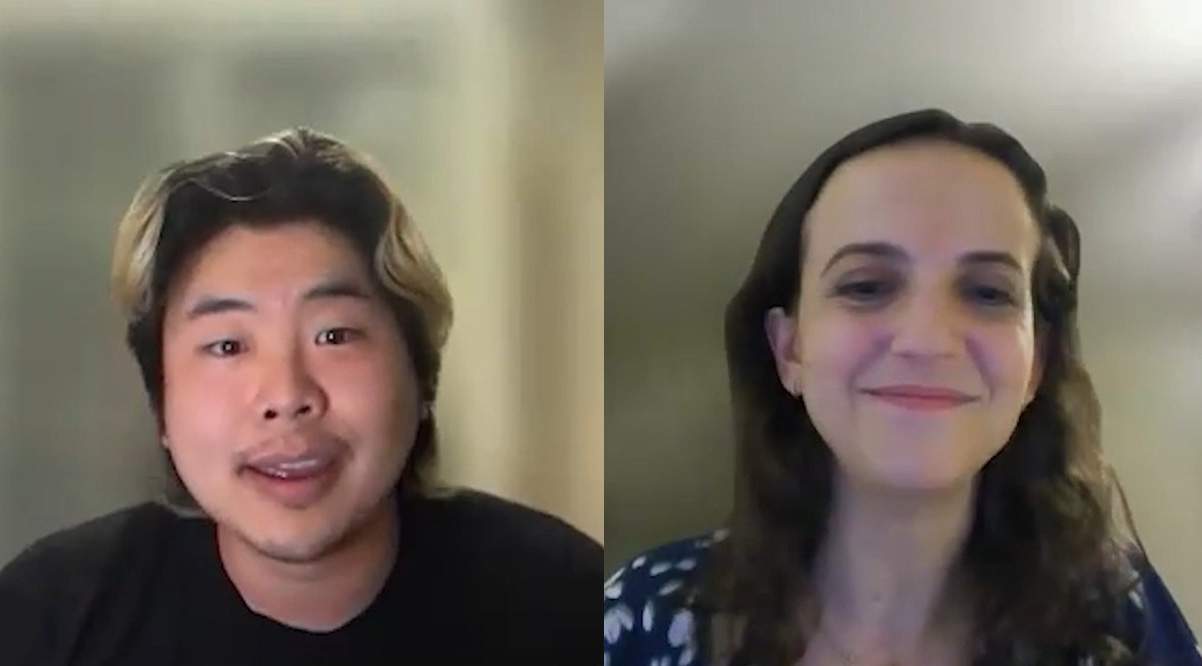
    Dr. Anita Ravi Thank you so much. I love doing these things. Getting the chance to spend time with medical students is so meaningful to me. Honestly, I have a secret wish that I hope to be your colleague one day. So, I do this because I think for me, almost through my entire journey, I think even in medicine, so often I felt like an outsider. And there's something about family medicine where it's not about bringing you in, but it's about: there's no right way to be a family medicine doctor. And so, I think you're seeing that already. But it's so awesome to find a place where you can belong and do medicine in the way that you feel. For me, it's the most just way to be able to do the care that I think people, the patients that I work with, deserve. And so, I'm so excited to be here and share more.

    Dr. Anita Ravi So yeah, I took the pre-med classes in undergrad, but I actually was a German major because I wanted to be a professional tennis player when I grew up. And my favorite tennis player was Steffi Graf, and she was German. And so, I thought to be polite, you've got to be able to speak someone's native language in case I ever saw her in the locker room. So that's what I studied. I took all their pre-med courses, but I never quite connected with it. And I think part of it might be because it was on such a molecular level. I think so much of the gatekeeping towards medicine is on the components of the human, but not quite the human or anything beyond that. And so sometimes, it can erase the beauty of what's actually waiting for us. So, we have the opportunity to pursue medicine.

    Dr. Anita Ravi I grew up in St. Louis, Missouri, for the most part. And my parents, who lived there for the last 30 or some odd years -- they're moving. And so, I've been going through a lot of my childhood belongings. And it's crazy because I found essays from my childhood and then personal statements to undergrad and beyond, and it's all had very similar themes. And the thing that I care about the most is being a part of the solution for doing something on violence against women. Gender based violence is, for some reason, that is just a very important topic to me. And I think when I was going through undergrad, it was always termed kind of a social issue, and it was never brought in under the umbrella of medicine. So, when I did my undergrad, and I majored in German, I took some of the online courses, too, I decided to apply to public health school. So, I got my master's in public health. I went to Yale, and that was amazing because it was actually the first time I got the opportunity to formally study domestic violence as a science issue. And so, I studied women who had been incarcerated in the only women's prison in Connecticut. And looking at their experience of domestic violence and different risk factors like HIV. And so, it was kind of the first time that you could apply science, I think, for a way that was inviting to a topic that I cared about. So, I did that.


    Designing a Career Around Gender-Based Violence

    Dr. Anita Ravi I'm always very honest on these presentations. So, you know, I took the MCAT. I did meh. And I took it again when I was getting my MPH, and I actually did worse the second time. And that was a very tough thing to process, especially after you've studied so hard. But what I did was, I actually applied and got a fellowship at the CDC, and I worked at the CDC for two years. It had a reproductive health epidemiology fellowship, and it's now defunct. But at the time, my job was to put together reproductive health guidelines in conjunction with the W.H.O. It was there that I had the chance to work with PhDs, work with MDs, and I was in the women's health section, and it was just amazing to see. I got to shadow the physicians who were doing the work, and then writing public health guidelines based on what they were noticing in patient care. And so that motivated me to try yet again. And I tried -- did much better on the MCAT when I tried again. And I applied to medical school with this dream of wanting to do something in women's health. And at the time, I thought the only way to be able to do that was if I went into OBGYN. I had never heard of any other specialty that could work with women.

    Dr. Anita Ravi I did my medical school in Ann Arbor at the University of Michigan, and I'm so grateful for that experience because they had a Department of Family Medicine, and when I was rotating through, I realized that there is actually a way that I would be able to work with this population that I had cared about, which was survivors of domestic violence, and really looking at it from a health care perspective. So, I set up a rotation in the Ann Arbor County Jail through the psychiatry department, actually, so that I could understand the experience of people who are -- people don't often realize this -- but the majority of women who are incarcerated have huge histories of trauma, including, in general, people who are incarcerated. And so, a lot of domestic violence survivors are incarcerated. And so, this gave me the opportunity to understand the psych background. When I was on my OB-GYN rotation, I noticed things like postpartum depression would come up. But there were some tools that could be used, but there wasn't a lot to address the connection that mom might have with her child. And I noticed in family medicine, it was awesome because I had the opportunity to weave together -- whether it was psychiatry, whether it was OBGYN, whether it was primary care -- through all these tools that could be useful for people, especially if they don't have insurance or if they don't have access to care in traditional ways.

    Dr. Anita Ravi So when I applied to residency, I looked for three things that might have been relatively unpopular. One was I was looking for jail-based electives. I was looking for the opportunity to do full spectrum reproductive health care. And I was also looking for the opportunity to do research. Because for me, my whole journey has been this triangle of patient care that informs the research, that informs policy, and that, again, impacts care. And so, you see this triangle, and I think often it's so much about finding the right mentors to understand, because I think sometimes, we can live in a world of people being like, "Oh, you're all over the place," or you have to do things in a certain way. But then sometimes you're really lucky to find people who support you and get it. And I just find there's a community of people who “get it” in family medicine.


    Founding Purple Family Health

    Dr. Anita Ravi So I did my residency training in New York City, and that's where I'm based. And I started a jail elective on Rikers Island, and I had the opportunity to be a volunteer on Rikers in the women's jail. So, I used to do health education workshops at Rikers. And after I finished my residency, I did a health policy research program. It's currently called the National Clinician Scholars Program. So, I did that at UPenn. And when I was doing that, it was a health policy; it was research. And I did my clinical care at the Women's Health Clinic at the VA, so I could again work with women veterans, many of whom experienced trauma and be able to do their women's health care and their primary care.

    But it was during that time that I had this intersection where I attended a conference, and it was on the role of health care and human trafficking. And it was the first time that human trafficking had ever been framed as a health care issue. So, I went to that as a third-year resident, and I was like, "Oh my God, there's such a big role for what we can do in this work." And so, I designed a study where I interviewed survivors of trafficking who are incarcerated on Rikers Island, asking them about their health care experience while they were being trafficked. Where did they get care, what would make them feel more comfortable connecting with care? And all of that led to me starting a medical practice called Purple Clinic. And now it's called Purple Family Health.

    I'm a family medicine doc who specializes in the care of survivors of gender-based violence, including domestic violence, human trafficking, and sexual assault. Pretty sure we're creating a specialty around this. And there's so much that I'm discovering because in medical school, I think so often we were just taught to screen for safety and find out if someone is safe at home. And doing this work for about a decade, you realize there's so much clinical pathology, and there's so much misdiagnosis. And there's a different art of delivering care that's needed to be able to make sure you're doing right by the community you serve. So right now, I started my own nonprofit, and our nonprofit fully funds our family medicine practice. So, I see patients who -- my whole panel is survivors -- and I do training of clinicians across the country. And then I do research. So right now, I'm a fellow at the National Academy of Medicine. I do a lot of work around traumatic brain injury, because that's a big thing with the intersection of intimate partner violence. And I still do work in prisons and jails, working with survivors and seeing if there's a way to apply medical knowledge to be able to help the personnel policy and broader things. So that triangle still lives of care, clinical, you know, research and advocacy.


    Gratitude to Mentors and Residency Support

    Dr. Anita Ravi And I want to quickly shout out one of my mentors from residency is on this. His name is Dr. Mark Levin. And he's one of those people that I think of. I remember when I started residency, one of the things I was so excited about for my program is that there was a rotation where we got to do field trips at the UN. And one of the things Doctor Levin did along with Doctors Without Borders, he did all that work, but he did a lot of asylum evaluations.

    And so, when I was a resident, I got my sexual assault forensic examiner training. I got my asylum evaluation training, and he was the first person who understood it, he supported me, and he helped me do my first cases. So, you got to find the people who get it and support you so that you can actualize the thing that you were meant to do. And I hope if that means that there's a home for you in family medicine, that you have an opportunity to realize it.


    Final Reflections and Advice for Students

    Dr. Bright Zhou (host) Something that I really liked is how you have really protected that triangle that you talked about, and you're still doing all three aspects: the patient care, the research, the policy work. And I think all our panelists tonight have really mentioned in some way or another, the systems that we work within. Also, side note: one of the staff who's on the call, we've got to put on an Instagram post, "Family medicine is a way to apply science to issues we care about." Because that was another amazing nugget that you dropped that I just totally resonate with.

    So anyway, to the point about the triangle. I'm curious, as someone who has really had this interest since your MPH, since before med school, where do you think -- I mean, it's kind of a leading question -- but please take it wherever you would like. But where do you think the future of family medicine will be in 5 to 10 years? Given that all our panelists and you yourself, with your experience here and creating a new sub-specialization in family medicine, where do you see that energy bringing all of family medicine in the next 5 to 10 years?

    Dr. Anita Ravi Yeah. I was contemplating this earlier today because I think -- and I was talking to some of my colleagues from residency -- because I think, again, I went out of my way to make sure it was said, there's no right way to family medicine, like to be a family medicine doctor. And what I mean by that is, I think it's beautiful that we can apply public health, preventative medicine, sub specialization and all sorts of different things with this baseline understanding of the entire body and entire systems. So, I think the thing that gives me power in being able to do the work that I do is: I rotated through emergency medicine; I delivered babies. I had all of that, even if I'm not doing it currently, when I'm working with patients and when I'm collaborating with everyone else in their care team, I have some understanding of the systems that are and aren't working. And so, I think, in the future, as we see medicine move in whatever, it gives you this flex of no matter where it goes, we had the opportunity with our baseline knowledge to find the thing we were passionate about and apply those skills in however primary care evolves and however you want to take it and build it. That's kind of how I visualize it.

    Dr. Bright Zhou (host) I love that answer. Primary care is so broad and yet so deep, and I think you are the perfect representation of exactly that, creating that subspecialty within such a powerful topic and having such deep expertise within that. So, with that said, I would love to bring up all the panelists for our final question of the evening, which I will offer to all our panelists.

    We will have Dr. Bruno first, and then Dr. Ravi and then Dr. Huhn respond to this question. So, the question is, what do you wish you had known about family medicine when you applied into it?

    Dr. Richard Bruno I think I have a wish that's actually a positive wish. So, I wish I had known how incredible a specialty it is. Or just being a collaborative specialty. I think the work that we're doing or trying to do as family doctors, as you've heard from some of my amazing colleagues today, is just truly inspiring. And so, I wish I had known that I was going to be among the midst of just such incredible people doing amazing things. And so, yeah, I'm very positive. And I couldn't have known that at the beginning. But I've met a few family doctors and I kind of knew, but I didn't really know what I was getting into until I was there, and I'm just so glad I did.

    Dr. Bright Zhou (host) Dr. Bruno wishes that this Vibe Check existed when he applied to residency. That's what I'm hearing. All right, Dr. Ravi, same question: what do you wish you had known when you had applied into family medicine?

    Dr. Anita Ravi Yeah, I think something similar, that there's so many different phenotypes. There were surgeon generals that have been family doctors, MacArthur geniuses, artists -- there's so many people. And then when you dig and you suddenly see the bio, you're like, "Oh my God, they're family doc!" So, there isn't this stereotypical way to be. And I think recognizing that from the beginning can really draw in the right people to keep that true of anyone can bring their best self into this and be better.

    Dr. Bright Zhou (host) I love that answer. We are the people's specialty, and I love that. And finally, Doctor Huhn, same question. What do you wish you had known when you applied into family medicine?

    Dr. Courtney Huhn Yeah, and I have to go last. So, they both said really great things that I think are so true. But I think, the big thing that I wish I had known is how the family of family medicine really is. And where Bruno and I were residents and students doing what was National Conference is now FUTURE, way back when. And so, you see these people, and you cross paths and there's always that connection and that opportunity to outreach and that opportunity to grow with one another in your field and be inspired by amazing colleagues that are on this webinar and just grow with each other. But really, outreach. I remember presidents of the Academy and other folks who are incredibly high achieving, just being willing to talk to you and support you and mentor you and guide you so that family of family medicine is a real thing and is incredibly powerful. So, I wish I would have known just how incredible it is.


    Closing Remarks and Resources

    Dr. Bright Zhou (host) I agree, I think that would be my answer as well. Getting involved with AAFP earlier, which all of you all as attendees already are. Our incredible staff have been dropping tons of resources in the chat. You don't have to check all of them out, but check out one thing. Come see us at FUTURE conference. Come see us at some of these other conferences. Reach out to your local family physicians and your local educators at your school to think about whether or not working in the community, working within systems, tending to the garden -- like Dr. Huhn said -- of our patients and ourselves is the right specialty for you.

    And so, with that said, I would love to thank our fantastic panelists for sharing all of the time, experience, wisdom, laughs, stories, crying -- all of that -- with us and our attendees.

    Dr. Bright Zhou (host) We would love to welcome you all as AAFP members if you've not already joined. Membership within our American Academy of Family Physicians is free -- completely free -- for medical students. So please come join us at aafp.org/join.

    Dr. Bright Zhou (host) Thank you all so much for attending. Thank you to our panelists once again. And I hope everyone has a great night. Thank you all.