Am Fam Physician. 2023;108(5):494-500
Author disclosure: No relevant financial relationships.
Family physicians commonly find themselves in difficult patient encounters that can result in dissatisfaction for the patient and physician. Successful navigation of these encounters includes recognizing common physician factors, such as systemic pressures, interpersonal communication, and situational issues. The practice of labeling patient types can lead to disparities in care and patient harm and should be avoided. When physicians recognize that they are in a difficult patient encounter, simple mindfulness approaches, such as the Name It to Tame It and CALMER approaches, can improve outcomes. CALMER approaches help physicians acknowledge which situations they can control, alter their thoughts about the situation, and tolerate uncertainty. Physicians working with patients to create a therapeutic bond can focus the encounter to understand the situation that the patient is experiencing and work to recognize and acknowledge strong emotions that are nonproductive. Negotiating an agenda can help manage expectations of what can reasonably be done during each visit. Supporting patients by validating their symptoms and helping them embrace uncertainty can enable them to take control of their diagnosis and focus on managing chronic conditions rather than curing them. Motivational interviewing is a useful tool to help patients take ownership of their illnesses and therapeutic goals. Self-care through reflection groups or personal coaching or counseling can help physicians feel supported and avoid burnout.
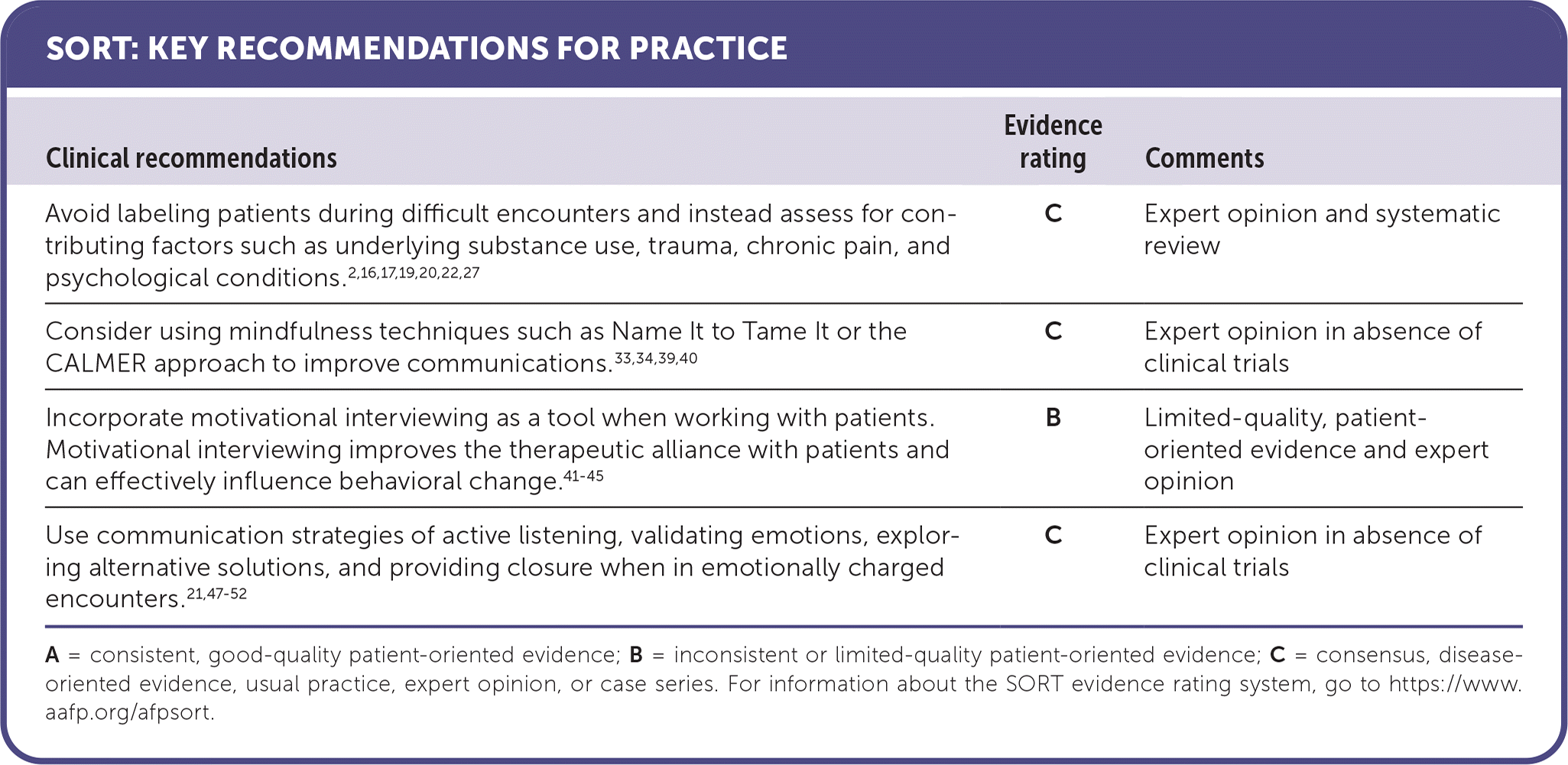
| Clinical recommendations | Evidence rating | Comments |
|---|---|---|
| Avoid labeling patients during difficult encounters and instead assess for contributing factors such as underlying substance use, trauma, chronic pain, and psychological conditions.2,16,17,19,20,22,27 | C | Expert opinion and systematic review |
| Consider using mindfulness techniques such as Name It to Tame It or the CALMER approach to improve communications.33,34,39,40 | C | Expert opinion in absence of clinical trials |
| Incorporate motivational interviewing as a tool when working with patients. Motivational interviewing improves the therapeutic alliance with patients and can effectively influence behavioral change.41–45 | B | Limited-quality, patient-oriented evidence and expert opinion |
| Use communication strategies of active listening, validating emotions, exploring alternative solutions, and providing closure when in emotionally charged encounters.21,47–52 | C | Expert opinion in absence of clinical trials |
Successfully navigating difficult patient encounters requires understanding and identifying physician and patient factors and external conditions that may apply to any clinical situation.3 Physicians bring their own experiences, biases, values, strengths, and weaknesses to all patient encounters. Patients bring their own personalities, values, complex medical needs, varying levels of health literacy, and communication styles to their interactions with physicians.4,5 Both patients and physicians are affected by conditions in the medical system that are beyond their control.6
Identifying Physician Factors
| Interpersonal |
| Bias toward specific medical conditions or populations |
| Communication barriers (e.g., language, literacy, poor rapport) |
| Differing expectations from patients (e.g., goals of visit, expected results) |
| Lack of trust |
Situational |
| Inadequate training |
| Lack of resiliency |
| Personal health issues (e.g., mental health condition) |
| Physician insecurity about their medical knowledge |
| Sleep deprivation |
Systemic |
| Corporatization of medicine (i.e., inadequate time for patient care) |
| Increased documentation requirements |
| Lack of staff support and resources |
| Moral injury (the challenge of simultaneously knowing what care patients need but being unable to provide it due to constraints that are beyond our control) |
| Social determinants of health (health-related social needs, including housing instability and nutritional insecurity) |
| Systemic racism (systemic unfairness that leads to socio-economic and health disparities for patients) |
SYSTEMIC PRESSURES
Physicians face pressures from the medical system in which they work, including increasing corporatization of the health care system, shifts toward productivity-based pay structures, increasing documentation and regulatory burden, and loss of autonomy.7,8 Time constraints and documentation requirements can turn the focus away from the needs of the patient.6 Lack of support staff can exacerbate the stresses on time-constrained physicians.9
The concept of moral injury describes the harm to physicians who are prevented from providing appropriate care. Moral injury in medicine lacks a standard definition but has been described as the emotional response that can occur after events that violate a person's moral or ethical code and the challenge of knowing what care patients need but being unable to provide it due to constraints beyond the physician's control.10,11 The COVID-19 pandemic included many elements of moral injury. A recent study showed that 60% of physicians reported at least one characteristic of moral injury in the first two years of the pandemic.12 Increased misinformation and general distrust of the medical establishment eroded foundations of the patient-physician relationship. An article in American Family Physician focused on countering medical misinformation.14
INTERPERSONAL
Communication with patients is key to accurate diagnosis and patient satisfaction. Physicians who are unable to communicate with patients due to language and cultural barriers, have knowledge deficits and biases toward specific conditions or populations, or who lack trust can struggle to obtain the information necessary for an accurate diagnosis.15–17
SITUATIONAL
Identifying Patient Factors
| Behavioral issues |
| Agitated, angry, defensive, frightened, or resistant |
| Demanding or entitled |
| Drug-seeking behaviors |
| High utilization of health care |
| Lack of trust |
| Manipulation |
| Manner in which patients seek medical care |
| Nonadherence to treatment |
| Not in control of negative emotions/grieving |
| Poor ownership of their health |
| Refusing to consider therapeutic avenues based on value conflicts |
| Self-sabotage or powerlessness |
| Suicidal and self-injurious behaviors |
| Unmotivated |
| Vague or exaggerated body symptom complaints |
Medical, social, and socioeconomic conditions |
| Medical: chronic pain syndromes; functional somatic disorders; history of physical, emotional, or sexual trauma; substance use disorder |
| Social: belief systems unfamiliar to physician's frame of reference; conflict between patient's and physician's goals for the visit |
| Socioeconomic: financial limits causing difficulty with therapy adherence; limited access to care, resulting in a need to cover more than four medical issues per visit; low health literacy/education; systemic racism (systemic unfairness that leads to socioeconomic and health disparities for patients) |
Psychiatric diagnoses |
| Bipolar disorders |
| Borderline personality disorder |
| Dependent personality disorder |
| Other personality disorders |
Previous models for difficult encounters involved labeling different patient archetypes, but evidence suggests that labeling a patient as difficult can cause serious harm.16,17,22 Labeling patients in the medical record, such as noncompliant, or using race identifiers and quotation marks can lead to disparities in care and worse health outcomes.16,17,22
Anger, agitation, or demanding and manipulative behaviors can elicit strong defensive responses from physicians and reduce collaborative care.26 Conditions that are traditionally difficult to treat, such as substance use, trauma, chronic pain, and psychological conditions, can elicit frustrations before the visit starts.27 A lack of shared understanding about the need for specific treatments or ability to pay for care can lead to feelings of helplessness for patients and physicians.28
Medical Setting
The practice setting can influence a patient's experience. In all medical settings, time delays are common. Practice-level approaches, such as providing inviting waiting rooms, comfortable seating and temperatures, calming music, and an easy check-in process, can improve the physician-patient experience.20
Therapeutic Approaches
FOCUS ON THE ENCOUNTER
The most important element in managing a difficult encounter is to focus on the situation instead of the person.16,17,22 Acknowledging emotions that are negative, nonproductive, or cause distress can help reduce physician anxiety.33,34 Being comfortable with discomfort and understanding that control is a myth can help physicians work collaboratively to find common ground and focus on shared concerns.35,36
UNDERSTAND THE PATIENT'S SITUATION
As Dr. Francis Peabody stated nearly a century ago, “…the secret of the care of the patient is in caring for the patient.”37 A determined curiosity can uncover psychiatric conditions, past trauma, substance use, and family or social dysfunction. Understanding the patient's situation can increase empathy toward patient challenges and provide treatment direction.38
INTERPRET STRONG EMOTIONS
Recognizing the strong emotions that are often triggered in the difficult patient encounter is an important skill. It requires cultivating an ability to mentally step back from a strong feeling and simply observe it. Physicians should focus on interpreting the situation and determining an appropriate action rather than reacting to the strong emotion. This dispassionate recognition of emotions is a type of mindfulness.33 One way to do this is with the Name It to Tame It tool (Table 3).33,34,39 Another tool that can be used in cultivating empathy is the CALMER approach (Table 4).40
| Example | |
| A patient you struggle to work with has an appointment in your clinic. As soon as you see their name, your chest tightens, and you snap at your front desk staff for scheduling them so soon after the last visit. | |
| Steps | |
| Notice | Notice the strong emotions that are occurring and name them (e.g., anger, fear, unease). Choose a word to describe the emotional reaction. |
| Acknowledge | Acknowledge this emotion and calmly hover over it to allow your executive brain to filter and organize it. |
| Make room | Make room for the emotion. Be with the anger, fear, and unease without explaining it. |
| Expand awareness | Expand awareness and monitor strong emotions so that the emotions do not take over when they return. |
| Outcome | |
| Naming the emotion and making room for these strong feelings can lead to feeling more calm and balanced. | |
| Element | Approach |
|---|---|
| Catalyst for change | Remind yourself that you cannot control the situation. Patients must own the responsibility for change. Physicians cannot control the patient's behavior, but they can control their own reaction. Identify the stage of change and work toward moving patients to the next stage. |
| Alter thoughts to change feelings | Recognize that the only way physicians can control their reactions is to alter their thoughts about the situation. Identify negative feelings the patient is eliciting. How are these feelings affecting the doctor-patient relationship? Do not take it personally. This is how the patient reacts in many areas of their life, not just in the doctor's office. Consider why the patient may act this way (e.g., history of abuse, loneliness). What can physicians tell themselves about the situation that might make them feel less angry? (e.g., “I would be frustrated if I was in pain as well,” “If I felt lonely, I would worry that no one cares about my opinion”). |
| Listen and then make a diagnosis | Negative responses to a patient's behavior can limit how physicians perceive a situation and how willing they are to engage. This can lead to errors in diagnosis. The ability to navigate negative feelings will improve the chances of making a correct diagnosis. |
| Make an agreement | Restate the plan of care made with the patient to get a confirmation of their agreement. This will help patients increase the awareness that they are making a conscious choice to continue working with the physician. Additionally, it helps both the physician and patient see increased control in managing the issue. |
| Educate and follow up | Help patients set realistic, achievable goals on which the physician and patient can agree. |
| Reach out and discuss feelings | Acknowledge that difficult patient encounters can take a toll on physicians. Find appropriate avenues to ensure self-care. |
NEGOTIATE THE AGENDA
Setting an agenda at the beginning of the encounter allows for shared decision-making on priorities. Agenda setting also enables the physician to agree that the patient is in distress and accept responsibility for providing care.1
VALIDATE SYMPTOMS AND UNCERTAINTY
Clarification between illness, symptoms, or personal experience vs. disease and abnormality in structure and function of organs or tissue can help reframe the discussion with patients.38 Many illnesses are not structural, and extensive workup to find a structural reason to validate symptoms can cause increased harm.1,38 Finding a nonstructural diagnosis that justifies their illness can improve sense of self, provide a common language for discussing treatment, and can help the patient move from a focus of curing the illness to coping with it.38
MOTIVATIONAL INTERVIEWING
Motivational interviewing is a counseling tool that can be useful in helping patients feel understood and enable shared treatment plans. It involves four main steps: (1) asking open-ended questions to ensure a shared understanding; (2) affirming the patient's priorities and efforts so far; (3) restating opposing priorities or values to allow the patient to determine what treatment they can commit to (i.e., reflective listening); and (4) summarizing the decision and confirming the treatment plan. Motivational interviewing allows patients to express themselves while allowing physicians to affirm patient efforts, offer empathy, and develop a shared understanding and course of action. Motivational interviewing improves the therapeutic alliance with patients and can effectively influence behavioral change.41–45
A Case Study
A 72-year-old married woman with opioid dependence is in remission and struggling with mild cognitive impairment. She arrives late to her appointment. At every visit, she describes overwhelming anxiety and often requests a prescription of benzodiazepines. Five months ago, she was prescribed five tablets of lorazepam by a colleague. A review of the prescription monitoring program shows that she is not taking other controlled prescriptions. You have recommended counseling, social support, behavioral health interventions, and family involvement, but she has consistently refused these suggestions. You feel frustrated at every visit and note that you dread her appointments.
PRACTICE EMPATHY
The mindfulness approach of Name It to Tame It can build awareness of your feelings and understanding of the situation. The physician should acknowledge that seeing the patient is a problem and reframe it as the patient is struggling. The physician may also consider rephrasing “this is going to be terrible” as “I feel worried, and I can build empathy.” It is also important to build awareness of what the strong emotions are saying. Patient context matters in addressing each difficult encounter. The focus should be on commonality with the patient rather than differences.
ESTABLISH THE AGENDA
Asking “what are we working on today?” lets the patient tell you their most pressing concerns and allows physicians to negotiate what is doable in this visit. Discussing the expectations of the patient for management of their anxiety provides an opportunity for physicians to commit themselves to the patient and their self-management. Empowering patients to make their own health care decisions and own their choices results in improved health outcomes.3,46
Examples of questions that empower patients are, “I remember you telling me that a different medication was helpful in the past. Can you tell me about that?” “I want to help but I can't prescribe the same medication because the risk of dependence, withdrawal, and side effects from long-term use is too high. Are you willing to try one of these other options?”
VALIDATE THE PATIENT'S SYMPTOMS
Instead of saying “There is nothing on your imaging that would explain your symptoms,” try saying, “I understand that you're hurt and that must be frustrating.” Acknowledging her anxiety and validating her situation can improve the therapeutic relationship and future symptoms. Physicians who validate also encourage a patient's self-efficacy.
TOLERATE UNCERTAINTY
Lack of a clear structural diagnosis can worsen anxiety. Collaborating with the patient can create acceptance of the diagnostic uncertainty and shift the focus to managing symptoms and improve coping.
EXPLORE RESISTANCE TO RECOMMENDED THERAPIES
Motivational interviewing identifies ambivalence toward change, hesitance with suggested therapies, and barriers to changing behaviors. This helps with “I don't know” answers from the patient. For example, “On one hand, you are bored with your day-to-day tasks and on the other, you are really anxious about trying out the senior center. I wonder what would have to change for you to feel comfortable enough to give it a try?” “Are you willing to work with me on this problem so that we can find a solution together?”
Further Communications Solutions
For all communication, especially emotionally charged discussions, physicians should use active listening skills, validate patient emotions, explore alternative solutions to problems, and provide options for the patient (Table 5).21,47–52 An approach that identifies and addresses physician and patient contributions to the difficult encounter can result in more effective care, less burnout, and improved physician and patient satisfaction.1,47
| Strategy | Physician actions | Examples |
|---|---|---|
| Use active listening | Understand the patient's priorities, let the patient talk without interruption, and recognize that anger is usually secondary to another emotion (e.g., abandonment, disrespect) | “Please explain to me the issues that are important to you right now.” |
| “Help me to understand why this upsets you so much.” | ||
| Validate the emotion and empathize with the patient (understanding, not necessarily sharing, the emotion with the patient) | Name the emotion; if you are wrong, the patient will correct you; disarm the intense emotion by agreement, if appropriate | “I can see that you are angry.” |
| “You are right—it's annoying to sit and wait in a cold room.” | ||
| “It sounds like you are telling me that you are scared.” | ||
| Explore alternative solutions | Engage the patient to find specific ways to handle the situation differently in the future | “If we had told you that appointments were running late, would you have liked a choice to wait or reschedule?” |
| “What else can I do to help meet your expectations for this visit?” | ||
| “Is there something else you need to tell me so that I can help you?” | ||
| Provide closure | Mutually agree on a plan for subsequent visits to avoid future difficulties | “I prefer to give significant news in person. Would you like early morning appointments so you can be the first patient of the day?” |
| “Would you prefer to be referred to a specialist, or to follow up with me to continue to work on this problem?” |
Physician Self-Care
The pressures of being a physician can lead to increased isolation.53 Self-care is a process that lets physicians present the best versions of themselves with the needed reserve to cope with difficult encounters.54,55 Resources on self-care can include support groups, reflection groups, such as Balint, and professional coaching and counseling. References and tools for physician well-being can be found at https://www.aafp.org/family-physician/practice-and-career/managing-your-career/physician-well-being/practicing-self-care.html.
This article updates previous articles on this topic by Cannarella Lorenzetti, et al.,21 and Hass, et al.56
Data Sources: We searched the Cochrane Database of Systematic Reviews, CINAHL, PubMed, EBSCO Host, and Essential Evidence Plus. Search terms were difficult patient encounters, challenging patients, anger, noncompliance, physician-patient relations, physician-patient communications, heartsink patients, demanding patients, patient satisfaction, motivational interviewing, literacy, abuse, somatoform disorders, and chronic pain. We also searched the bibliographies of previously identified studies and reviews, the ClinicalTrials.gov registry, the U.S. Preventive Services Task Force, and UpToDate. We included only English-language publications. Whenever possible, if studies used race and/or gender as patient categories but did not define how these categories were assigned, they were not included in our final review. If studies that used these categories were determined to be essential and therefore included, limitations were explicitly stated in the manuscript. Search dates: October 28, 2022, and December 9, 2022.