We upgraded AAFP.org security on Dec. 7.
Account holders must create a new password. Previous passwords will no longer work.

brand logo

Am Fam Physician. 2024;109(1):51-60

This clinical content conforms to AAFP criteria for CME.

Author disclosure: No relevant financial relationships.

The mental status examination relies on the physician's clinical judgment for observation and interpretation. When concerns about a patient's cognitive functioning arise in a clinical encounter, further evaluation is indicated. This can include evaluation of a targeted cognitive domain or the use of a brief cognitive screening tool that evaluates multiple domains. To avoid affecting the examination results, it is best practice to ensure that the patient has a comfortable, nonjudgmental environment without any family member input or other distractions. An abnormal response in a domain may suggest a possible diagnosis, but neither the mental status examination nor any cognitive screening tool alone is diagnostic for any condition. Validated cognitive screening tools, such as the Mini-Mental State Examination or the St. Louis University Mental Status Examination, can be used; the tools vary in sensitivity and specificity for detecting mild cognitive impairment and dementia. There is emerging evidence for the validity of cognitive screening performed during telemedicine visits, but it should not replace in-person evaluation of patients who have comorbidities that would preclude reliable testing via telephone or video. The workup after abnormal results of a mental status examination or cognitive screening tool is based on clinical judgment and primarily focuses on ruling out reversible causes of impairment and considering the need for further neuropsychiatric evaluation.

The mental status examination (MSE) is an evaluation of a patient's cognitive and affective state and begins at the start of the patient encounter. Clinical judgment is the foundation of the MSE because much of the examination depends on the physician's observations and interpretations.1 Implicit bias, if not appropriately addressed, may alter the results.2

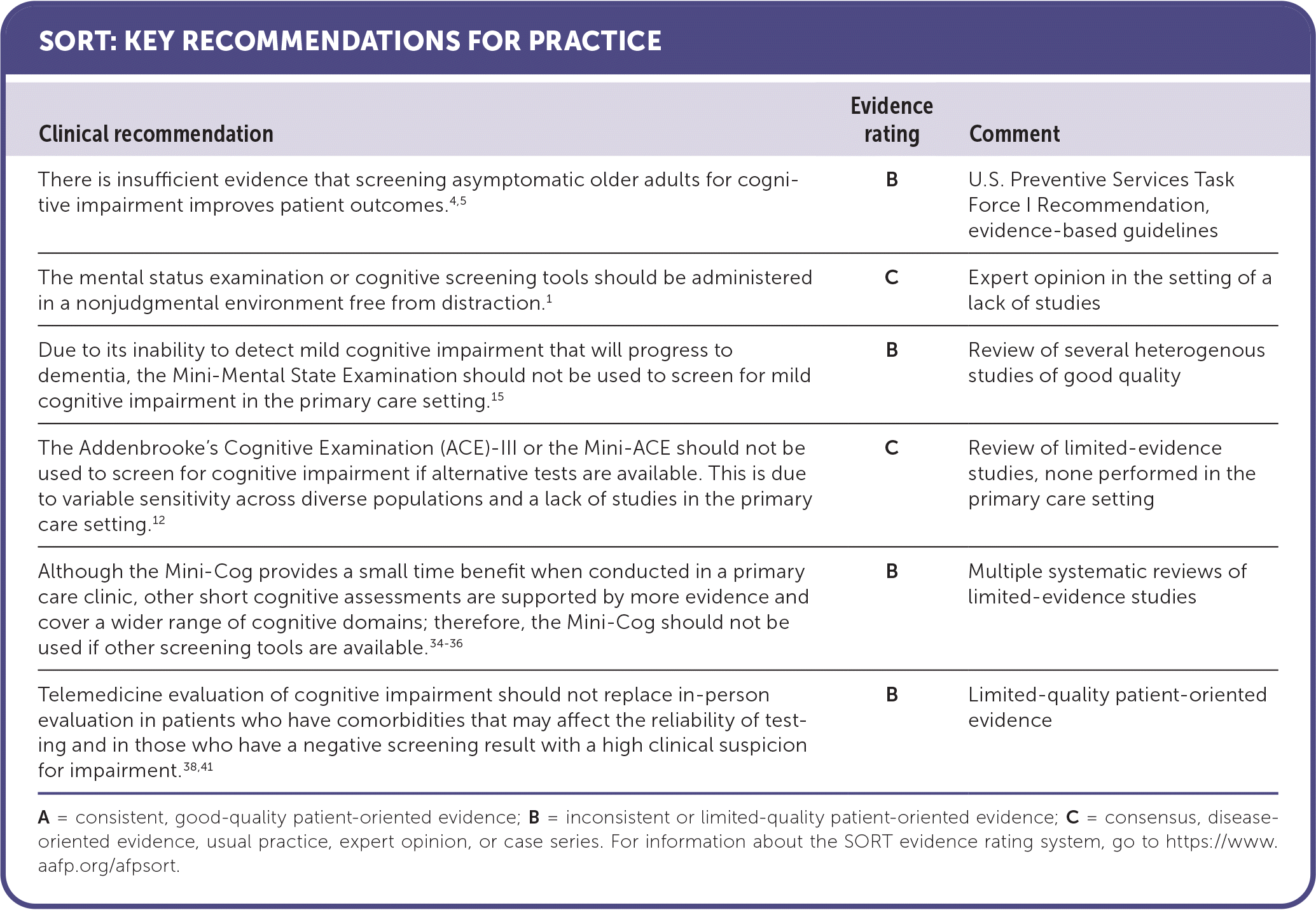
Clinical recommendation Evidence rating Comment
There is insufficient evidence that screening asymptomatic older adults for cognitive impairment improves patient outcomes.4,5 B U.S. Preventive Services Task Force I Recommendation, evidence-based guidelines
The mental status examination or cognitive screening tools should be administered in a nonjudgmental environment free from distraction.1 C Expert opinion in the setting of a lack of studies
Due to its inability to detect mild cognitive impairment that will progress to dementia, the Mini-Mental State Examination should not be used to screen for mild cognitive impairment in the primary care setting.15 B Review of several heterogenous studies of good quality
The Addenbrooke's Cognitive Examination (ACE)-III or the Mini-ACE should not be used to screen for cognitive impairment if alternative tests are available. This is due to variable sensitivity across diverse populations and a lack of studies in the primary care setting.12 C Review of limited-evidence studies, none performed in the primary care setting
Although the Mini-Cog provides a small time benefit when conducted in a primary care clinic, other short cognitive assessments are supported by more evidence and cover a wider range of cognitive domains; therefore, the Mini-Cog should not be used if other screening tools are available.3436 B Multiple systematic reviews of limited-evidence studies
Telemedicine evaluation of cognitive impairment should not replace in-person evaluation in patients who have comorbidities that may affect the reliability of testing and in those who have a negative screening result with a high clinical suspicion for impairment.38,41 B Limited-quality patient-oriented evidence

The MSE can be as simple as observing a patient or as comprehensive as using a formal evaluative tool. The examination includes evaluation of several cognitive domains, which have been reviewed in a previous American Family Physician (AFP) article3 and can help the primary care physician identify and distinguish a variety of conditions such as delirium, dementia, mania, or depression.

Most domains can be evaluated in a typical clinic visit through general observation of the patient's appearance, affect, attention, language, and praxis. Assessment of executive function and memory may require a dedicated evaluation.1,3 Table 1 lists typical components of the MSE.3

ComponentDefinition/contentWhat to assessSample questions/testsPotential diagnoses if abnormal
General observations
AffectObjective observation of patient's emotional state by the physicianConsistency of the patient's report with their presentation
Lability, range, and intensity of emotion; body movements; facial expressions (e.g., tearfulness, smiling, frowning)
Mood disorder, anxiety, psychotic disorders, schizophrenia, substance misuse, anosognosia
AppearanceLevel of cleanliness, manner of dress, general physical conditionAppearance: attention to detail, attire, distinguishing features (e.g., scars, tattoos), grooming, hygiene, apparent ageDisheveled: depression, schizophrenia or psychotic disorder, substance misuse, homelessness
BehaviorEye contact, interpersonal interactionsEye contact: fleeting, good, none, sporadic
Behavior: candid, congenial, cooperative, defensive, engaging, guarded, hostile, irritable, open, relaxed, resistant, shy, withdrawn
Poor eye contact: depression, psychotic disorder
Provocative behavior: personality disorder or trait
Irritable affect: anxiety
Paranoid: psychotic disorder
MoodSubjective report of emotional state by patientHow is your mood?
Have you felt sad or discouraged lately?
Have you felt energized or out of control lately?
Mood disorder, anxiety, psychotic disorders, schizophrenia, substance misuse
Motor activityFacial expressions, movements, posturePsychomotor agitation: excessive motor activity (e.g., pacing, wringing of hands, inability to sit still)
Psychomotor retardation: slow motor function, bradykinesia (e.g., slowing of physical and emotional reactions)
Catatonia: immobility with muscular rigidity or inflexibility
Psychomotor agitation: anxiety, drug overdose or withdrawal, medication effect, mood disorder, posttraumatic stress disorder, schizophrenia, mania
Psychomotor retardation: depression, medication effect, schizophrenia, parkinsonism
Catatonia: schizophrenia or psychotic disorder, severe depression
Cognitive functioning
AttentionAbility to focus based on internal or external prioritiesCount backward by sevens or fives
Spell a word backward
Attention-deficit/hyper-activity disorder, delirium, dementia, mood disorder, psychotic disorder
Executive functionOrdering and implementation of cognitive functions necessary to engage in appropriate behaviorsEach cognitive function involved in completing a taskClock drawing test: ask patient to draw a clock with hands set to 11: 10
Trail-making test: ask patient to alternate numbers with letters in ascending order (e.g., A1B2C3)
Delirium, dementia, mood disorder, psychotic disorder, stroke
GnosiaAbility to name objects and their functionShow patient a common object (e.g., pen, watch, cell phone) and ask whether they can identify it and describe how it is usedAdvanced dementia, stroke
LanguageVerbal or written communicationAppropriateness of conversation, rate of speech (> 100 words per minute is normal; < 50 words per minute is abnormal), reading and writing appropriate to education levelRapid or pressured speech: mania
Slow or impoverished speech: delirium, depression, schizophrenia
Inappropriate conversation: personality disorder, schizophrenia
Inappropriate reading or writing level: dementia, depression, previous stroke
MemoryRecall of past eventsDeclarative: recall of recent and past events
Procedural: ability to complete learned tasks without conscious thought
When is your birthday?
What are your parents' names?
Where were you born?
Where were you on September 11, 2001?
Ask patient to repeat three words immediately and again in five minutes
Ask patient to sign their name while answering unrelated questions (each test must be tailored to the individual patient)
Short-term deficit: amotivation, attention-deficit/hyper-activity disorder, dementia, inattention, substance misuse
Long-term deficit: advanced dementia, amnesia, dissociative disorder, movement disorder, previous stroke
OrientationPatient's ability to recognize where they areTime, place, personWhat year/month/day/time is it?
What city/building/floor/room are you in?
What is your name?
When were you born?
Amnesia, delirium, dementia, mania, previous stroke, severe depression
PraxisAbility to carry out intentional motor actsApraxia: inability to carry out motor acts; deficits may exist in motor or sensory systems, comprehension, or cooperationCould you show me how to use this item?Delirium, dementia, intoxication, stroke
ProsodyAbility to recognize the emotional aspects of languageRepeat “Why are you here?” with multiple inflections (e.g., happy, surprised, excited, angry, sad) and ask patient to identify the emotion
Ask the patient to say the same sentence with each of the above emotional inflections
Autism disorder, developmental delay, mood disorder, schizophrenia
Thought content and perceptionWhat the patient is thinking and experiencingDelusions, hallucinations, homicidality, obsessions, phobias, suicidalityDelusions:
Are people talking behind your back?
Do you think people are stealing from you?
Do you think people are trying to hurt you in some way?
Hallucinations:
Do you see things that upset you?
Do you ever see, hear, smell, taste, or feel things that are not there?
Have you ever heard or seen something other people have not?
Homicidality:
Have you ever thought about hurting others or getting even with someone who wronged you?
Obsessions:
Do you have thoughts or images in your head that you cannot get out?
Phobias:
Do you have any irrational or excessive fears?
Suicidality:
Do you feel life is not worth living?
Have you ever thought about hurting yourself? If so, how would you do it?
Have you ever thought the world would be better off without you?
Delusions: fixed delusions, mania, psychotic disorder or psychotic depression
Hallucinations: delirium, dementia, mania, schizophrenia, severe depression, substance misuse
Homicidality: mood disorder, personality disorder, psychotic disorder
Obsessions: obsessive-compulsive disorder, posttraumatic stress disorder, psychotic disorder
Phobias: anxiety disorder, posttraumatic stress disorder
Suicidality: depression, posttraumatic stress disorder, substance misuse
Thought processesOrganization of thoughts in a goal-oriented patternCircumstantial: patient goes through multiple related thoughts before arriving at the answer to a question
Disorganized thoughts: patient moves from one topic to another without organization or coherence
Tangential: patient listens to question and begins discussing related thoughts, but never arrives at the answer
Generally apparent throughout the encounterAnxiety, delirium, dementia, depression, schizophrenia, substance misuse
Visuospatial proficiencyAbility to perceive and manipulate objects and shapes in spaceAsk patient to copy intersecting pentagons or a three-dimensional cube on paper
Draw a triangle and ask patient to draw the same shape upside down
Delirium, dementia, stroke

Decision to Screen

It is unclear whether an early diagnosis of mild cognitive impairment (MCI) or dementia improves patient outcomes or increases support for the caregiver or use of advanced care planning.4 For these reasons, the U.S. Preventive Services Task Force has determined that there is insufficient evidence to recommend screening for cognitive impairment in asymptomatic older adults (I statement).4 Furthermore, the 5th Canadian Consensus Conference on the diagnosis and treatment of dementia recommends against routine cognitive screening of asymptomatic individuals.5 Therefore, shared decision-making with patients and their caregivers should drive the decision to screen.

However, the U.S. Preventive Services Task Force acknowledges that Medicare requires assessment of cognitive impairment as part of the annual wellness visit due to its increasing prevalence.4 The American Academy of Neurology recommends using a validated screening tool to assess for impairment instead of relying on subjective reports of cognition alone.6

In routine patient encounters, targeted evaluations should only be performed if concerns arise, such as when the patient cannot recall past events or struggles to follow a line of questioning. In that setting, assessing a specific domain, such as orientation (asking the patient for the date, their name, and current location), could be helpful.1 If the encounter reveals a general concern for cognitive impairment, brief screening tests, such as the Rapid Cognitive Screen, could be used. Although these tools only evaluate a few domains, they may indicate the need for further testing.7,8

When there are concerns regarding cognitive function, patients and their caregivers often present first to a primary care physician. It is appropriate to address these concerns by performing a focused history and physical examination to rule out alternate causes of impaired cognition. Physicians should consider dedicating a separate visit for cognitive testing, given the number and complexity of patient factors that can impact performance on the MSE and the validity of screening results, especially when screening for dementia and MCI.1 These factors can include age, education level, primary language, medications, pain, fatigue, anxiety, and the presence of family members.1 Expert opinion recommends performing the examination in a nonjudgmental environment without distractions.1 Although no current guidelines address how to best administer an MSE, Table 2 provides considerations for in-office testing.1

ConsiderationsPossible solutions
Organization of testingBe deliberate in choice of mental status examination testing
Organize materials before you begin: forms, writing utensil, firm writing surface instead of tablet-based
Perform in a quiet room without distractions
Patient attributes: age; education; language; IQ; visual, auditory, or mental impairmentChoose a test that has been validated for the patient's age, education, language, IQ, and level of mental impairment
If the patient has visual or auditory impairment, avoid telemedicine evaluation
Psychological state: anxiety, depression, and fear of embarrassment may affect performance; being observed by family may lead to embarrassment and poor performanceEnsure the testing environment is nonjudgmental
Test the patient alone if possible to avoid family member or caregiver influence
Physical state: fatigue, hunger, pain, adverse effects of medication can all impact performanceEnsure the patient is at or near their baseline when testing (i.e., do not evaluate for dementia during acute illness)
Avoid testing in the early morning or late afternoon
Avoid testing during the patient's normal meal times
Prior testing: testing familiarity from prior testing may falsely elevate performanceChoose tests that have multiple validated versions if you anticipate repeat testing
Length and speed of testing: patients with slow response times may be graded incorrectly if rushedSet aside a separate appointment for testing, if possible
Feedback and encouragement: lack of response is not the same as an abnormal responsePatients should be encouraged to respond, even with “I don't know”
Positive feedback can keep a patient focused and engaged
Do not give indications as to whether the patient answered correctly
Evaluate performance: poor effort leading to incorrect answers could lead to a false-positive testing resultConsider whether the patient seems to be giving their best effort, rather than withdrawing or rushing through testing

There are several cognitive screening tools validated for dementia and MCI assessment. In general, these tests are more sensitive for detecting dementia than MCI.4 The choice of screening tool is typically based on the clinical scenario and the physician's familiarity with the tests.1 A positive screening result alone is not sufficient for diagnosis. However, more comprehensive cognitive tests, such as the Mini-Mental State Examination (MMSE), can help diagnose dementia once alternative diagnoses have been ruled out.5,9 Table 3 lists common screening tools for diagnosing dementia.3,4,7,8,1012

ToolTime to administer (minutes)SensitivitySpecificityDomains assessedLimitationsAccessibilityWebsite
Addenbrooke's Cognitive Examination-III≤ 2082% to 97%4% to 77%Attention, executive function, language, memory, orientation, visuospatial proficiencyNot studied in the United StatesPublic domainhttps://neurovascularmedicine.com/ace.pdf
Mini-Cog≤ 576% to 100%27% to 85%Executive function, memory, visuospatial proficiencyLimited cognitive domains assessedPublic domainhttps://mini-cog.com/wp-content/uploads/2022/04/Standardized-English-Mini-Cog-1-19-16-EN_v1-low-1-2.pdf
Mini-Mental State Examination5 to 2088%94%Attention, language, memory, orientation, visuospatial proficiencyLimited ability to detect mild cognitive impairmentProprietaryhttps://www.parinc.com/products/pkey/238
Montreal Cognitive Assessment≤ 1094%60%Attention, executive function, language, memory, orientationOne-hour training requiredPublic domainhttps://mocacognition.com/
Rapid Cognitive Screen≤ 387%70%Executive function, memory, visuospatial proficiencyLimited cognitive domains assessedPublic domainhttps://www.slu.edu/medicine/internal-medicine/geriatric-medicine/aging-successfully/pdfs/rapid-cognitive-screen.pdf
Saint Louis University Mental Status Examination7 to 1098%98%Attention, executive function, memory, orientation, visuospatial proficiencyLess studied than other screening testsPublic domainhttps://www.slu.edu/medicine/internal-medicine/geriatric-medicine/aging-successfully/pdfs/slums_form.pdf

Although related to the MSE, neuropsychiatric testing that provides detailed assessments of cognitive and emotional functioning is beyond the scope of this article. A previous AFP article discusses how neuropsychiatric testing can be used to determine the severity of cognitive impairment, to guide individualized rehabilitation, or when diagnosis is unclear.13

Cognitive Screening Tools

MINI-MENTAL STATE EXAMINATION

The MMSE is one of the most well-known assessments of mental status. It was developed in 1975 and is the most researched cognitive screening tool available. Advantages of the MMSE include its ability to differentiate moderate dementia from normal cognition and its assessment of multiple cognitive domains, including attention, language, memory, orientation, and visuospatial proficiency.5,9 It is available in multiple languages, including English, Spanish, and Chinese.14

The primary disadvantage of the MMSE is its inability to detect MCI that will progress to dementia. A 2021 Cochrane review found the sensitivity and specificity for detecting MCI that will progress to dementia to be 23% to 76% and 40% to 94%, respectively, when administered as a stand-alone baseline test.15 Therefore, the MMSE should not be used to screen for MCI in the primary care setting.

Additionally, interpretation requires consideration of age, education, and cultural background for scoring. If these components are not appropriately incorporated, the scoring is invalid.16 Another notable deterrent to using the MMSE is its proprietary nature. The manual and questionnaires must be purchased to use.14 The product website offers free training, which is recommended but not required, before use of the examination.14

MONTREAL COGNITIVE ASSESSMENT

The Montreal Cognitive Assessment (MoCA) is a nonproprietary screening tool that assesses all the domains of the MMSE with additional emphasis on executive function and verbal fluency. A Cochrane review found the MoCA to be highly accurate for detecting dementia, but none of the studies included in the review were done in the primary care setting.10

For identification of MCI, the MoCA is superior to the MMSE, but is not as effective as the Addenbrooke's Cognitive Examination (ACE)-Revised.1719

The manufacturer of the MoCA requires one hour of training, free on their website, before certifying an examiner to perform the test.20 A mobile application allows the test to be administered via tablet, with several subscription options available; up to 20 tests per month can be administered for free.21

The MoCA does have drawbacks. A test is considered positive when the score is less than 26 out of 30, but this has been associated with false-positive rates as high as 40%.10 A positive screening result can lead to a misdiagnosis of MCI because this diagnosis is often inappropriately made by testing alone. Proposals to lower the score cutoff or adjust the components of the test to better account for education may help with this issue, but they require more research.22,23

Despite its publication in more than 100 languages and dialects, the MoCA has shown varying sensitivity and specificity across cultures and may require score adjustments when administered in different languages.24,25

SAINT LOUIS UNIVERSITY MENTAL STATUS EXAMINATION

The Saint Louis University Mental Status (SLUMS) Examination is a nonproprietary cognitive assessment similar to the MoCA. The original validation study has shown the SLUMS examination to be highly sensitive, but its sensitivity and specificity for both MCI and dementia vary depending on the patient's level of education.11

Advantages of the SLUMS Examination include assessment of multiple domains such as attention, memory, orientation, and executive function. It is available in multiple languages, including English, Spanish, Arabic, and Chinese.26 The test is free and requires no formal training to administer. A recent study found similar validity between the SLUMS Examination and the MoCA, but found the MoCA takes twice as long to administer.27

The primary disadvantage to the SLUMS Examination is that it has been studied mainly in a White, male population, but more research is being conducted to determine whether it has similar accuracy in diverse populations.2832

ADDENBROOKE'S COGNITIVE EXAMINATION

The ACE is another multidomain assessment and has been updated several times since its original publication. Previous studies supported use of the ACE-Revised, the second edition of the test, for cognitive impairment screening. However, a 2019 Cochrane review found insufficient evidence to support use of the most recent versions, such as the ACE-III and its abbreviated form, the Mini-ACE.12 Both have variable sensitivities across diverse populations and lack research in the primary care setting.12 Additionally, the ACE-III is longer than the MoCA, which may make it more difficult to administer in a busy clinic.16 The ACE-III and Mini-ACE should not be used to screen for cognitive impairment if alternative tests are available.

RAPID COGNITIVE SCREEN

The Rapid Cognitive Screen is a three-item assessment adapted from the SLUMS Examination. It takes less than three minutes to perform and comprises recall and insight questions and a clock drawing test. It has demonstrated high overall accuracy compared with the SLUMS Examination, with an area under the curve (AUC) of 0.97 (95% CI, 0.94 to 0.99) for dementia and an AUC of 0.79 (95% CI, 0.69 to 0.88) for MCI.7 An AUC of 1.0 represents a perfectly accurate test, and an AUC of 0.5 or less indicates a useless test.33 A meta-analysis found that the overall accuracy of the Rapid Cognitive Screen is high compared with the MoCA for both dementia and MCI in a multiethnic population (AUC = 0.82; 95% CI, 0.75 to 0.90).34 Given its speed and relative accuracy, the Rapid Cognitive Screen may be the best brief screening tool for dementia and MCI available to busy physicians. But, like the SLUMS Examination, further studies are needed to ensure its applicability among a diverse patient population.

MINI-COG

The Mini-Cog is a brief cognitive screen that consists of three-word delayed recall and a clock drawing test.8 It has been the subject of several Cochrane reviews, all of which conclude that the evidence is insufficient to recommend for or against its use for dementia screening.8,35,36 The greater amount of supporting evidence for and wider range of domains assessed by other short cognitive screening tools may outweigh the time benefit the Mini-Cog provides for most primary care physicians.3436

Telemedicine Considerations

Telemedicine visits performed via telephone or video can be as effective as face-to-face visits for many conditions seen in primary care, with high patient satisfaction.37 The MMSE and the MoCA have versions adapted for delivery over the telephone.38,39 A 2021 Cochrane review found that only low-quality evidence suggests that telemedicine evaluation can be highly accurate for the detection of dementia compared with face-to-face evaluation.40 Several subsequent studies have considered this topic, with mixed results. Two meta-analyses found the MMSE to be highly accurate when delivered via a telemedicine visit, with an AUC of 0.95 (95% CI, 0.94 to 0.98).38,41 Low-quality studies showed mixed results regarding the accuracy of video-based MoCA testing, whereas the telephone-administered MoCA showed a reliable AUC of 0.82 (95% CI, 0.71 to 0.94) when studied in a poststroke population.38,41,42

Screening tests can be offered to those who prefer telemedicine evaluation. Visual or hearing impairment and difficulties with language or speech can impact telemedicine assessment, and caution should be taken in these cases.41 Any concern for cognitive impairment, despite negative screening results, warrants in-person follow-up or referral for formal neuropsychiatric testing. There is not enough evidence to support the use of widespread telemedicine screening.

Next Steps

The MSE should incorporate the complete clinical picture, including the patient's history and physical examination, to guide the differential diagnosis and next steps in management. Abnormal responses to one or more components of the MSE can highlight concerns for focal or global impairment.1 For example, an acute change in mental status with behavioral changes or an altered level of consciousness would point toward a diagnosis of delirium, whereas a history of impaired gnosia or praxis would point toward a diagnosis of stroke.

Reversible causes of cognitive impairment should be explored. This includes screening for comorbid conditions such as depression or a substance use disorder. Medications should be reviewed to identify those that may contribute to impairment, such as anticholinergics or pain medications.43 Evaluation may also include laboratory testing to rule out reversible causes of mental status changes such as hypo- or hyperglycemia, electrolyte abnormalities, acute kidney or liver failure, hypo- or hyperthyroidism, intoxication, low vitamin B12 level, urinary tract infection, or HIV infection.1,3,43 Neuroimaging with computed tomography, magnetic resonance imaging, or positron emission tomography may be indicated, depending on the clinical scenario.44,45 Evaluation for altered mental status and suspected dementia were reviewed in previous AFP articles.43,46 If the diagnosis is still unclear, referral for neuropsychiatric testing or neurologic evaluation may be indicated. Additional information on cognitive impairment can be found at https://www.aafp.org/family-physician/patient-care/care-resources/cognitive-care.html.

This article updates previous articles on this topic by Norris, et al.3 and Snyderman and Rovner.47

Data Sources: A PubMed search was completed using the key terms mental status examination, cognitive testing, the Mini-Mental Status Exam, the Montreal Cognitive Assessment, the St. Louis University Mental Status Exam, the Mini-Cog, the Rapid Cognitive Screen, and Addenbrooke’s Cognitive Examination. Additionally, MeSH terms with mental status and dementia tests and primary health care or physicians, primary care were searched. The search included meta-analyses, randomized controlled trials, clinical trials, and reviews. The Cochrane database and Essential Evidence Plus were also searched. Whenever possible, if studies used race, ethnicity, and/or gender as patient catcategories but did not define how these categories were assigned, they were not included in our final review. If studies that used these categories were determined to be essential and therefore included, limitations were explicitly stated in the manuscript. Search dates: February 15 to October 27, 2023.

The opinions and assertions contained herein are the private views of the authors and are not to be construed as official or as reflecting the views of the U.S. Air Force, the U.S. Department of Defense, or the U.S. government.

Continue Reading

More in AFP

More in PubMed

Copyright © 2024 by the American Academy of Family Physicians.

This content is owned by the AAFP. A person viewing it online may make one printout of the material and may use that printout only for his or her personal, non-commercial reference. This material may not otherwise be downloaded, copied, printed, stored, transmitted or reproduced in any medium, whether now known or later invented, except as authorized in writing by the AAFP.  See permissions for copyright questions and/or permission requests.